Archive | Lectures RSS feed for this section

2012 lectures to bring returning guests, new inspiration to Amp

Chautauqua’s 2011 Season brought a multitude of speakers, ideas and experiences to the Amphitheater. Authors and historians shared the stage with spies, health workers and economists. Some lecturers made “A Case for the Arts,” while others focused on “The Path to the Civil War.”

Next summer, audiences have the chance to see nine weeks of new talks, each day an opportunity to learn, to grow and to be inspired. The 2012 Chautauqua morning lecture series kicks off on June 25 with a guest who’s no stranger to the Amp — writer Roger Rosenblatt.

Read more
harris perry_0827_2_eh

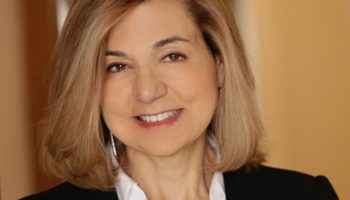
Harris-Perry: Remnants of Civil War era still inform U.S. politics today

Author, professor and columnist Melissa Harris-Perry said there is much Americans can learn from history.

“History is, in many ways, the collective project of making meaning out of the events of the past,” Harris-Perry said. “But history is also much more than an academic exercise.”

Her lecture focused on what current generations can glean from history and how historical events, specifically attitudes in the decades surrounding the Civil War, still have relevance in today’s socio-political world.

Read more
Smith_Roger_&Watley_082511_mt_040

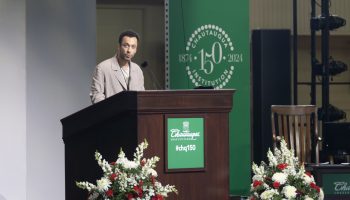
From Douglass to Obama, Smith and Watley compare history to present

Frederick Douglass’ speech “The Meaning of July Fourth for the Negro” came back to life at Chautauqua on Thursday as actor Roger Guenveur Smith recited the abolitionist’s words for the Interfaith Lecture Series.

“What, to the American slave, is your Fourth of July? I answer; a day that reveals to him, more than all other days in the year, the gross injustice and cruelty to which he is the constant victim,” Smith said, reciting the speech.

Read more

Panel to close series with discussion on taking action

To close this week’s Interfaith Lecture Series, the Rev. Joan Brown Campbell and Rex Ellis are going to compile the week’s ideas and information to encourage the audience to do one thing: take action.

“It’ll be a wind-up, really, of the whole week, and we’ll bring it into the present. If we hold these truths to be self-evident, well, what are these truths, and do we follow them?” Campbell said, adding that today’s lecture will bring the theme full circle.

Read more
Harris-Perry_Melissa_082611

Harris-Perry to explore how post-Civil War choices affect politics today

The path to the Civil War diverged as a result of the war, creating an array of new challenges that continue to affect Americans to this day.

Melissa Harris-Perry, professor of political science, author, columnist for The Nation and MSNBC contributor, will discuss the choices the U.S government made after the Civil War and explore how they continue to impact the nation’s politics in her lecture at 10:45 a.m. today in the Amphitheater.

Read more
promiseoffreedom107_082611_df

Even after Emancipation Proclamation, slaves still skeptical

A common misconception is that after former President Abraham Lincoln signed the Emancipation Proclamation, everything became suddenly easier for slaves. But 10 actor-interpreters from the Colonial Williamsburg Foundation disproved that theory in the performance “Promises of Freedom” at the Interfaith lecture at 2 p.m. in the Hall of Philosophy Wednesday.

Many slaves were skeptical of the legitimacy of Lincoln’s offer. They had been promised freedom before and had it taken away. Other slaves were left without families because their children and spouses had been sold. For some slaves, the Emancipation Proclamation did not even apply to them.

Read more
Daniel Walker Howe speaks in the Ampihtheater on Thursday, August 25, 2011.

Howe: Revolutions in communication, transportation deepen North-South division

There are many ways to look at and study the Civil War and the events leading up to it, but Daniel Walker Howe offered a new way of looking at the crisis of secession at his 10:45 a.m. lecture Thursday.

In his lecture, “The Secession Crisis,” Howe put the Civil War into the context of the dramatic revolution occurring a generation prior to the war in the way of communication and transportation.

In the years between the War of 1812 and secession, the world was reshaped, Howe said.

Read more
Pulitzer Prize winner

Howe to address 19th-century advances leading up to Civil War

The Pony Express, the telegraph, steamboats and railroads — although most would call these things innovations that moved forward America’s history, today’s speaker will discuss how these advances served as a catalyst for the onset of the Civil War.

Daniel Walker Howe, author, historian and professor emeritus, will present “The Secession Crisis” at 10:45 a.m. today in the Amphitheater as the fourth speaker in the week exploring “The Path to the Civil War.”

Read more
Smith-Guenveur_Roger_082511

Smith to bring Douglass’ words to life

From research to papers, videos to music, Roger Guenveur Smith has been reenacting Frederick Douglass’ life since he was an undergraduate in college.

At 2 p.m. today in the Hall of Philosophy, Smith will choose recitation as his method of interpretation for the Chautauqua audience. He will recite Douglass’ speech from 1815 about what the Fourth of July means to African-Americans.

Read more
Ed Ayers speaks to the Chautauquan audience.

Ayers: Southern logic allowed for no choice but to secede from Union

“There might seem to be a non sequitur in the title of my lecture, ‘The Logic of Secession,’” Edward Ayers said to open his lecture at 10:45 a.m. Wednesday in the Amphitheater. “How could there actually be a logic of taking the United States apart?”

Ayers’ lecture focused on discerning the logic that led the Southern states to secede. As a historian, Ayers has focused on the history of the South.

Read more