JENNA OUTCALT
Staff Writer
Twan Leenders sees caterpillars as a metaphor for humans.
“They’re tiny, seemingly insignificant pieces of this giant puzzle,” the conservationist and biologist said, “and they’re critical pieces.”
Like caterpillars, humans might not seem like they can do much on their own. However, every little action and effect can accumulate to create something powerful.
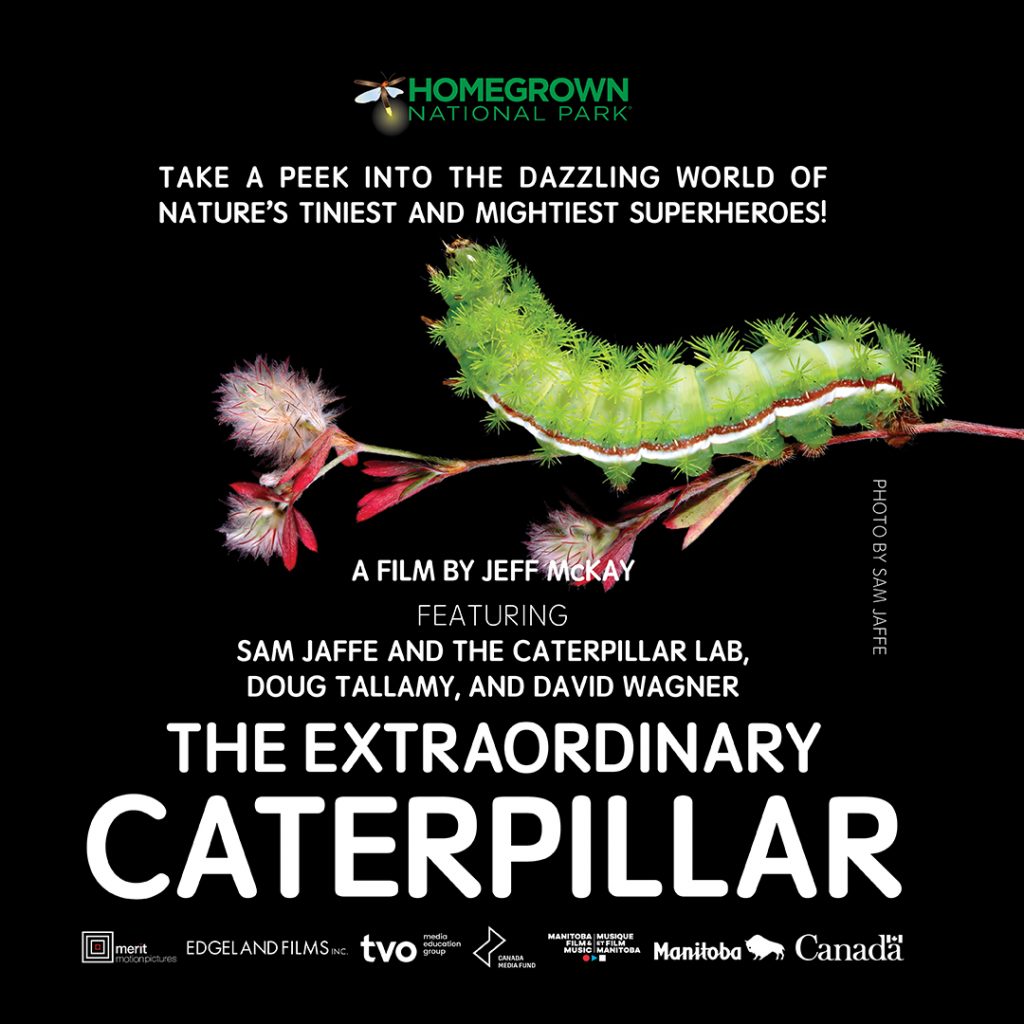
The Bird, Tree & Garden Club and Chautauqua Climate Change Initiative will host a screening of “The Extraordinary Caterpillar” followed by a Q-and-A with Leenders at 4:30 p.m. today in Chautauqua Cinema.
The 60-minute family-friendly documentary explores the vital role of caterpillars in the ecosystem, a role that Leenders said is almost “an invisible part of nature.”
“It’s always the sort of hyper focus on the charismatic megafauna that draws the general public’s attention, but for every single panda bear, polar bear or whale, there are millions and millions of little creepy crawlies that have an equally important — if not more important — role in the ecosystem,” Leenders said. “And I think just to be able to shine a spotlight on that will be really fascinating.”
He emphasized the critical role caterpillars play in an ecosystem. One entomologist and ecologist featured in the documentary, Doug Tallamy, conducted research showing it takes thousands of caterpillars to raise one clutch of chickadees.
“If it wasn’t for those caterpillars, for these other small insects, we wouldn’t have birds, we wouldn’t have lizards and frogs, we wouldn’t have a lot of other things that feed up into the food chain,” Leenders said.
Leenders was born and raised in the Netherlands. He used to be a tropical herpetologist, often working in former conflict zones. This led him to transition from animal ecology to conservation biology. He now serves as director of conservation at Everwild Land Trust.
“The fact that we have as much water as we do is amazing. And the fact that it’s as clean as it is is also amazing,” Leenders said of Chautauqua County. “To me, those are the top priorities. We need to protect that.”
According to Leenders, the documentary will make “incredibly powerful connections” to everyday life.
“In my mind, it’s not just about caterpillars,” he said. “It’s about all these millions of other creatures out there that rely on how we handle nature and what we do with our environment.”
However, Leenders also emphasized how fascinating the tiny creatures themselves are.
“If you’ve never spent time looking at the incredible diversity of caterpillars out there, you’re going to be blown away,” he said. “They’ll have everything from the gross-out factor to the wow factor.”
Leenders explained caterpillars could be threatened when people encourage monocultures in agriculture or replace native plants with ornamental ones that caterpillars have not coevolved with.
“It’s often an almost-invisible cascade of small decisions that have really put our insect populations on the brink of collapse, because we’ve really replaced just about everything that we grow at our houses with things that don’t belong here and have no nutritional or ecological value for insects,” Leenders said.
Leenders said younger people especially may feel hopeless about seeing deterioration around them when it feels like there is nothing they can do. However, he emphasized that — like caterpillars — many small impacts can add up to a large impact.
“We’ve gradually become as compromised as we are right now not because of one event, but because of millions of little events over the whole world,” Leenders said. “So I think that the same could work in reverse.”
According to Leenders, if half the audience walked away wanting to reduce fertilizer and pesticide use, it would be a win.
“I can guarantee you’ll take something away from this, and I think that if you even implemented a little bit of the takeaway messages from this documentary, we’re all better off for it,” he said. “We’re all making a step in the right direction to making our environment more resilient and more enjoyable.”