

NORA SMITH
Staff Writer
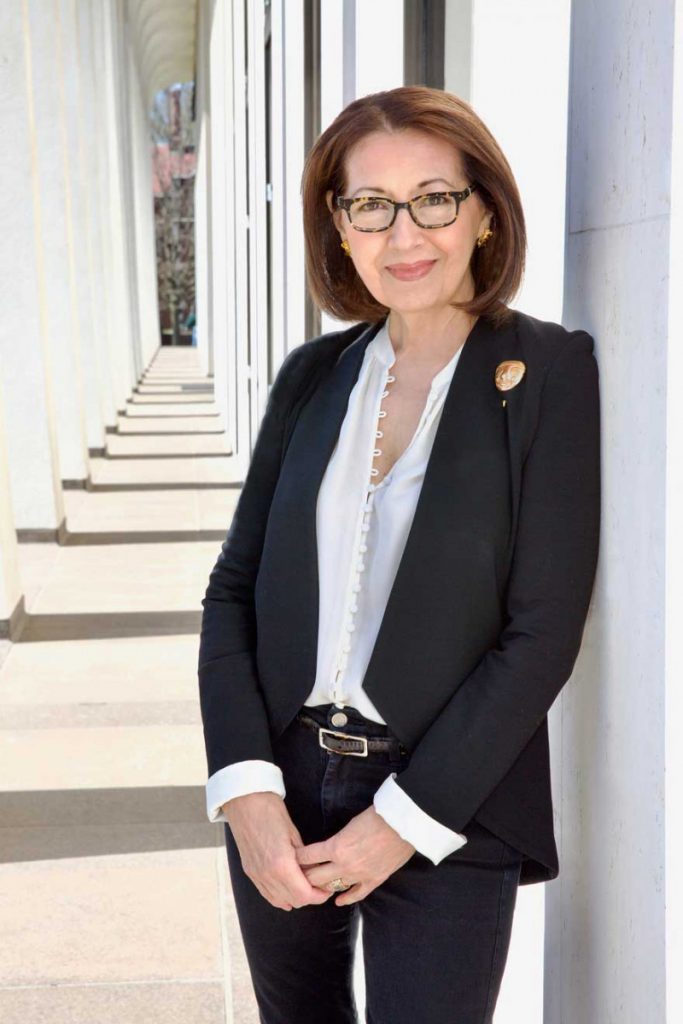
Marie Arana, born in Lima, Peru, was a child when she moved to the United States to live in New Jersey, and she soon found herself and her siblings to be the only Latinos in her community at the time. Now an author, editor, journalist, critic and inaugural literary director of the Library of Congress, her mission is simple: spotlight Latin Americans and their history, which has long gone underrecognized.
Although she had already written books on the subject of Latin America and Latin Americans like American Chica, a memoir of her own experiences as a Latina, and Bolivar: American Liberator, a biography about Simón Bolívar, Arana’s editor later posed a question that inspired her to widen this breadth of coverage.
“It was my editor who said, ‘How about the population here?’” Arana said. “‘How about you? How about the Latinos here?’ Then it expanded to that big universe, which of course, was where I was headed all along, although I didn’t really know it.”
Now, in Arana’s latest book LatinoLand: A Portrait of America’s Largest and Least Understood Minority, she braids together history, hundreds of interviews and her and her family’s own experiences to introduce readers to the nobleness of the Latin American population.
Arana said she feels that this story is missing from classrooms, history books and textbooks across the country; this is her attempt to fill that void.
“Here it is,” Arana said. “Here is this universe. Here is this part of America, and we are Americans. We are definitely — and have been from the very, very start — a part of the history of this country.” Latinos have been present in American history for centuries. This fact is largely unknown, according to Arana, due to incorrect counts of Latinos in America from long ago that have residual impacts even today.
According to Arana, when the civil rights laws first began, so many Mexicans were subsumed by westward expansion and told they could vote because they were white. This resulted in many Mexicans counting themselves as white and has long led to the misunderstanding of the actual size of the Latin American population.
“I think that lately, in the last couple of decades, there is Latino pride, and that pride has registered voters as Latinos,” Arana said. “They checked that box because they’re proud, but they haven’t always been proud. They’ve always been very defensive.”
Arana said the Latin Americans she interviewed included “menial workers, construction workers, gate cleaners, window washers, musicians, artists, movie stars, politicians, doctors” and small business owners. Arana explained that what she found most impressive while conducting these interviews was the shared pride in identifying as Latino across age, class and countries of origin.
“Even though you have less in common than you ever imagined with some of us, you still feel a strong bond,” Arana said. “You come from a country that is predominantly Catholic, you share the same experience of colonialism, you’ve all been separated on purpose by the Spanish colonial world to keep you apart … and now, we find ourselves together in this country, which is really kind of sweet.”
At 2 p.m. today in the Hall of Philosophy, Arana will present LatinoLand: A Portrait of America’s Largest and Least Understood Minority, the Chautauqua Literary and Scientific Circle Selection for Week Three’s theme, “The 2026 Election: What’s at Stake?”
In relation to the theme of “What’s at Stake,” Arana said that Latin Americans don’t adhere strictly to bipartisan loyalties. Unlike the rest of the population, who either vote Democratic or Republican, Latin Americans often swing based on three issues they find most important: economy, education and security, often in a variety of orders.
Because of this, Arana explained, the Republican or Democratic campaign can make or break whether Latinos will vote for them. For example, The LIBRE Initiative, a group that courted Hispanics for the Republican vote, did so by focusing on what the Latin American population valued the most — a strategy Democrats lacked.
Meanwhile, the biggest mistake on the Democrats’ side, according to Arana, was assuming that Latinos would vote Democratic, perhaps just because they had previously done so for Obama. This resulted in the majority of Latino votes going toward the Republican party in the previous elections.
“Right now, what I know — I think what the pollsters know — is that the Latinos are definitely going to swing away from the Republican party at this coming election,” Arana said. “There’s no doubt about it. The pain has been too strong.”
Through her book and forthcoming CLSC author presentation, Arana hopes that readers and audience members can gain a better understanding of the expansiveness of the Latin American population, not only in terms of its collective diversity but also of how Latinos have been present in American history far longer than many people may realize.


