
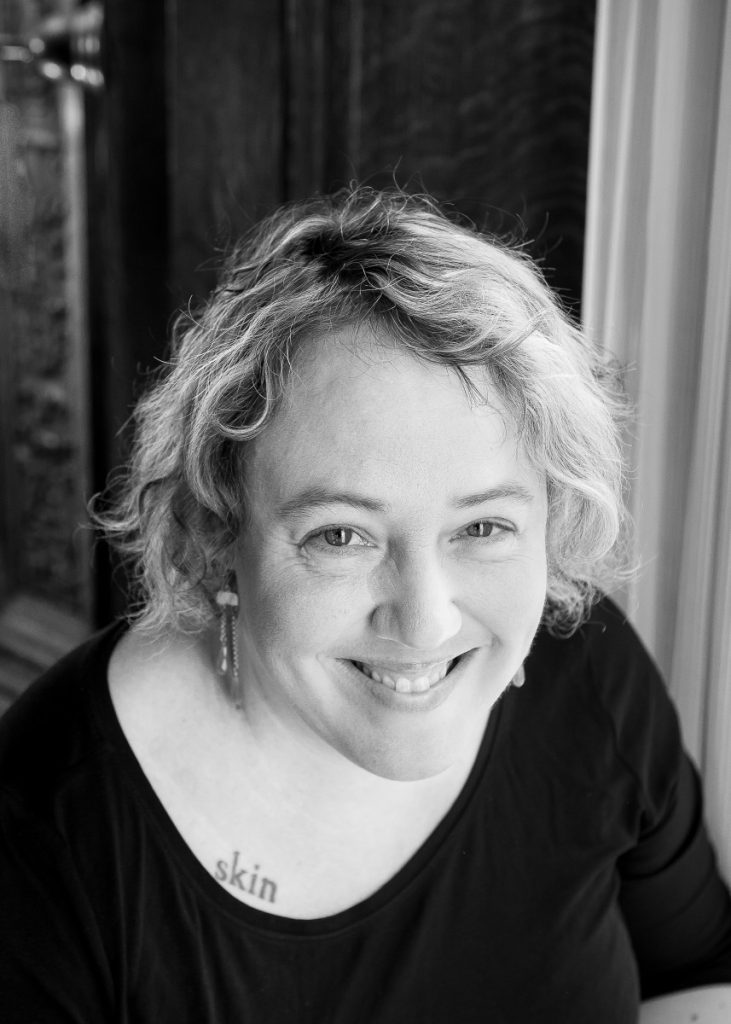
NORA SMITH
Staff Writer
At 2 p.m. today in the Hall of Philosophy, national bestselling author Kelly Link will give a presentation on Week Nine Chautauqua Literary and Scientific Selection and 2024 Chautauqua Prize Finalist White Cat, Black Dog, transporting Chautauquans into the magical world of fairy tales that might not be too far off from the world today.
Link said she hopes readers walk away from her collection of stories surprised and delighted, but also having recalled how the stories present in their lives as children made them feel. She said she hopes audiences will leave reminded of how stories function as a way for people to understand the world and people around them, as well as how stories can ask questions with complex answers.
Published in 2023, White Cat, Black Dog houses seven genre-bending short stories accompanied with illustrations by Shaun Tan. According to the book’s description, Link found “seeds of inspiration in the stories of the Brothers Grimm, seventeenth-century French lore and Scottish ballads … [and spun] classic fairy tales into utterly original stories of seekers — characters on the hunt for love, connection, revenge or their own sense of purpose.”
“There’s a long tradition of retelling fairy tales — since so many of the ones we know now came from the oral tradition, it makes a great deal of sense that re-tellers feel a kind of permission to rework them,” Link said. She added that the short story form gave her ample room to experiment.
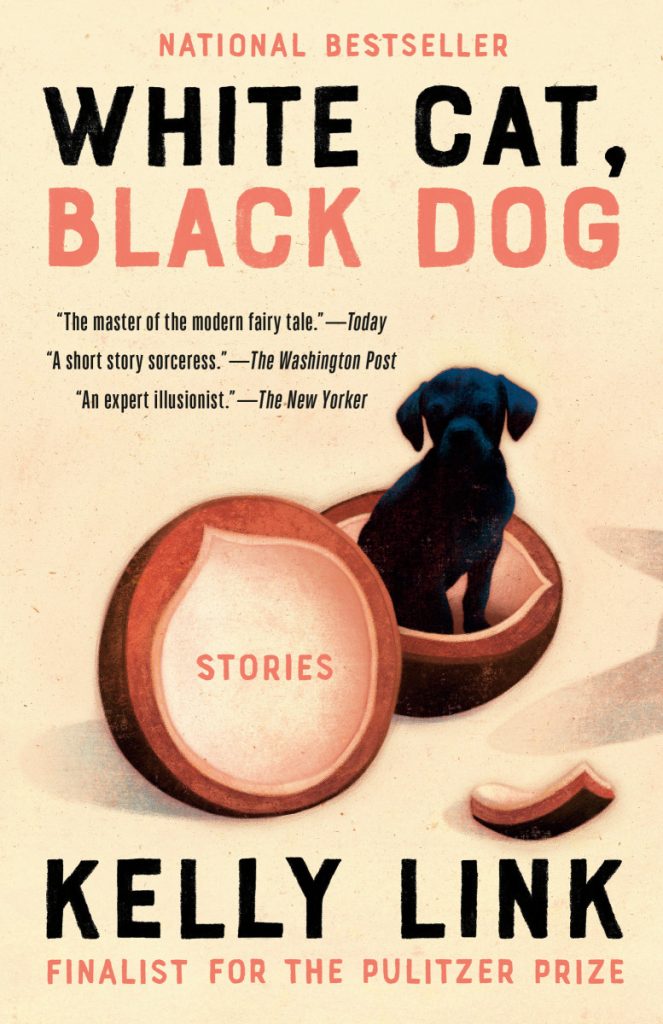
Link said when thinking of a collection of stories, she makes it a rule not to use the same technique for each story; White Cat, Black Dog was the first collection of stories that she formed around a singular theme of fairy tales, because she is able to change how she approaches each story.
“I like a collection much better if the stories in it don’t feel as if they all called each other the night before and then showed up to school wearing matching outfits,” Link said. She added that she typically begins writing based on a situation or character rather than a fairy tale. Once the story has some meat on its bones, Link said she starts to imagine which fairy tale might lend itself to the story.
“I’ve found that the use of fantasy can be a way of changing the lens through which a reader sees the world,” Link said. “It can mean that they pay much more close attention to everything I’m saying in a story.”
Today, Link said, “Fairy tale logic feels closer to the world we live in now than it might have felt a few decades ago,” and this sense of magical thinking is on the rise. For example, Link said all fairy tales are about power in one way or another and small acts of generosity.
“Right now we are all living in a world and a time in which the rich are richer than they’ve ever been, and where the conventional routes to power, or change, feel choked off or unaffordable or dangerously precarious,” Link said. “We live in a world where people who might as well be kings do as they please, and the people most likely to help us when we need it are often in as precarious a position as we are.”
During her presentation, Link said she plans to read the first story from White Cat, Black Dog, “The White Cat’s Divorce,” before speaking to the intersection of fairy tales and ghost stories.