NORA SMITH
Staff Writer
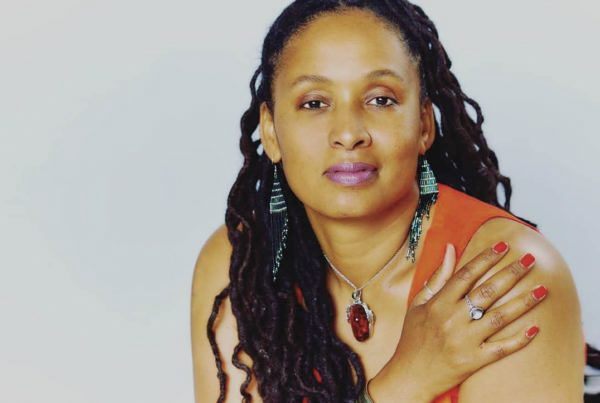
Like many authors, Angela May and Shonda Buchanan spent much of their childhoods with their noses in books. For May — founder of May Media and PR, former award-winning television news journalist and co-author with New York Times bestselling author Mary Alice Monroe on The Islanders — and award-winning poet, fiction, nonfiction writer and educator Buchanan, the books they read early on left lasting impressions.
When May was a child, the library was the most magical place she could imagine besides the outdoors. Often, May spent the nights of her childhood reading or playing outside until the streetlights came on.
“I was the kid who would come home with a stack as tall as I could carry out of the library, and then just love[d] that I could read as much of it or as little as I want[ed] and return it,” May said.
While reflecting on her childhood and the books that impacted her, May mentioned Where the Red Fern Grows, the first book that made her cry.
“I remember thinking, ‘What’s happening to me?’” May said. “But I think that was crossing that threshold unknowingly from the world of picture books and learning how to read, to discovering worlds and stories and lives that are different from your own, or experiences you wish you could have, and that later would become middle grade fiction.”
May always wanted to be a writer, but as she grew up, she didn’t see how it was possible to make a career out of writing novels. Instead, she pursued journalism, where she was still able to employ her love for language.
Yet following successful careers in journalism, PR and marketing, May found herself working behind the scenes as a media specialist with Monroe, helping to arrange book tours and other tasks. Eventually, after working with Monroe for several years, she was asked if she’d like to write a middle grade series with Monroe.
“I just started crying,” May said. “It was such a surprise, crying happy tears, because what she didn’t really know at that time was that was something as an adult that I was on my inside wishing, ‘I would love to write children’s books,’ and so she really spoke that dream out loud with that opportunity.”
Yet when Monroe said “children’s books,” May imagined picture books. It wasn’t until she ventured to the bookstore and library to see what was categorized as “middle grade” that she questioned her assumptions. She recalled seeing the titles of books she read growing up alongside other “new and wonderful” titles, and she realized it was a “space for independent reading” that she fully wanted to be part of.
For May, it’s been a joy and a dream come true ever since and an even better experience getting to do it alongside Monroe, who May now considers a longtime friend and mentor.
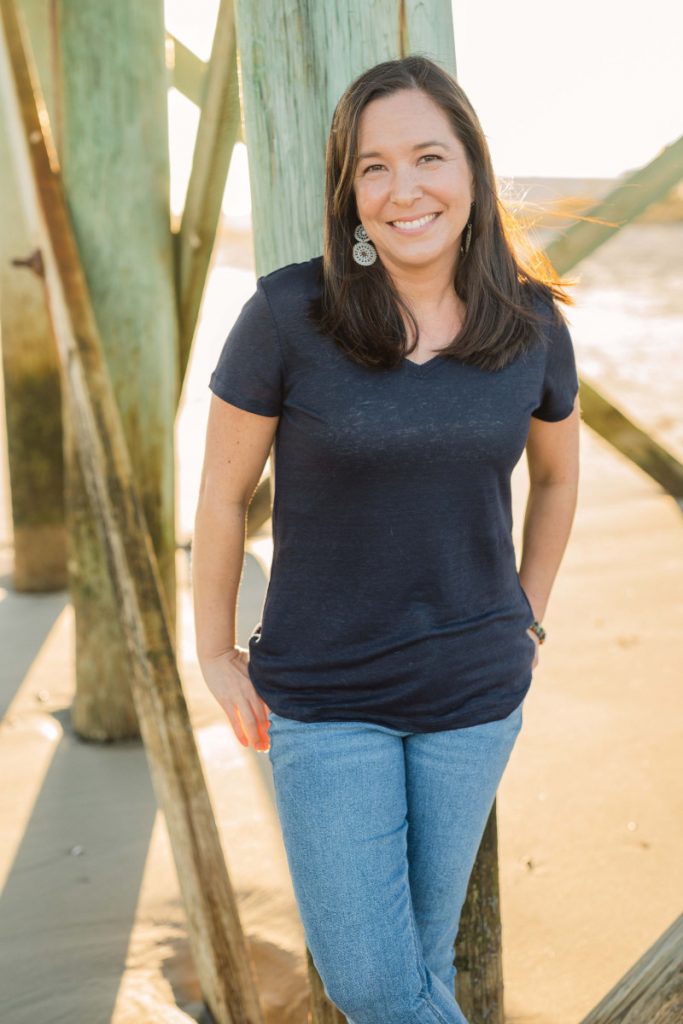
The Islanders, co-written by May and Monroe, is an award-winning series of three books, from which May will read during the free faculty reading at 3:30 p.m. Sunday in the Hall of Philosophy along with Buchanan. She said she was excited to read from the series, and through her reading, remind people of the magic of nature.
May said that it’s easy to remain focused on oneself, almost as if in a bubble, but it’s books that encourage us to experience empathy and understand those around us while expanding our perspectives on the world.
“I want to see this trajectory continue where we are bringing in more diverse voices and experiences from around the world,” May said.
May said she finds most of her writing set in the middle of wild spaces and the outdoors, where she often found herself as a child.
“That’s where our roots are, right?” May said. “That is where our imagination explodes, outdoors, without the boundaries of four walls and a room, right? Where we can be creative and be anything we want.”
May’s generative workshop, “Wild Words: Using Nature in Books for Kids,” will run from 8:30 to 10:30 a.m. Monday, Wednesday and Friday from July 20 to July 24 with a maximum of 15 participants and a fee of $145 per person in the Alumni Hall Poetry Room, where May will focus on the value of nature in writing.
Interim Michael I. Rudell Director of Literary Arts Stephine Hunt expressed her excitement for featuring a CLSC Young Readers Selection for the week with the intention of the faculty reading to be a crossover of CLSC Young Reader author events.
“It’s one of the ways we’re trying to kind of cross the pillars of Literary Arts, and by bringing in some of our young reader authors to the Writers’ Center, it gives us the opportunity to support that work in a space where perhaps we don’t have the full budget to support them,” Hunt said.
Hunt said she looks forward to putting May in conversation with Buchanan, who has written a memoir and multiple poetry collections that invoke her heritage, often through an Afro-Indigenous lens that ties back to the natural world.
“I’m thrilled that she’s going to be back with us,” Hunt said. “Her workshop went incredibly well with our audience last summer, and even though she’ll be teaching poetry instead of memoir this summer, I think she will still reach her audience in a really powerful and dynamic way.”
Buchanan first began reading when she was about 7 years old, and she even had her first poem published at the age of 9. She said that this relationship with poetry began with the books she read early on, one being I Am the Darker Brother, a collection of poems by African Americans published in 1968.
“Reading that book . . . it gave me the sense and ability to articulate things that I saw and I didn’t understand,” Buchanan said. “So, Richard Wright, one of his poems talks about lynching. I didn’t know what that was until I read the book and looked it up. Every time I read that poem, it became a different understanding for me.”
From there, as Buchanan grew up and turned 10, 11, 12 and 13, she would read the book twice a year; she said it gave her, as a child, a sense of how race evolved.
“The more that I found books that reflected and represented me, the more I would read,” Buchanan said. “I was devouring … I could read in the summertime, from 11, 12 and 13, I could read a book a day.”
Soon, books became a portal to a different world for Buchanan.
“I didn’t even understand the relationship that authors had to literature and language until I got older and I was published, and I realized people are doing this for a reason,” Buchanan said. “They’re fighting because it needs to be said or needs to be out in the world or someone needs to heal from this story, this narrative.”
Now, as an author, Buchanan’s poems often center around sociopolitical issues like social justice, womanhood and family issues, exploring the ways that language can help heal trauma, like her own.
When Buchanan began her role as a university professor teaching composition, fiction and poetry, she realized it was her time to inspire others, to teach them to read and write and show them the meaning of language that she had discovered.
During the free faculty reading in collaboration with May, Buchanan said she plans to read a few poems from Who’s Afraid of Black Indians?, some from her newest collection of poems, The Lost Songs of Nina Simone and possibly an excerpt from her memoir, Black Indian.
In The Lost Songs of Nina Simone, Buchanan writes about Simone’s childhood, her ancestors and what had to happen for Simone, a child prodigy, to be born. Some poems are for Simone’s great-grandfather and even daughter.
“I’m really trying to move in between the elements of what I’m normally writing about: heritage, womanhood, motherhood, society, music and how Nina Simone’s music in particular impacted and changed America,” Buchanan said.
Buchanan’s generative workshop, “Writing Ekphrastic Poems of Hope in Times of Fear,” will run from 8:30 to 10:30 a.m. Tuesday and Thursday from July 21 to July 23 in the Alumni Hall Poetry Room with a fee of $145 for each participant and a maximum of 15 participants, in addition to her presentation “Hidden Black Indian Figures and Heritage of America” at 4 p.m. Tuesday at the African American Heritage House.
“I love how Chautauqua, both Stephine and Kwame (Alexander), are really looking at the multifaceted artistic expression and diversity and inclusivity,” Buchanan said. “So, I’m really grateful to be a part of representing elements or aspects that hadn’t been at Chautauqua before.”