
ROCCO PRIOLETTI
Staff Writer
In 1929, American composer Harold Arlen and lyricist Ted Koehler wrote the song “Get Happy.” Sung in a peppy swing, the standard proclaims for all to throw away their cares, sins and troubles for the happiness that judgment day should provide. Despite the Black Thursday stock market crash that impaired the country, by 1930, the gospel-infused tune was within the top 10 on the pop charts.
“That’s very incongruous if you think about it,” pianist and scholar Lara Downes said. “[In] this country, where everybody is starving and suffering and desperate, that song is a popular song.”
For that very reason, Downes noted people “desperately needed some reassurance and some joy” throughout those troubling times. This perseverance-through-optimism is a facet that rings true throughout American songwriting — especially during the period soundtracked by “Get Happy.”
“The music is piping into every home in America. Your radio is your lifeline and your connection to the world. So, if that song is on the radio, you know that song. It’s almost like an anthem,” Downes said.
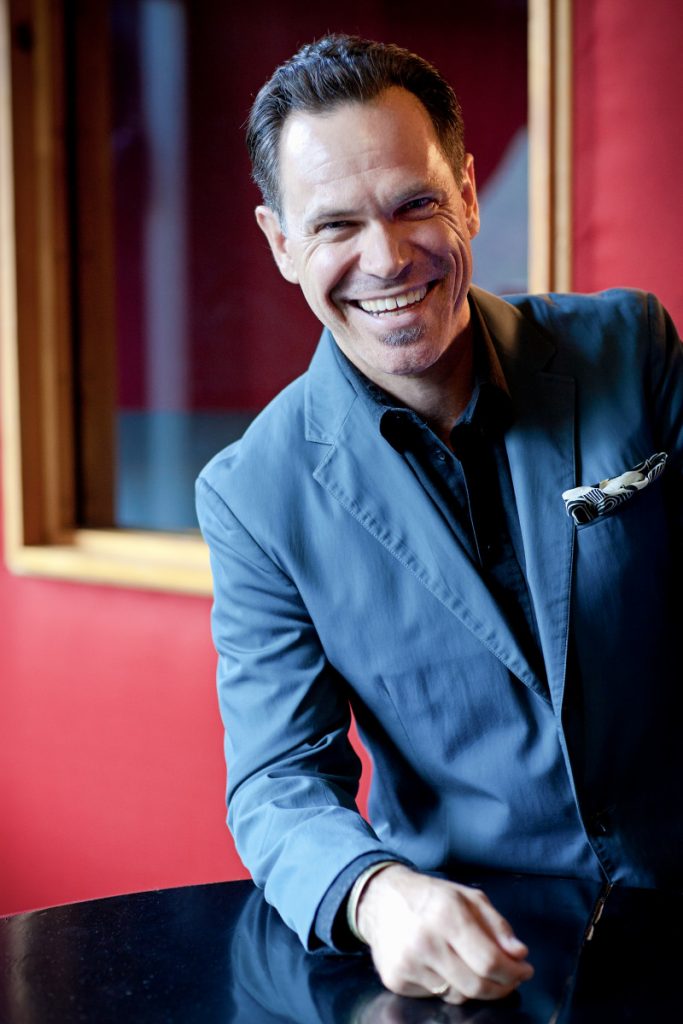
At 8 p.m. tonight in the Amphitheater, Downes and jazz vocalist Kurt Elling will retell America’s history of optimistic musicality throughout their performance titled “Get Happy.”
Recently, during a collective rough period, Downes said she and many of her colleagues experienced a “crisis of faith”; she questioned whether her role was as an entertainer or a documentarian — whether her work was a reflection or a distraction to the present moment. However, meditating upon songs like the 1929-composed “Get Happy” and African American spirituals, she realized those two roles are one in the same.
“You can offer solace and sustenance and hope and encourage[ment] and joy,” Downes said. “At the same time, we can bring everybody together in feeling this moment and feeling our way out of this moment.”
Though the 250th anniversary of the United States has passed, “Get Happy” acts as a “new chapter” and a “very necessary page turn” with the country’s commemoration in mind, she said.
“For me, the value of history is lessons both of success and of failure. What has been successful before, in times like this, to bring people together to move on to the next thing, to build better on a broken foundation? And I think that everything that I do, in my little way, is trying to point the way to that,” Downes said. “If what we need right now is empathy and encouragement and hope across the board, but also in music, then let’s do that.”
Downes felt “Get Happy” was especially pertinent to the contemporary moment. During the COVID-19 pandemic, she realized a connection between the country’s colloquially dubbed “unprecedented times” and the collective belief that these current experiences are completely new. Despite the fact that the country has experienced a pandemic previously, “we forget.”
“It’s very helpful to understand that pretty much anything that any human is ever going to experience during their lifetime has happened to some other human at some other time, maybe some other place,” Downes said. “… Not only do they overcome things, but they made things better. Because, when you’re thinking that something that is happening to you is unique and uniquely terrible, that can just feel overwhelming and hopeless and helpless. But, I think when we connect with the cycles of history, we do better and the music just shows up so clearly.”
Today, American songwriters have kept this longstanding optimism alive. Downes noted musician Jon Batiste as someone who continues to spread happiness through song.
“The act of making music is a joyful act,” Downes said. “Even a sad song is meant to offer comfort, right?”