Sophia Rooksberry
Staff Writer
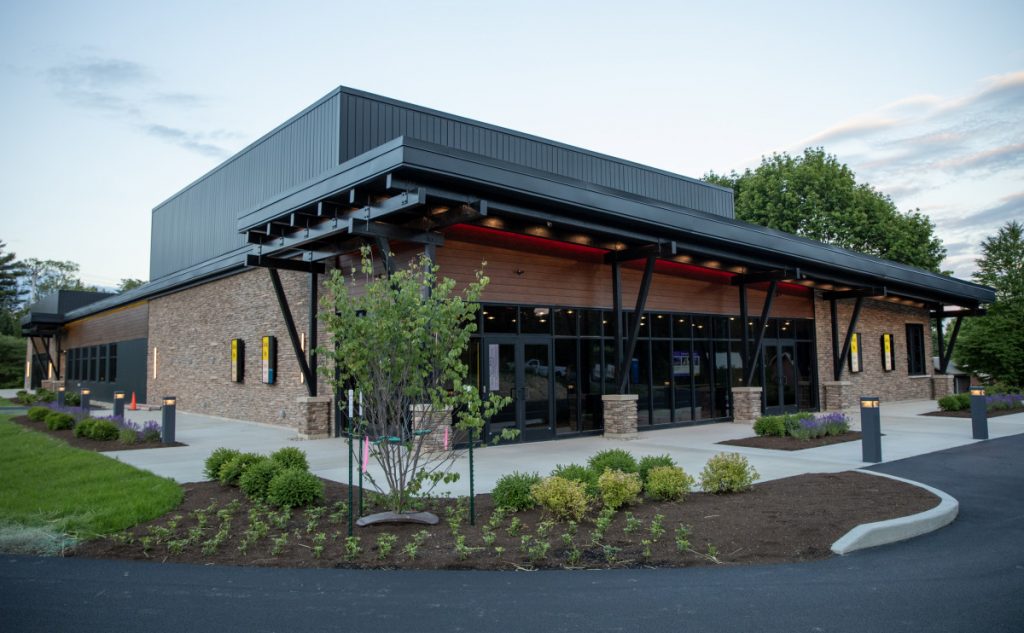
When the gates of Chautauqua Institution open for the 2026 Summer Season, thousands of Chautauquans will be immersed in a world of endless events and activities. In addition to classic programming, this summer comes with the opportunity to witness Chautauqua Theater Company’s inaugural season in its newly constructed home: Roe Green Theater Center.
RGTC is named for the arts-focused philanthropist whose foundation donated $4.5 million to construction costs. Countless other donors provided the remaining $6.5 million required to fund the project, and the building is filled with rooms that bear their names, like the Andrew L. & Gayle Shaw Camden Studio, Jill & Arnold Bellowe White Box, Janet & Av Posner Box Office and more.
“Chautauquans have been involved in every step of this,” Jade King Carroll, the producing artistic director of CTC, said. “… They’ve been talking about it, inspiring and continuing to support theater. So many people stepped up with gifts from $500 to $4.5 million, and it’s all appreciated and needed. They did it — we’re just here guiding.”
Although the plans for the building took shape a little over two years ago, seeds of the idea were planted decades before Green committed her gift in spring 2024.
“Back in 1988, there was a five year plan to get us out of Brawdy (Theater Studios),” Emily Glinick, the managing director of CTC, said. “… This has been decades in the making, and then there was renewed energy when Jade came in as an artistic leader.”
King Carroll’s appointment to her position in 2022 coincided with a dire need for a new rehearsal space, after the COVID-19 pandemic and deteriorating conditions left Brawdy an untenable space for CTC. After evacuating from Brawdy, CTC operations were scattered across the grounds and the company was left without a communal space to rehearse and create together.
“On a practical level, the Roe Green Theater Center is allowing us to level up and really give working spaces and working conditions befitting the extraordinary artists and students who inhabit it,” Laura Savia, vice president of performing and visual arts, said.
In addition to providing a functional space for CTC to operate, RGTC was designed to consolidate company members within a collective building.
“To bring everybody back under one roof is going to really support the company culture that we’ve always had here,” Glinick said. “It’s just going to feel so much more cohesive … like we are one unit. We’re not just the lighting team, and the sound team and the props team … we’re all going to be together.”
With the inclusion of a black box performance space, the building is going to become not only a space for CTC to practice and collaborate together, but also another setting for Chautauquans to gather and immerse themselves in theatrical art forms.
“(Roe) was the one who doubled down and said, ‘It’s not just a replacement of Brawdy,’” Glinick said. “‘It’s that, and I want you to have a second stage, a second venue.’ We really have her to thank, not just for the transformational gift, but the vision to get us a black box theater.”
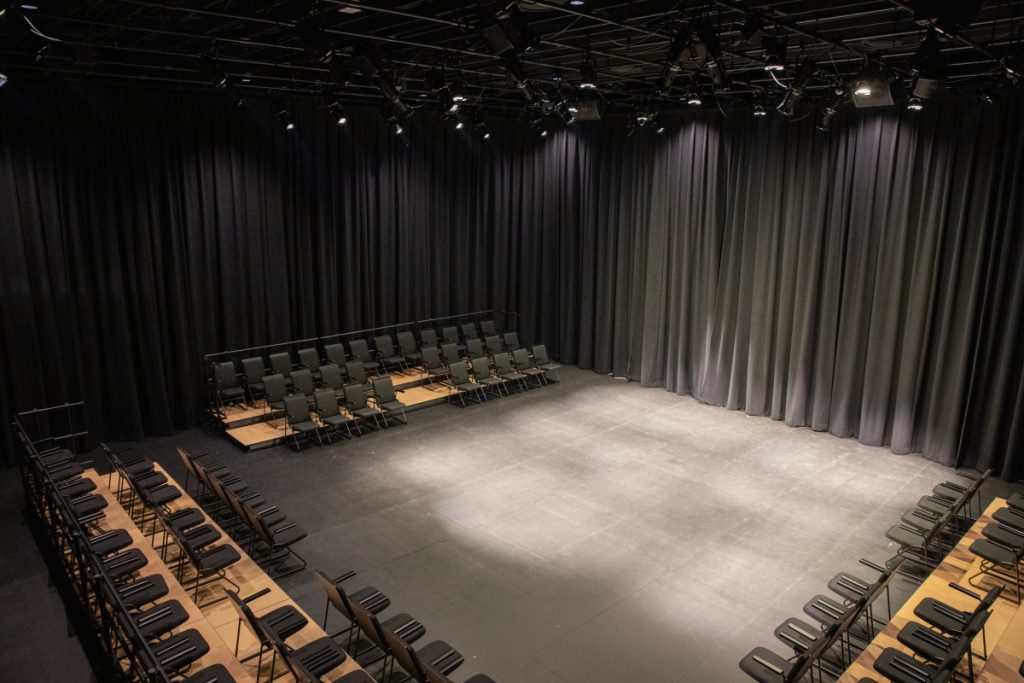
The black box contains 99 seats, offering a more intimate connection between audience members and performers compared to more spacious venues like the Amphitheater or Bratton Theater. The performance space is named after former Institution President Michael E. Hill, who was integral in the creation of RGTC through his dedication and energy of “activating wildly big dreams,” according to King Carroll.
One of these dreams has manifested in the new FutureNow New Play Labs, a program that will allow playwriting fellows to stage new work for a public audience.
“I walked into the black box and I started weeping just thinking of the generations of artists that are going to be creating in this space — actors, designers, directors, playwrights,” King Carroll said.
In addition to platforming new fellowship programs, the black box stage will allow more shows to premiere each season at Chautauqua. On Aug. 1, four productions will run at different venues across the grounds, which is more than CTC has previously managed in a single weekend. Glinick and King Carroll are both hopeful that this number can grow to six or seven as the company acclimates to the new space.
“We can arc toward truly filling the gap of new play festivals,” Glinick said. “We’ve seen so many sunset or shuttered completely.”
On top of burgeoning fellowship programs and increased seasonal productions, RGTC is bringing late-night entertainment to Chautauqua. Whether it’s a magician or stand-up comic, the fresh talent brought to the black box will provide a whole new dimension of entertainment to the summer.
“The bar will be open, and you can bring a drink inside (the black box),” Savia said. “It’s a cabaret model of theater, and there will be a mix of comedy and music, and it’ll just be a little bit more of an adult, slightly edgy, titillating and fun experience.”
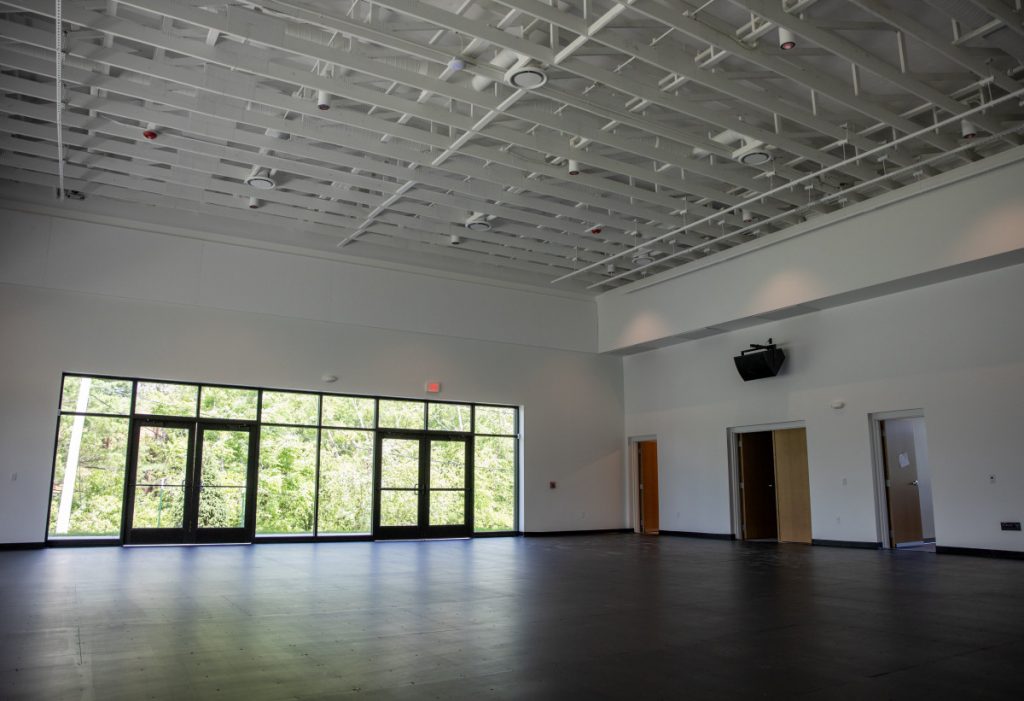
Beyond the black box serving as a space for performances, whether they be part of the late night programming or the FutureNow Playwriting Fellowship, RGTC also includes a white box rehearsal space, which Savia said was inspired by an idea from Jill and Arnold Bellowe, for whom the room is named.
“The donors supporting the Roe Green Theater Center … are people with deep relationships to this place and to Chautauqua Theater Company, so it felt very organic to be in conversation with them, and it felt like we were all on the same team realizing this dream,” Savia said.
Other members of this team included past artistic directors of CTC, who spent their tenures hoping for a space like this to find its way onto the grounds. Another invaluable team member was Ryan Boughton, who worked with his team alongside Savia, Glinick and King Carroll on the architectural considerations and program for the space.
“It was really a great project, because you don’t get to design a theater every day,” Boughton, the administrator for architecture and land use and capital projects manager for Chautauqua Institution, said. “(CTC) is a very neat program and a very cool organization … to work with. The fact that we’re starting off ideas right now that will end up on Broadway or somewhere else is really cool.”
In addition to aspects like the black box theater and white box rehearsal space, Boughton is particularly proud of how the building’s layout has already contributed to an accelerated workflow among CTC contributors.
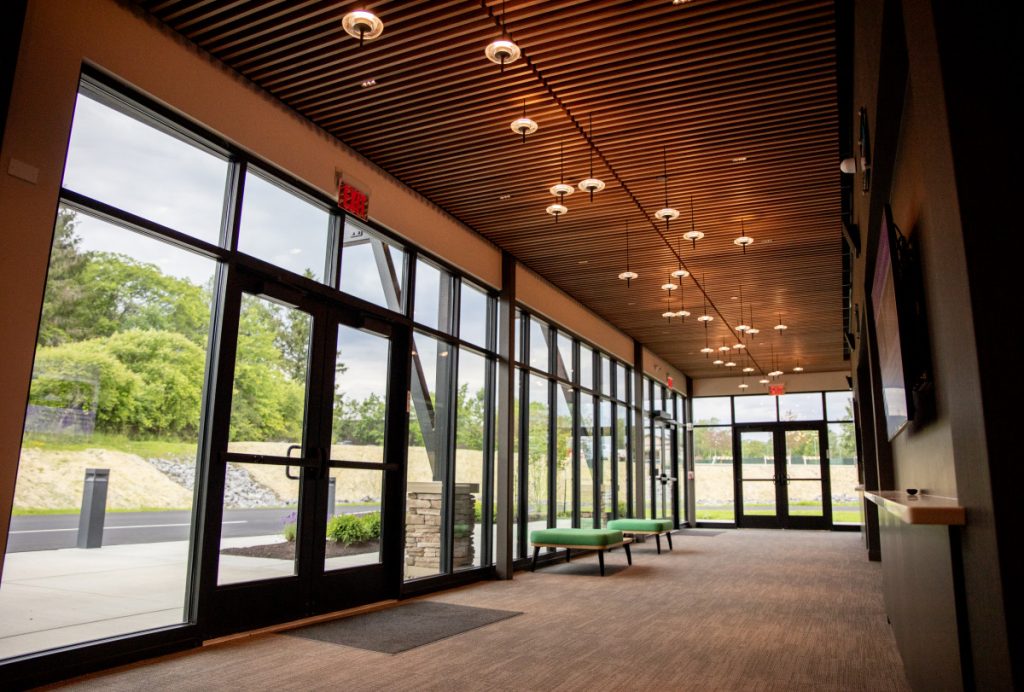
“There’s a huge connection hallway that goes literally between the main stage door for the black box and the main stage door for the rehearsal room that goes right past the shops on one side and right past the offices and green rooms on the other side,” Boughton said. “To have that huge transportation access way between all the main spaces, it’s like a spinal cord running through the building.”
The hivelike organization of the building caters to the efficiency of the company’s operations, and also encourages fast-tracked collaboration throughout the building.
“My hope is that this place is a microcosm of the best of what we find on the grounds, which is cross-pollination amongst different art forms,” Glinick said. “We’re going to have cross-pollination of different artists, and we’re going to have those deep conversations that the Chautauquans crave.”