
ARIANNA NEVAREZ
Staff Writer
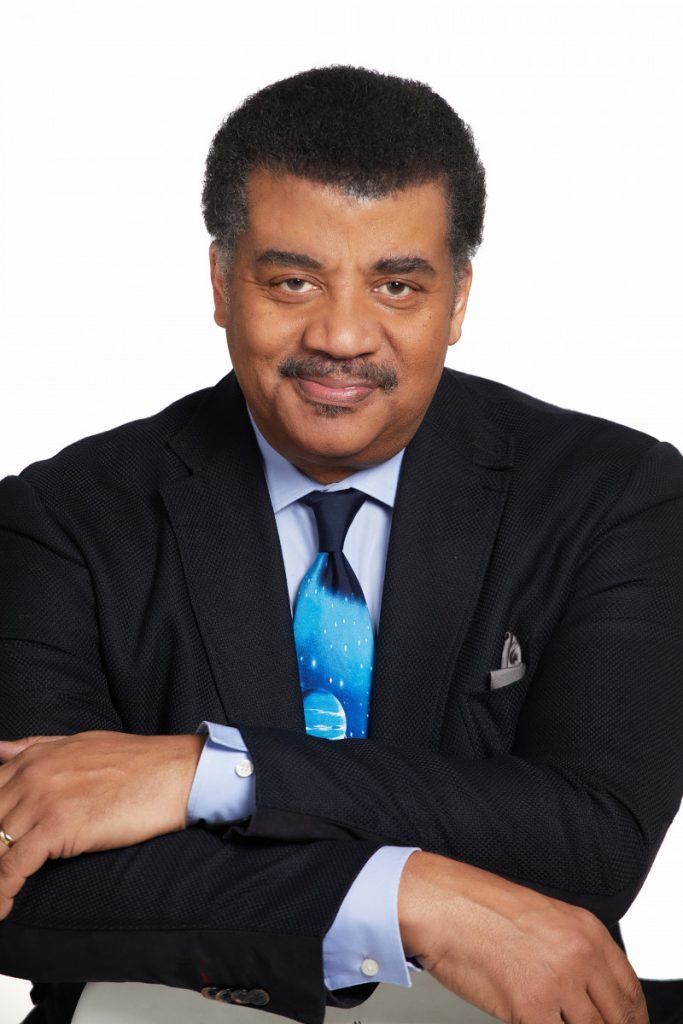
After creating two documentary films together, Neil deGrasse Tyson and Scott Hamilton Kennedy will join together for a conversation at 10:45 a.m. today in the Amphitheater, closing the Week Two theme “Breaking the News: Charting a New Media Landscape.”
“We are living through a time of difficulty when it comes to verifiable truth. Just a relationship with the truth is up for a wrestling match, and that’s not a good thing,” Kennedy said.
Scott Hamilton Kennedy is an Academy Award-nominated director, journalist and educator. He founded Black Valley Films, a documentary production company based in California. Besides his films with Tyson, Kennedy’s other work includes “OT: Our Town,” “Fame High” and the Oscar-nominated documentary “The Garden.”
Neil deGrasse Tyson is an astrophysicist, educator and New York Times bestselling author. He currently leads the Hayden Planetarium of the American Museum of Natural History, and he is also the host and cofounder of the Emmy-nominated podcast “StarTalk,” which combines science, humor and pop culture.
Kennedy and Tyson’s films engage in scientific journalism to show both sides of the story while showing growth in perspectives. “Food Evolution” is on the topic of genetically modified organisms, while “Shot in the Arm,” which will be shown at 4 p.m. today at the Chautauqua Cinema, looks at the anti-vaccine movement during the measles outbreak and moving into the COVID-19 pandemic. Both films focus on misinformation and how it can be spread, including thorough analysis of how individuals who spread misinformation can, in some cases, eventually assume positions of power to address the very issues in question.

“These two films represent showing the problem and the solution,” Kennedy said. “They clearly represent the problem of not understanding science, the problem of disinformation, the problem of being pulled away from integrity and cheating the system to sell something. And the solution, which is the scientific method, humility, moving towards experts and things like that. So it’s a great honor that these films can be used in that way.”
When asked about trust in journalism and science, Tyson said it cannot be earned back; instead, it has to be achieved. He said the first problem is that journalists are now researching their stories using specific algorithms that can be biased. The second main issue, he explained, is that journalists believe they should give all points
of view an equal shot, which isn’t something he believes should be done in scientific reporting.
“It is not your obligation to give that dissenting view 50% of your journalistic copy,” Tyson said. “Because what happens when you do that, the public is deceived by you into thinking that it’s an actively debated topic in science, when it’s basically settled, and we’re moving on. Because there will always be outliers.”
Tyson said science is going through its own dilemma of misinformation and platforming of the wrong people. He said it is difficult for people to know whom to trust because people with a pedigree will use their titles to create a sense of trust and then misinform their audiences.
“Mainstream science does not have platforms. It does not have a YouTube channel. There are no charismatic posts. There’s none of that,” Tyson said. “It’s only the outliers who do this, and so now you have people believing something that’s abject, false or they’re being misled by something, but they think that they’re following sound advice. And what happens is the people who think they’re following sound advice do so because what the person is telling them resonates with their preexisting social, cultural, religious proclivities.”