
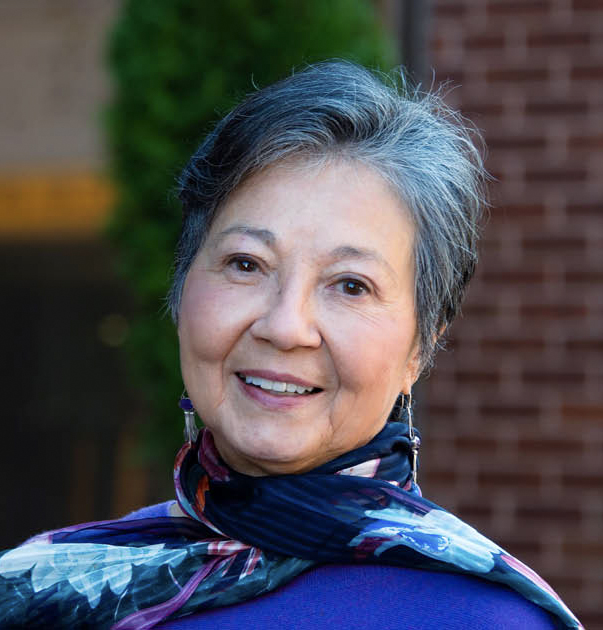
LILY RESLINK
Staff Writer
Rita Nakashima Brock says the constructs of empire have gone hand in hand with versions of religion that hold people back from peaceful cooperation and falling in love with nature.
“As long as you can keep people, in a sense, dissociated … from loving the earth and all of its riches and beauty, the easier it is for them to disregard how badly it’s been damaged,” she said.
At 2 p.m. today in the Hall of Philosophy, the scholar, editor and writer will give a lecture on religion’s role in the rise of empires and how this connects to the collapse of fossil fuel civilization.
Brock said she is inspired by Luke Kemp’s work, Goliath’s Curse, which she called “a really persuasive discussion about the collapse of all empires.” She said Kemp studied 300 empires over a 5,000-year range to identify common characteristics in their collapses.
With an emphasis on Christianity, she said she will also explore religion as a remedy.
“I want to look at how religion can be a resource to help us get through it all,” Brock said.
She said her prompt for the lecture was “to talk about human flourishing,” which connects to her interest in religion’s ability to help humans and recover a lost sense of love for the Earth.
“I think also the ways that religion has emerged out of empires makes some forms of religion orient — not to the world around us and how we interconnect — …, but they sort of orient you to power and authority and obeying authority,” Brock said. “I think that’s a major problem.”
Brock was born in Japan and raised in a U.S military family. “There wasn’t any pressure on me to become a Christian, but we did go to church all the time.” She recalled Sunday school lessons about heaven and hell.
“The idea that I would have to leave my Japanese family behind in some kind of afterlife didn’t make any sense to me.”
Though staying within the Christian tradition, she said she did not embrace it until college exposed her to a different version of Christianity. This version, which she said focuses on social justices like caring for disenfranchised individuals, made more sense to her. “There was a long trajectory of that within Judaism and Christianity.”
She said halfway through her undergraduate college career, education surrounding Earth Day helped introduce environmental considerations into her spiritual lens.
Brock’s disciplinary focus, informed by lived experience, has also taken many directions. Her earlier work focuses on the “moral injury” of veterans, on which she wrote the book Soul Repair: Recovering from Moral Injury After War.
She said that publishing a book on the topic led to her last contribution to Chautauqua’s Interfaith Lecture Series in the 2016 Summer Season. She said Robert Franklin, former director of Religion, invited her to plan a lecture series related to her book, in conjunction with the mainstage theme of “War and Its Warriors.”
Brock’s roles — co-founder of the Soul Repair Center at Brite Divinity School, former director of the Shay Moral Injury Center at Volunteers of America and former professor of humanities — relate to Brock’s views of how faith should manifest on Earth.
For today’s lecture, she said she wants to address the perception of Christianity as “otherworldly.”
She said the idea that “we’re just [on Earth] waiting to get to the right place if we made the right choices” is a Christian heresy. She said she thinks earlier versions of Christianity “regard paradises in this world.”