NORA SMITH
Staff Writer
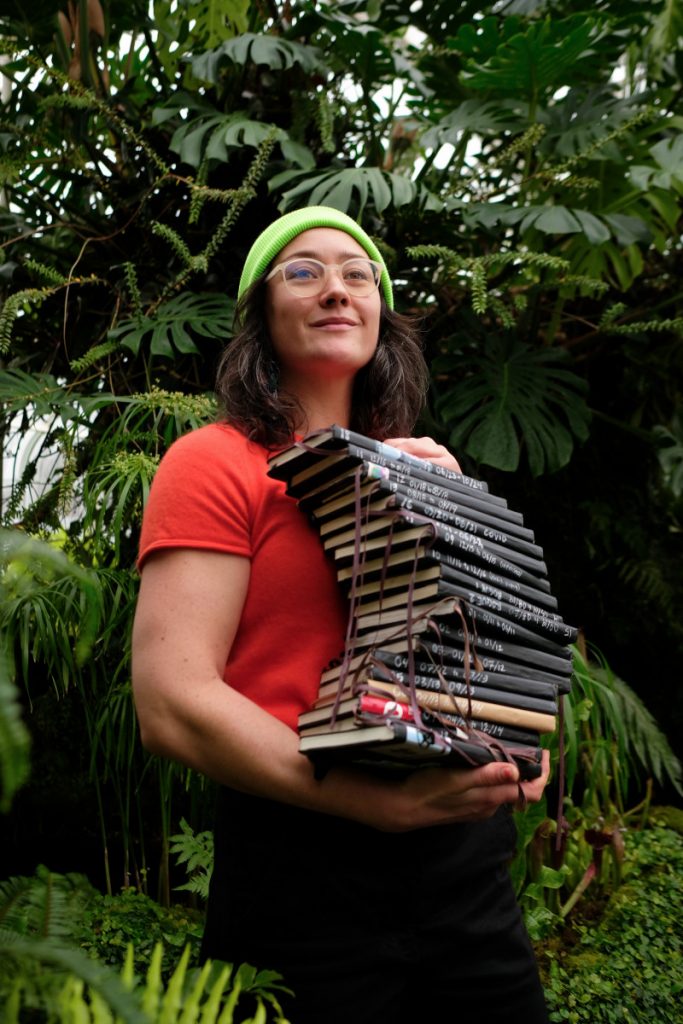
At an off-grid homestead in the wilderness, having just returned from a four-day mountaineering trip, Tessa Hulls, artist, writer and adventurer, said she’s excited for her next voyage: Chautauqua Institution.
“I like being thrown into the deep end of things,” Hulls said, regarding coming to Chautauqua for the first time to present her Pulitzer Prize-winning graphic memoir and Chautauqua Literary and Scientific Circle Week Five selection, Feeding Ghosts: A Graphic Memoir.
Having spent time in the wilderness surrounded by natural spaces, Hulls said she teaches her body to understand what a story is, and when she returns to her desk to write and attempt to translate a scene into text, she often thinks back to moments of recognition in her body, such as how it feels to climb a mountain or speed down a hill on a mountain bike.
“What I can offer is a much more feral perspective than almost any writer that’s going to come through [Chautauqua],” Hulls said. “… For me, writing is the necessary byproduct of the way that I want to live, but it’s not what I lead with.”
Hulls said she will speak about literal landscapes throughout her presentation at 2 p.m. today in the Hall of Philosophy.
“I’m going to be talking about braided rivers,” Hulls said. “I’m going to be talking about glacial erratics, alluvial fans, and I’m really interested in forcing people to ask themselves, ‘Where have I become dead to my own wildness?’ . . . that’s what I actually want to talk about.”
As time passes and Hulls grows more distant from when she was working on Feeding Ghosts, she said she has realized that she didn’t necessarily intend to make a book, but rather, a watershed.
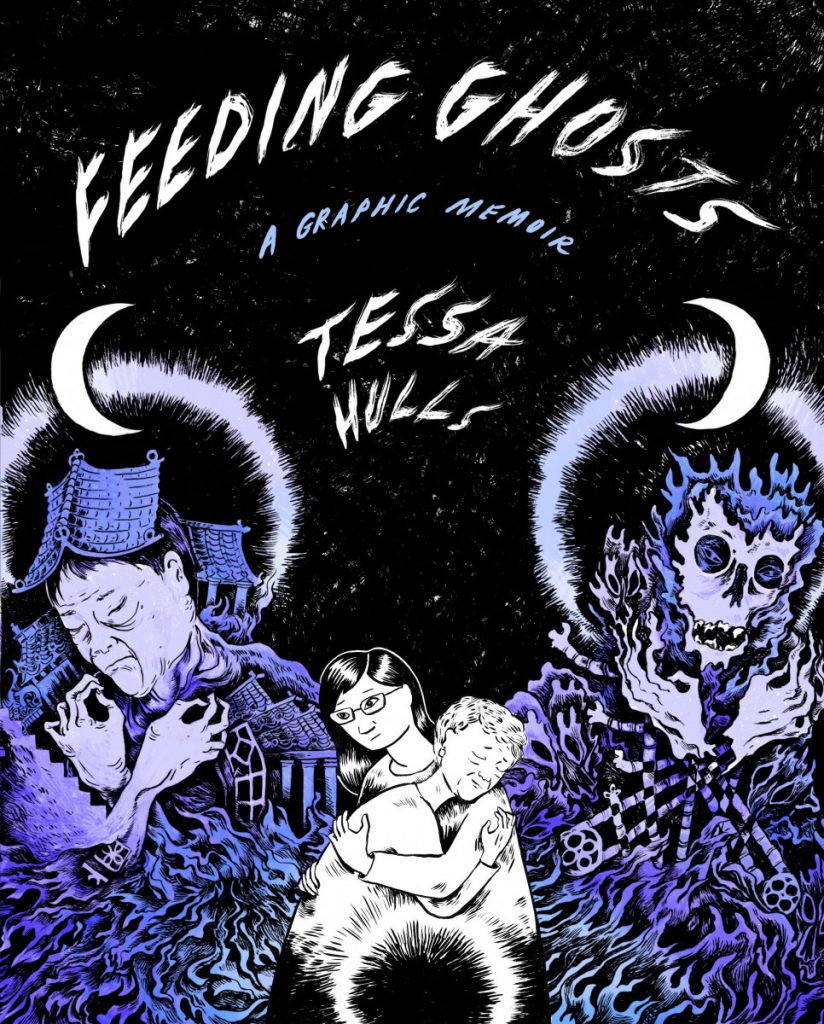
“I’m really interested in braided rivers, in a literal sense of having stared at them for so long in Alaska, and I knew that that’s what I wanted to do with my family’s story,” Hulls said. “I wanted to show all the complex channels of this river, and I couldn’t do it just in prose.”
“Juggling the whole river” meant using words and images to tell the complex story of her family, challenging readers to confront things Hulls had to work through while writing the book.
“Instead of choosing a narrative, I was able to lay out contradictory paths by having the words and images be [intentional] and kind of kick the can and say, ‘Okay reader, it’s up to you. What do you think is true? Because I’m not going to feed you easy answers,’” Hulls said.
Relying on both images and text to tell the story, Hulls had to be precise when choosing words because, rather than straight prose, which can go on for hundreds of words, there’s only so much space for words in a comic.
“That, I think, is the beauty of comics,” Hulls said. “It’s more like poetry than any other form, where you have to find places, where you can pick your language so meticulously that it punches above its weight.”
When drawing images, expressions, experiences and scenes to get the story across, Hulls said she was able to experience the story through her own body.
“Drawing forces you to not just revisit, but relive memory because you end up assuming all of the poses and expressions that you draw, and there’s a way in which it really felt like it made my body a conduit for the story,” she explained.
Spending years enveloped in her grandmother and mother’s stories as she wrote and illustrated allowed Hulls to walk in their shoes.
“Walking in their shoes really left me with this profound physical appreciation for how much they had given me,” Hulls said. “That was the main feeling I had by the end of carrying this story home, is absolute gratitude in the sense of what a privilege to be able to finish this thing that they gave me the life to start.”