Archive | Interfaith Lecture Recaps RSS feed for this section
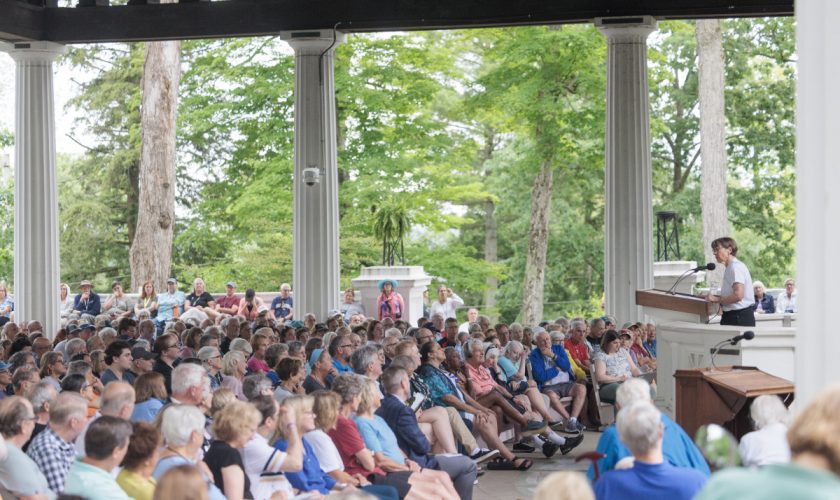
James Robenhalt and John Dean speak on “The Ethics of Clarity” through a behind-the-scenes examination of the Watergate scandal, in which Dean was involved, at Thursday’s Interfaith Lecture in the Hall of Philosophy. Photo by Lauren Rock.

Dean, Robenalt discuss ethical clarity through Watergate case-study

“Joan told us that we had to say something religious during this talk, (since we’re speaking on) tapes uncovering wrongdoing and all that: Luke 12:3 ‘Therefore whatever you have said in the dark side shall be heard in the light, and what you whispered in private rooms shall be proclaimed on the housetops,” said James Robenalt, a partner at Thompson Hine LLP, during the 2 p.m. Interfaith Lecture.

On Thursday, in a continuation of the Week Nine Department of Religion theme, “The Ethics of Presidential Power,” Robenalt spoke with John W. Dean, former counsel to President Richard Nixon during the Watergate scandal, to present a lecture titled “The Ethics of Clarity: Waking Up From Wrongdoing.”

Read more
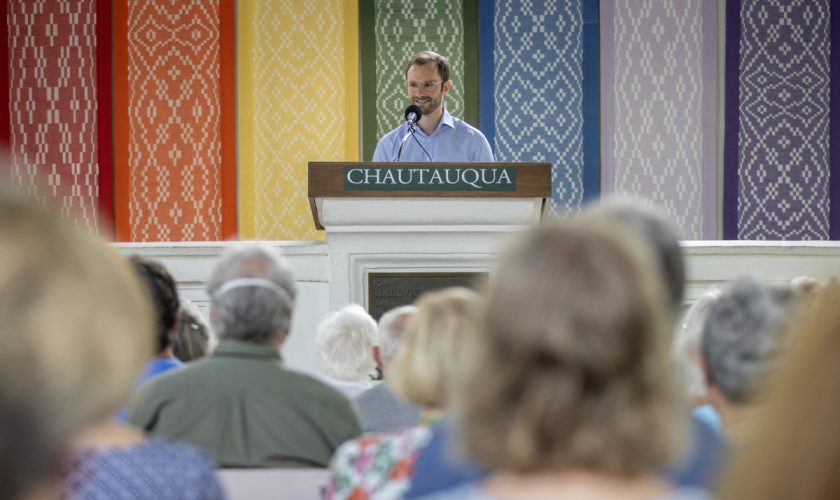
John Q. Barrett, professor of history and law at St. John’s University, discusses presidential judicial appointments at Wednesday’s Interfaith lecture in the Hall of Philosophy. Photo by Lauren Rock.

Barrett traces presidential ethics and values through judicial appointments

On Wednesday, John Q. Barrett, a constitutional law and history professor at St. John’s University, continued the Department of Religion’s Week Nine Interfaith Lecture theme, “The Ethics of Presidential Power,” with a lecture titled “Civil Rights and Judicial Appointments: Presidents Kennedy and Johnson and Their Successors.”

In his 2 p.m. lecture, Barrett touched on six main points: the federal court and judicial appointment process; criteria for presidential appointments; judicial appointments during the modern civil rights era — starting with Calvin Coolidge; a case study of Judge A. Leon Higginbotham; an examination of presidential appointments following Kennedy and Johnson; and a discussion of the court’s future progress.

Read more
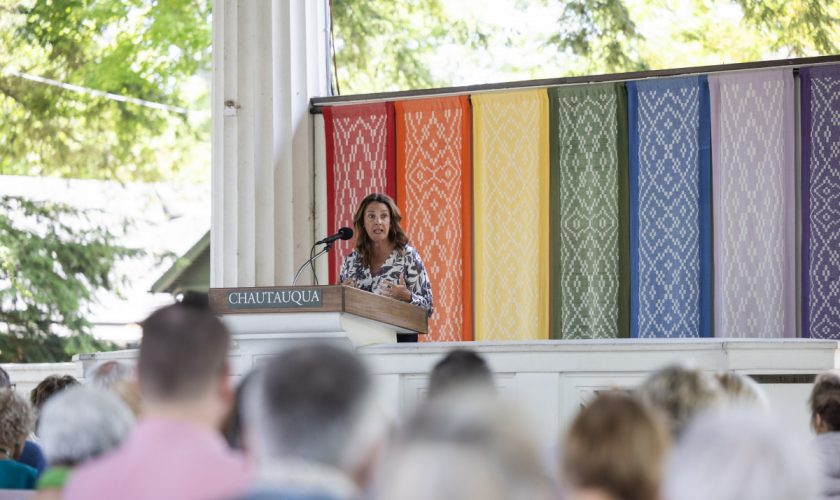
Rabbi Arthur Waskow speaks with the Rev. Joan Brown Campbell, director of Chautauqua’s Department of Religion, about social issues Friday afternoon in the Hall of Philosophy. Waskow insists that every generation has to struggle for freedom from oppressors. Photo by Eric Shea.

Waskow dialogues on radically renewing, transforming the world

Rabbi Arthur Waskow is a radical, a pioneer; he has been one for a long time and has no intention of giving up anytime soon.

On Friday, Waskow sat down for an intimate conversation with the Rev. Joan Brown Campbell in the Hall of Philosophy for the final lecture on the Week Eight theme, “Radicalism: Burden or Blessing?”

In a discussion titled “Radicals, Radishes and the Spiritual Root of Social Action,” the two touched on the fight of the radical, Waskow’s work with the Jewish renewal movement, the inspiration behind his interfaith action and the new radical movement both Waskow and Campbell belong to: the U.S. Council of Elders.

Read more
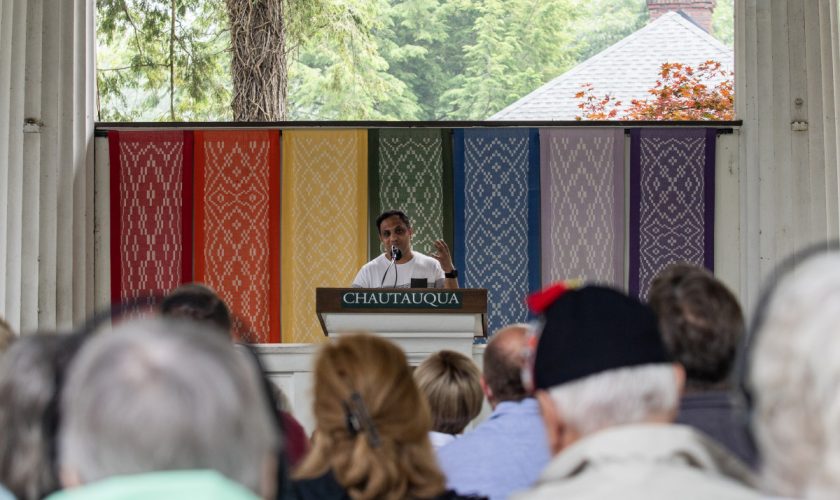
John Bryson Chane, retired Episcopal bishop of Washington, lectures in the Hall of Philosophy Wednesday afternoon. Chane questioned if Jesus should be considered a radical figure, and if then, by association, the Christian church a radical church. Photo by Eric Shea.

Chane discusses a radical Jesus, radicalism in Christianity

“Was Jesus a radical?” Bishop John Bryson Chane asked the Hall of Philosophy audience during the 2 p.m. Interfaith Lecture.

On Wednesday, Chane continued Week Eight’s theme of “Radicalism: Burden or Blessing?” with a lecture titled “Radicalism… A Passion for The Possible in the 21st Century.” The title comes from the title of a book written by William Sloane Coffin, a Christian theologian, Chane said. In his lecture, Chane discussed the meaning of the word “radical,” whether Jesus was a radical, and whether the Christian church of today is or is not a radical church.

Chane was consecrated the eighth Bishop of Washington and was CEO of the Protestant Episcopal Cathedral Foundation. He is also an active participant and proponent of interfaith dialogue and a graduate of Yale Divinity School. Before attending Yale, Chane was a student at Boston University where he was a member of the Students for a Democratic Society.

Read more
Eboo Patel, founder of the Interfaith Youth Core, speaks Tuesday afternoon in the Hall of Philosophy. Photo by Adam Birkan.

Patel: Appreciation of pluralism is both American, Islamic sentiment

Eboo Patel, founder of the Interfaith Youth Core, released his newest book, Sacred Ground: Pluralism, Prejudice and the Promise of America, Tuesday at the Chautauqua Institution. During the 2 p.m. Interfaith Lecture, in the Hall of Philosophy, Patel gave a lecture of the same name.

Patel touched on the Week Eight theme, “Radicalism: Burden or Blessing?” in his speech, which discussed the inspiration for his book, the history of pluralism in both the United States and Islam and the nature of America’s sacred ground.

Every time he is in the middle of writing a book, Patel said, he turns to his wife and asks why she let him do it again. For every author who elects to write another book, there is a spark of inspiration that ignites them at the start of the process, a spark which they hope burns through to the end, Patel said. For him, that spark came in the summer of 2010, while the U.S. was inflamed in the controversial battle over the “ground zero mosque.”

Read more
Rabbi David Gordis, president emeritus of Hebrew College and currently a professor at the University of Albany, speaks on radicalism within religion at Monday afternoon’s Interfaith Lecture in the Hall of Philosophy. Photo by Eric Shea.

Gordis explores the duality of radicalism within religion

Radicalism is a loaded term. It can be explored in many contexts: social, political, religious. From the religious lens, there are two main forms of radicalism: radicalism and religion, and religious radicalism, Rabbi David M. Gordis said Monday in the Hall of Philosophy.

Gordis opened Week Eight’s Interfaith Lecture theme of “Radicalism: Burden or Blessing?” with a lecture discussing the duality of religious social functions, the two religiously focused forms of radicalism, and two radicals of the Jewish faith, in a lecture titled “Conserve or Transform: Religion’s Dilemma.”

Gordis is the president emeritus of Hebrew College and serves as a professor at the University of Albany. He began with discussing the two main functions of religion. Religion provides a sanctuary where people can find peace, prayer, worship and meditation. It is a stable institution that people can turn to when the world seems chaotic or insecure.

Read more
Environmentalist David Orr speaks Friday afternoon in the Hall of Philosophy. Photo by Michelle Kanaar.

Orr discusses acting with honor and integrity to combat climate change

“Is it possible for one generation to undermine the possibilities and scope of honor and integrity for its children and theirs?” asked David Orr during the 2 p.m. Interfaith Lecture Friday in the Hall of Philosophy.

“The answer is sure it is.”

In the final Week Seven Department of Religion lecture on the theme “Creating Cultures of Honor and Integrity,” Orr discussed culture, honor and integrity from the lens of an environmentalist in a lecture titled “Creating Cultures of Honor and Integrity in a Hotter Time.”

Read more
Syeed
Photo by Michelle Kanaar.

Syeed discusses the benefits of democracy for American Muslims

On Thursday, Sayyid M. Syeed continued the Week Seven Interfaith Lecture theme, “Creating Cultures of Honor and Integrity,” as he discussed the history, growth and optimism of an expanding Islamic community in North America. His lecture was titled “Islamic Experience in a Pluralist Democracy: Building a New Muslim Identity and Institutions in America.”

“What I am going to talk about is a new opportunity, a new millennium for humanity where those two religions are going to create a new reality of cooperation and understanding that is here in this country,” Syeed said.

That community is possible in the United States, because 250 years ago, the Founding Fathers committed to freedom of religion. Though it has taken some time for their goal to come to fruition, the society has gradually realized the interfaith vision the Founding Fathers had for the U.S., Syeed said.

Read more