
LILY RESLINK
Staff writer
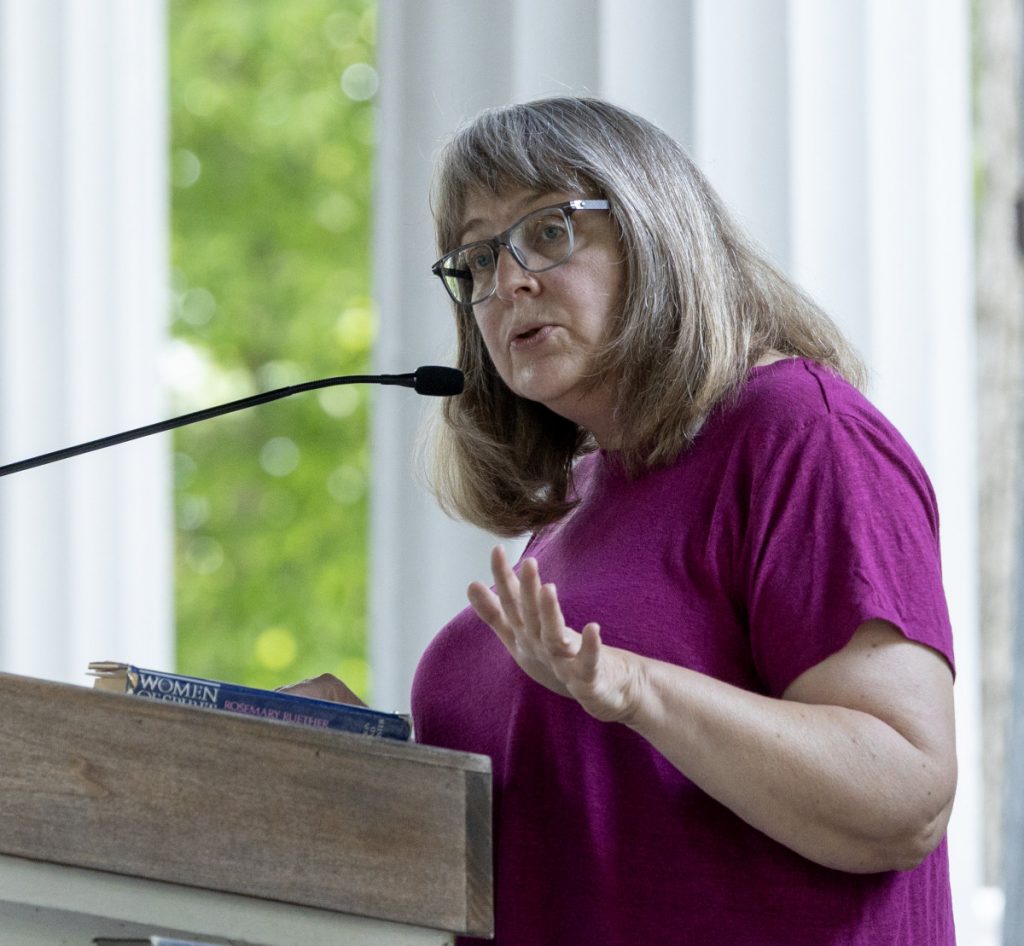
In the first Interfaith Lecture Series event of the 2026 Summer Season, Diana Butler Bass delved into biblical texts to explore discrepancies in the Gnostic gospels and the Nestle-Asland Greek New Testament records of Mary Magdalene, whom Bass described as simultaneously among the most iconic and most elusive figures.
Bass is an award-winning author and a religious scholar with a PhD in the history of American Christianity. In her lecture, however, she focused on texts from the earliest years of Christianity’s history.
“… I want to go all the way back to the place where there’s less evidence, to the early years of the history of Christianity — the ones for which we only have scattered, incomplete and often corrupted texts,” Bass said.
Bass began her lecture by consulting her first-edition, yellow-edged 1979 copy of Women of Spirit, the book that inspired her to talk about women in biblical records in conjunction with Week One’s theme of the same title. Admitting she is not a textual scholar, Bass was roped into a history-altering discussion by scrolling on Twitter in 2023 — something she said aligned much more with her writer duties.
In her scroll, Bass encountered an article published about the potential suppression of the extent of Mary Magdalene’s influence, which ties to her portrayal in the Nestle-Asland Greek New Testament. Through the powers of the internet, Bass connected with the article’s author Elizabeth Schrader, an enthusiastic contemporary scholar in religion who was still in her masters program at the time.
Published to Harvard Theological Review, Schrader stacked this roughly 30-page article with evidence that argued the biblical character of lesser influence recorded as Martha was actually also Mary Magdalene all along. Schrader’s thesis argued that Lazarus had just one sister: Mary Magdalene.
Should this argument be true, Bass explained the ramifications of a woman’s power diluted into two characters due to a faulty transcription, especially considering the evidence of intentional erasure.
Bass noted Schrader’s unconventional path, as her earlier aspirations were musically-focused and completely unrelated to religion. Schrader’s interest pipelined from a song she was writing about Mary Magdalene and rabbit holed into checking out Mary Magdalene for Dummies at the library and deciding to study Greek for a better understanding of the texts that document her.
Schrader followed a journey of a lifetime to land her evidence on the review of Nestle-Aland’s committee, which after a long wait, was ultimately recognized as a biblical alternative with scholarly credibility.
This literature evokes a series of questions, which Bass posed: “In the story of Jesus that has been accepted by the church since the 4th century, where is she?”
The lecture illuminated the significance of religious scribes and their work, with every mark having the power to shape — or misshape — an accurate view of history.
“Everything flows from the beginning,” Bass said; this has impacted the understanding of women’s roles, making it a continued journey to seek out truth in the telling of biblical events.
“Even when we have been silenced or secreted away, women belonged. We’ve just been asking all along if the church knows that we do,” Bass said.