Sophia Rooksberry
Staff Writer
In the late 1800s, Alexander Graham Bell patented a communication device that became one of society’s most pervasive technologies: the telephone. A century and a half later, playwright Jenny Stafford is bringing the story of the invention to Bratton Theater.
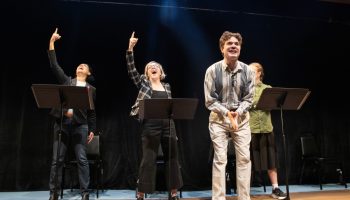
At 4 p.m. today, Chautauqua Theater Company will present the first reading of Ahoy-Hoy in Bratton, with two more offerings on Friday and Saturday afternoon. In her new work, Stafford aims to look beyond the popular facts of Bell’s invention and into the nuances of the story.
“I was watching a documentary about [Bell], and I sort of knew from my research that he had been plagued with lawsuits about his patent for the telephone, but this documentary was the first one that was like, ‘On the exact same day that he filed the patent, another guy [Elisha Gray] filed the patent three hours later,’” Stafford said. “The documentary moved on, and I was like, ‘Wait, what?’”
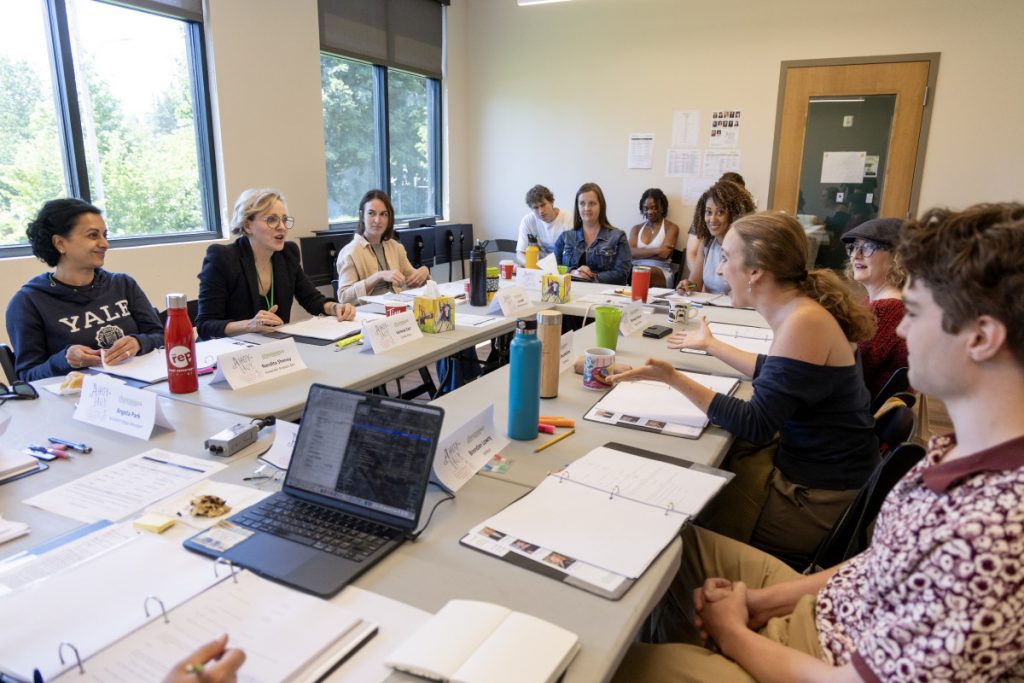
As Stafford continued diving into the bizarre circumstances of Bell’s creation, she identified the comical factors and feuds that defined the genre of the summer’s first New Play Workshop. As opposed to staging fully realized productions, these workshops are designed for playwrights to develop their script amid public presentations.
“I have the opportunity between the readings to make changes, which is unusual,” Stafford said. “Not a lot of places do that. Once you get to the public presentation, that is what it is, but seeing it in front of an audience is when you actually learn things about the piece.”
By nature, a workshop emphasizes the script, and the actors often sacrifice dynamic movement to focus on the language of the play. However, Nandita Shenoy, the actor playing Bell, said she and her fellow performers have not been able to help themselves.
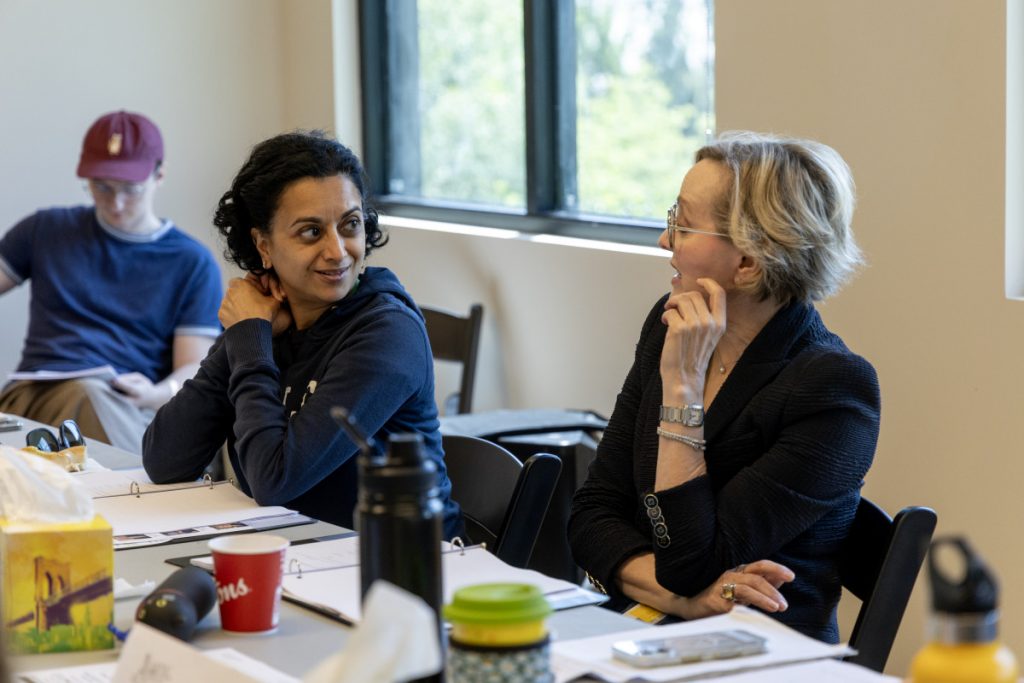
“It’s really fast-paced, and we’ve been discovering that the play is very physical even though it’s going to be a reading and it’s not going to be staged,” Shenoy said. “I think there are some really physical aspects of it, and both Geneva [Carr], who plays Elisha [Gray], and I … felt like, ‘Oh, we need to get up on our feet.’ It’s very energetic.”
This energy will bring multiple dimensions to the workshop: a lively kineticism from the performers, as well as a prioritization of the script. By allowing Stafford to edit her work based on the reactions of the crowd, the workshop structure also grants the audience a chance to influence the play’s development.
“I hope lots of people will come and support it, because their feedback, just from where the laughs land or where people get quiet, all of those things really make a difference,” Shenoy said. “It’s an opportunity to actually be a part of a real process.”
While Shenoy participated in last summer’s New Play Workshop Pranayama, other actors in Ahoy-Hoy are experiencing the Institution for the first time. Lydia Mushkatina, a rising junior at The Juilliard School, is participating in her first season with the CTC Acting Conservatory and will portray Cornelius, the assistant of Bell’s rival.
“I’m really grateful that I get to be part of such a comedy, because it’s opened up my perspective about the type of art I want to contribute to, and being here has opened up my perspective on the kind of life I want to lead as an artist, which is really nice to have, especially right now where I’m just at the beginning,” Mushkatina said.
In addition to learning about her own acting capabilities through the comedy of Ahoy-Hoy, Mushkatina has also been learning from her fellow performers, creative team members and the playwright herself as they engage in the themes of the play together.
“With all the comedy, there’s also a discussion about privilege when it comes to wealth, privilege when it comes to gender,” Mushkatina said. “Being in a room filled with women talking about their experiences when it comes to gender and power dynamics … and how they’ve been impacted, especially as women who have been working in this industry for such a long time, is both frustrating to hear [and] fabulous that we get to explore it and question things in this art piece.”
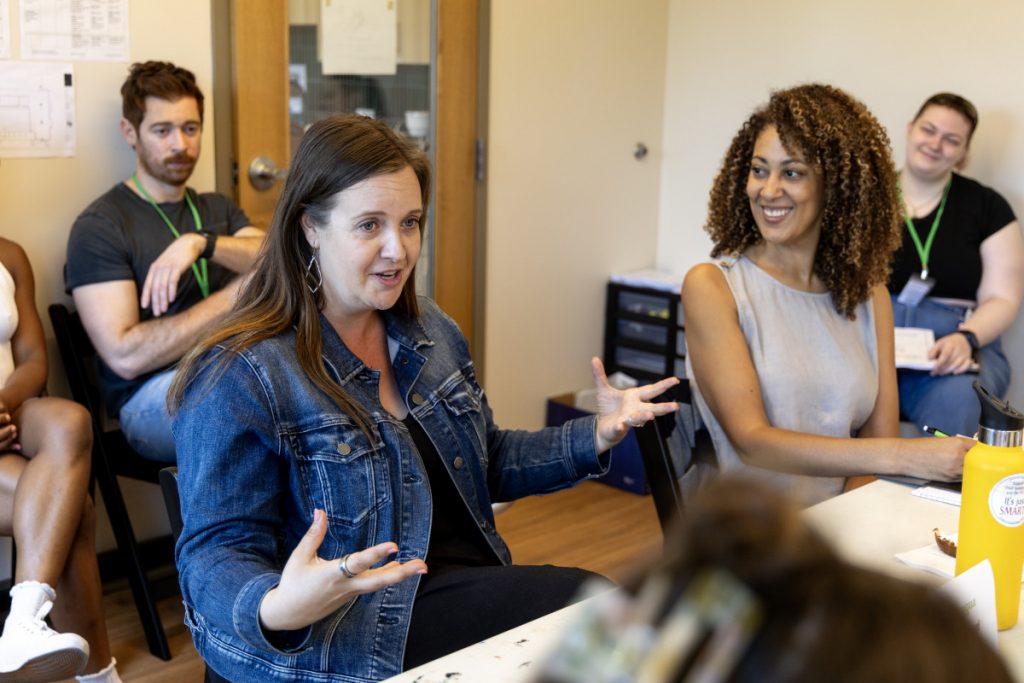
This balance between the playfulness of comedy and the weight of historical contexts was exactly Stafford’s intention behind the story, in the hopes she could provide a layered experience for the audience.
“I’m excited for people to get lost in the comedy of it,” Stafford said. “I feel like we’re in a time where comedy is serving a really important survival function for us, but … I hope the play is doing a lot of deeper work about the idea of legacy and what we give up in our everyday life in order to leave something behind when we’re gone.”