JENNA OUTCALT
Staff Writer
Filmmaker Janice Overbeck doesn’t want us to take antibiotics for granted. In fact, she notes that they support all kinds of modern medicine, from surgery recovery and childbirth to simple wound care. However, the creeping threat of antimicrobial resistance could become one of the biggest health risks in the medical field if it is not addressed.
“Antimicrobial resistance is not only a hospital problem or a future problem. It is connected to everyday choices, healthcare systems, agriculture, research, policy and global access to medicine,” Overbeck said. “The World Health Organization has said this will kill more people than anything else including cancer by 2050 if we don’t do something about it.”
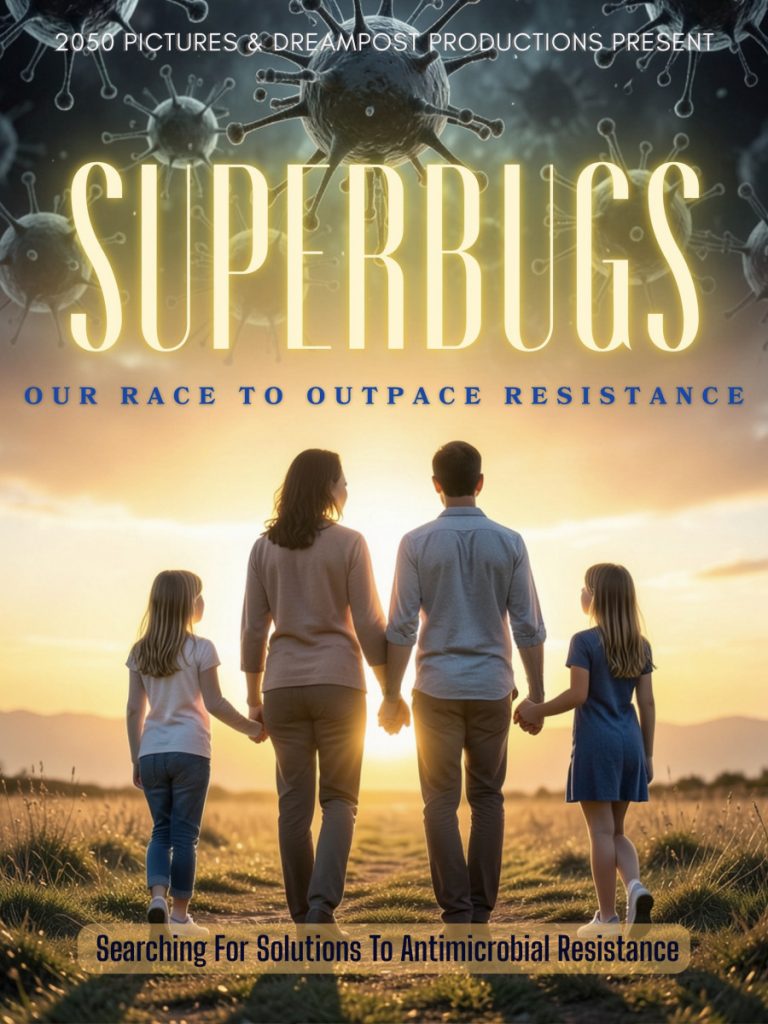
Overbeck’s new film, “Superbugs: Our Race to Outpace Resistance,” will delve into “the relationship between humans and the microbial world, and about how our choices shape that relationship.”
The Chautauqua Climate Change Initiative will host a viewing of Overbeck’s film and a filmmaker discussion 4:30 p.m. today at Chautauqua Cinema. Dr. Michael Bevilacqua, a medical scientist featured in the documentary, will join Overbeck over Zoom for an audience Q&A.
“We wanted to make this film because antimicrobial resistance is one of the most serious public health challenges of our time, but it often remains invisible until it affects someone personally. Unlike many crises, this one is quiet,” Overbeck said. “There is no single dramatic moment when the world realizes antibiotics are losing their effectiveness. It happens gradually, infection by infection, hospital by hospital, community by community.”
Overbeck said the documentary is meant to present the issue in a way that is “human, visual and accessible.”
“We wanted to move the conversation beyond statistics and show the real people involved: patients, families, doctors, scientists, innovators and public health leaders who are trying to prevent a future where common infections become much harder to treat,” Overbeck said.
According to Overbeck, “antimicrobial resistance is no longer a distant warning,” giving the film a certain amount of urgency.
“It is already affecting patients and healthcare systems around the world, and the window to act is narrowing,” she said. “At the same time, there is also real momentum: Researchers are developing new therapies, diagnostics are improving, global surveillance is expanding and more people are beginning to understand that antibiotic effectiveness is a shared resource.”
However, Overbeck wants the audience to leave feeling informed, not overwhelmed or hopeless.
“Antimicrobial resistance is urgent, but it is not beyond our control. Everyone has a role to play, whether that means asking better questions, using antibiotics appropriately, supporting science and public health or simply understanding why this issue matters for future generations,” she said.
Overbeck is also looking forward to a meaningful Q&A session with Bevilacqua.
“People bring different perspectives: healthcare, science, parenting, farming, policy, personal illness and community health,” she said. “The film is meant to open that conversation.”
Overbeck wants the film to change how people think about “superbugs,” considering how we interact with them as humans. She emphasized that antibiotics are not guaranteed, but require “responsibility, innovation and cooperation.”
“The solution is not one breakthrough or one new drug,” Overbeck said. “It will require better prevention, smarter prescribing, stronger infection control, faster diagnostics, continued research and public awareness.”