NORA SMITH
Staff Writer
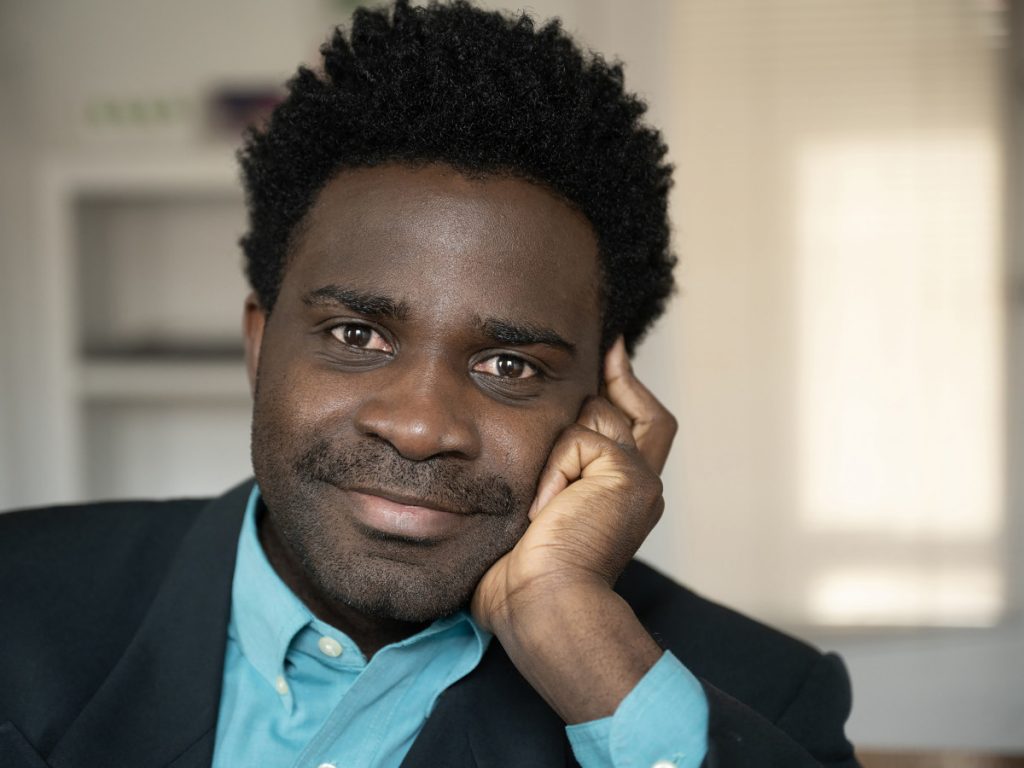
To address the impacts of climate change and envision change for a better future, Haitian poet and author Sony Ton-Aime, former Michael I. Rudell Director of Literary Arts, turns to a different historical event: the Haitian Revolution.
Ton-Aime tells the story of the Haitian Revolution through his debut poetry collection Konbit, a Haitian Creole term meaning communal labor and mutual aid. This historically significant event, although centuries ago, exemplifies the importance of community in combating hardships and conflicts.
Through his poetry, he sought to understand how collective and collaborative action can address pressing humanitarian issues. In the case of the Haitian Revolution, for 300 years a person’s destiny was determined by how they looked. According to Ton-Aime, it can be difficult for one individual to imagine a world of monumental change, but together, that change can become realized.
“They [did] not know anything else,” Ton-Aime said. “You can see how they would believe that this is only the natural world of things and there’s nothing to change and even if they wanted to change, ‘If people were living 200 years before could not change it, who am I?’”
Together, enslaved people in Haiti imagined a world of freedom beyond slavery and brought change. Today, Ton-Aime said, that battle is climate change.
For Ton-Aime, it is difficult to see past climate change, but at 12:30 p.m. today in Smith Wilkes Hall, he will dare to imagine a future beyond the issue with the encouragement of his ancestors at “Imagining a Future Beyond Climate Change: Lessons from the Haitian Revolution, with Sony Ton-Aime.” This event is hosted in partnership with Chautauqua Climate Change Initiative and embodies the goal of generating more dialogue around the issue of climate change.
“I cannot imagine a society, a future without this laptop, without my car, without all of the things that we have in this world,” Ton-Aime said. “Therefore, I cannot imagine a future beyond climate change.”
However, when looking back on his ancestry of enslaved Haitians who did dare to imagine a future where they would be independent, Ton-Aime is hopeful to do the same.
“That’s what I’m trying to do here, where my ancestors faced something that was even mightier, more dangerous, more outrageous than what we’re facing now, and every time I think of climate change I feel terrified,” Ton-Aime said. “This is the same terror my ancestors felt, but that did not discourage them, and therefore I feel emboldened, and I feel hopeful.”
However, Ton-Aime can’t solve climate change himself — nor should the weight of a solution be on one individual alone. Rather, like the title of his book, Konbit, this battle requires communal labor. This brings Ton-Aime back to why he picked the story of the Haitian Revolution to illustrate his point.
“I wanted to use something that is in the margin, because I do believe that we cannot only use the mainstream,” Ton-Aime said. “We cannot wait for the people who are in power, the people we listen to all the time for the solutions; we need to bring people who are also in the margin, the stories we’re not familiar with, to bring them in for us to try and find solutions.”
Just because Ton-Aime is telling this history in the form of a poetry collection doesn’t mean that these conversations aren’t being had elsewhere. Instead, they are everywhere: in music, visual arts, hobbies and all other forms of artistic expression.
In Ton-Aime’s poetry reading today, different forms of media such as vivid imagery and music will join the poems for a cohesive presentation. These forms of media, like the songs that will be included, were some of what inspired Ton-Aime while writing.
“I wanted to bring that to the forefront to say, ‘You don’t need to be a writer, you don’t need to be a scientist, you don’t need to be an intellectual in that way.’” Ton-Aime said. “Everything that you have, we will need you.”