
LILY RESLINK
Staff Writer
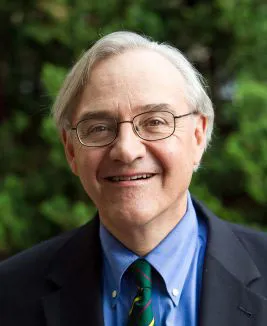
Journalist and political commentator E.J. Dionne Jr. will not switch gears from political talk to religious talk, but instead join the two for his lecture at 2 p.m. today in the Hall of Philosophy.
Dionne is a columnist for The Washington Post and The New York Times, Georgetown University professor, political commentator and senior fellow in governance studies at Brookings Institution. He said he will deliver his Interfaith Lecture on cycles in American history in defining morality and its role in public life.
According to Dionne, more individual behavior defines standards of morality in some periods, such as prohibition, while other periods define morality in social terms, as in judging what kind of society individuals want to build and what constitutes fairness in that society.
“One of the arguments I want to make is … we’re in a transition period from a heavy focus on the personal kind of behavior to a much greater concern with the morality of the economy: of how we treat each other and the social obligations that we all have,” he explained.
Although Dionne’s career in public policy research and commentary reputationally associates him with politics — landing him a spot in the 10:45 a.m. Chautauqua Lecture Series — he spoke on his connection to faith that grounds him within the Interfaith Lecture Series.
“I have always thought that if you have religious faith of any kind, it can’t help but influence how you think about politics,” he said.
Dionne said his views are shaped partly by being a Christian and by Catholic social thought relating to obligations toward impoverished people and social justice. Dionne said he was raised by civically-minded parents: his mother a librarian and teacher, and his father a dentist who started a free dental clinic. The couple raised him in what he called a largely Catholic town in Massachusetts that was, until recently, very democratic, working class and labor-oriented.
Dionne said he grew up in a Republican family and started debating his dad about politics at age 13. “My dad, to his everlasting credit, encouraged me to argue with him rather than discourage me from arguing with him,” Dionne said.
He said this encouragement from a parent to argue with them is a wonderful thing.
Dionne advocated for the coexistence of debate and humility. “I once said in a talk years ago, … that if I made a baseball hat, it would say, ‘make America empathetic again,’” he said.
While encouraging empathy, he said he appreciates productive dissent — especially pertaining to the relationship of religion to politics.
“I think that ‘there but for the grace of God go I’ is one of the most socially and morally productive sentences that anyone ever wrote,” he said.
In conversations of religion, Dionne advocates for arguments that are digestible, understandable and relatable for those outside of one’s own religion. According to Dionne, members of a religion who assert their scripture as the only “right way” disrupts productive conversation, and this caution extends to when these assertions come from the state.
Dionne had been invited to Chautauqua as a speaker before in 2011, 2013 and 2017, and delivered lectures on topics relating to these beliefs on morality, civility and meaningful dialogue.
While there are other venues in the US for cultivating meaningful conversations, Dionne said Chautauqua Institution stands out in its contemporary incorporation of its religious history. He commends what he sees as a balanced way “to move in new directions.”