Lily Reslink
Staff Writer
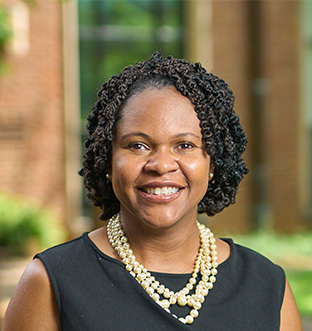
If Yolanda Pierce could make one change to create a more peaceful world, she said it would be “helping others to recognize that because each human being is made in the imago dei (the image and likeness of God), every single person is our neighbor.”
It is this mentality that the womanist theologian will bring to Chautauqua Institution for her 2 p.m. lecture today in the Hall of Philosophy.
“My lecture will focus on the storytelling traditions of women and how they create spiritual legacies from their stories,” Pierce said.
Pierce will close out Week One of the Interfaith Lecture Series, “Women of Spirit,” with a topic that pulls from her scholarly focuses of theological concepts across time, faith traditions and religious communities.
“The theme chosen by Chautauqua helps us to interrogate women as spiritual workers: ministers, teachers, lay leaders, priests, musicians and griots,” Pierce said.
Pierce became the first female dean of Howard Divinity School and taught as a professor at Princeton Seminary; she now serves as the dean of Vanderbilt Divinity School.
She is the author of multiple books including In My Grandmother’s House, a reflection on womanist theology rooted in liberating scriptures which explores issues like race, spirituality, trauma, freedom, resistance and memory, according to her website.
According to a review on Pierce’s website from New York Times bestselling author Austin Channing Brown, “Within the pages of In My Grandmother’s House, Dr. Yolanda Pierce brings to the forefront the titans of faith formation, the holders of theological wisdom, the guides who rarely receive credit from the academy for having crafted a faith that endures: Black grandmothers. By giving language to the ways Black women have long helped us make sense of the Divine, Dr. Pierce offers us a window into the sacred lives of Black women, at once centering ourselves, our histories and our God.”
Having given an Interfaith lecture in 2022 on social justice and faith, she said the Chautauquan audience is one she is honored to engage with in these topics.
She said she appreciates the range of material connected to Week One’s theme: lectures, musical performances and daily worship.
Pierce applied her scholarship to reflect on a change she believes would move the world closer to peace.
“Because of my faith, I have a deeply-rooted optimism about what can be possible in our current world, even given our particular social and political climate.”
She connected the concept to “eschatological hope,” a term from Christian theology.
It refers to “the possibilities for a better, peaceful and more just world in an age to come,” Pierce said. To her, it is rooted in the commandment to love our neighbor as we love ourselves.
“It’s a recognition that mercy and justice may be difficult to achieve in our own lifetimes, but there is hope for the future,” Pierce said.