
SOPHIA ROOKSBERRY
Staff Writer
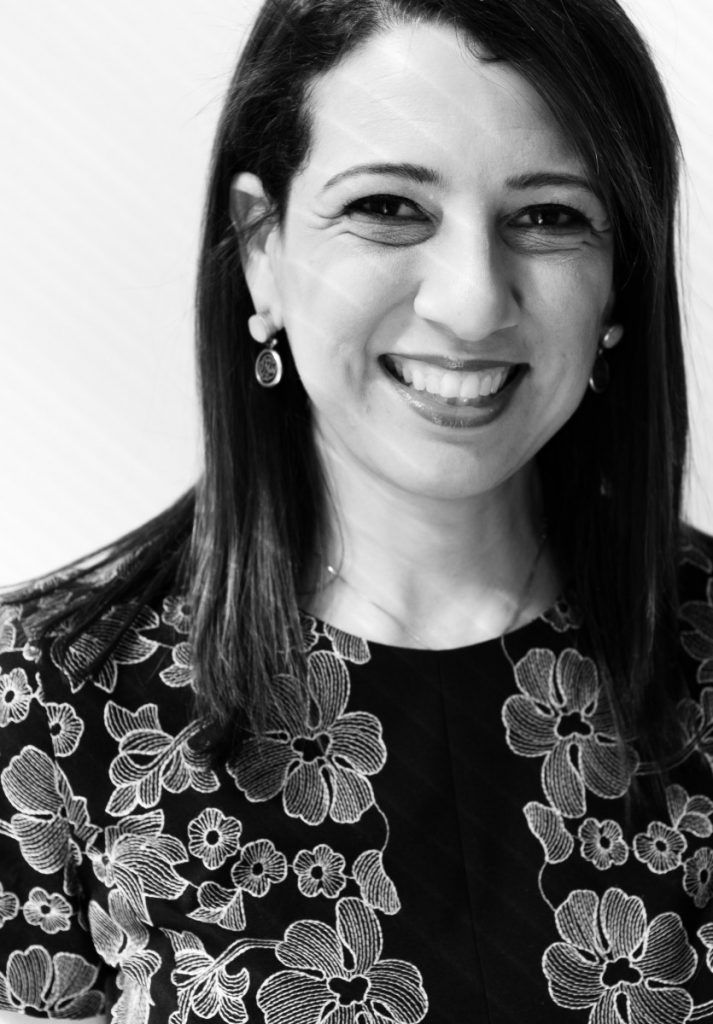
By the time Nancy Youssef graduated middle school, she knew she wanted to be a journalist. However, by the time she graduated university, Youssef boasted degrees in economics and security studies rather than journalism or communications.
By pursuing higher education in the fields she wanted to write about instead of the writing itself, Youssef set herself up for a robust career as a reporter for The Baltimore Sun, The Detroit Free Press, The Wall Street Journal and, for the past year, as a staff writer for The Atlantic.
At 10:45 a.m. today in the Amphitheater, Youssef will kick off Week Seven’s theme of “Global Power and Our Evolving International Order” with a lecture encapsulating her more than two decades of experience covering national security and foreign policy.
“We’re entering a new era,” Youssef said. “We think about foreign policy often in terms of eras — the Cold War era, the post-Cold War era — and I think that the Trump administration is really challenging a lot of assumptions for the last 20, 30 years, and is looking to position itself not as the guarantor of the post-Cold War era, but the most powerful negotiator within it … I want to look at how America has changed its view, what role economics is playing in foreign policy [and] how military force is being used differently.”
As Youssef witnessed the United States’ recent evolution in the realms of foreign policy and national security, she also saw a shift in how journalists cover these issues. She said front-line reporting has become far more dangerous and inaccessible than in years past, which has fundamentally changed what foreign and military correspondence looks like.
“We’ve had journalists embedded in America’s wars since the Civil War, and [the Iran war] is the first conflict that I know of in which journalists can’t be on the front lines of the battlefield,” Youssef said. “… The Pentagon had reporters in the building since it opened in the 1940s, and we don’t have journalists in the building … We’re having to write this potential reshaping of U.S. foreign policy, but it’s much harder to actually see it for ourselves.”
Even though entry into this subsection of journalism becomes more daunting with each passing day, Youssef said this necessitates a greater need for reporters to embrace and reclaim changes to the beat.
“If I were going into national security reporting now, I would find a way to carve out an area that isn’t reported as much, but is important to national security,” Youssef said. “… It’s not just battlefields anymore, or diplomacy, and actually under the Trump administration [it] has become more broad, where things like tariffs are now part of national security policy in a way that they weren’t before.”
Youssef spent the majority of her career among these ever-transforming issues, and in the process, found her personal favorite way to write about them, which she believes is more accessible and digestible to readers who struggle to understand the turbulent state of modern foreign policy and
national security.
“I love newspapers, but I think there’s so much information coming at readers right now in pieces,” Youssef said. “What I like about The Atlantic is it’s an opportunity to put those pieces together and write in a style that really walks people through where we are … I love the intellectual challenge of trying to say, ‘Here’s where the war is going, here are the themes of the week that you might have been hearing about in pieces,’ and taking the essential parts of it and putting it together in a way that readers can follow.”
In addition to keeping up with current events in her field of interest, Youssef encourages Chautauquans to attend her lecture and the subsequent lectures throughout the week, in order to maintain a grasp on the week’s theme in the broader context of their lives.
“Things are moving so quickly, and the changes are happening at such a fast pace,” Youssef said. “I think Chautauqua offers a really unique opportunity to step back and really sit with these changes and think about where they’re going.”