
LILY RESLINK
Staff Writer
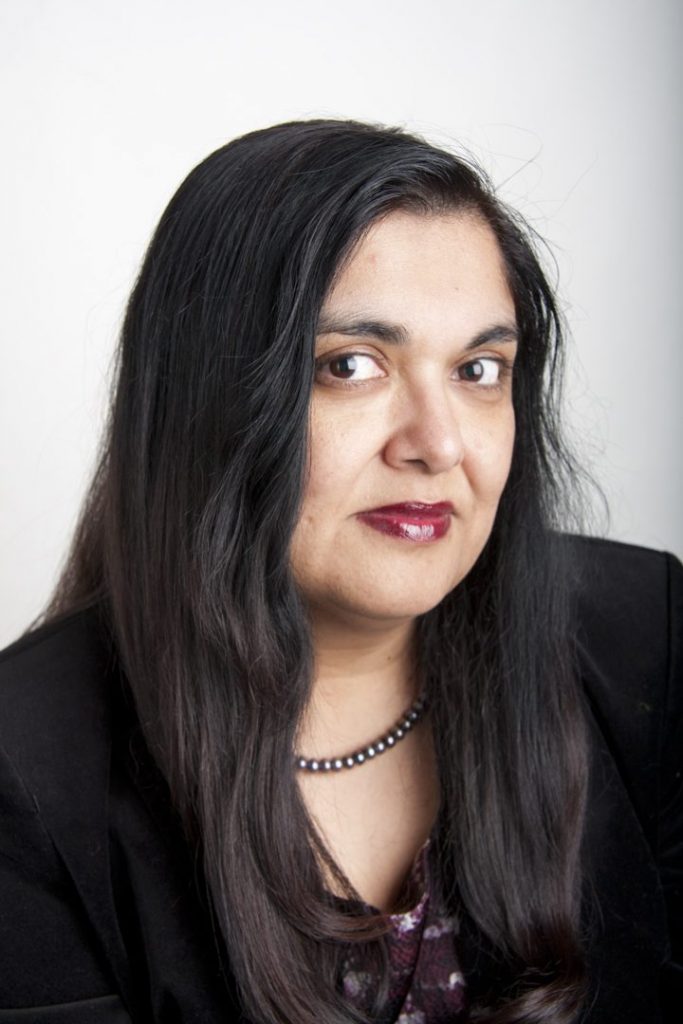
In looking at the history of the Civil War and Reconstruction as a remaking of the American Republic, Manisha Sinha said contemporaries call this time period “the Second American Revolution,” but she calls it the “Second American Republic.”
Her 2 p.m. lecture today in the Hall of Philosophy will focus on the history of American Republicanism, which she said is both a story of triumph and a story of tragedy when looking at achievements that have historically been undone.
“The lesson is that the defense of rights that have been won and of American democracy requires active citizenship because things can go backward pretty fast,” Sinha said.
To Sinha, America’s 250th anniversary increases the importance of thinking about American Republicanism’s history not as linear, but as marked by rises and falls.
“The story of how emancipation is undone in the South, how Reconstruction is undone with the rise of Jim Crow and the disfranchisement of Black people, tells us that rights and democracy can be lost for a long period of time unless we are prepared to fight for them and safeguard them,” Sinha said.
Sinha is the Draper chair in American History at the University of Connecticut and a past president of the Society for Historians of the Early American Republic. She is the author of The Counterrevolution of Slavery: Politics and Ideology in Antebellum South Carolina and The Slave’s Cause: A History of Abolition.
She was also a featured contributor for a podcast by Barack Obama and Malcolm Gladwell. She also said that Justice Ketanji Brown Jackson, in her concurrence in the Supreme Court birthright citizenship case, footnoted Sinha’s book.
“That was very exciting that she and her team were actually aware of my book on Reconstruction and used it as a sort of historical backing for her take on birthright citizenship in the United States.”
Sinha said her work as a historian seems to speak to contemporary issues.
“People whom I admire — like President Obama or like Justice Ketanji Brown Jackson, who is emerging as a great dissenter in the footsteps of (Justice) John Marshall Harlan, who was the great dissenter in all the Supreme Court cases in the late 19th century that undid Reconstruction constitutional amendments and laws … are aware of the work and that they find it useful.”
“It shows that history and historians do matter and we can make a difference,” Sinha said.
Sinha said she was shaped by growing up in India during the Civil Rights Movement’s outcome.
“I, like many Indians, was aware of the fact that Dr. King used Mahatma Gandhi’s notions of nonviolent resistance in the movement and was inspired by it, and so were many other civil rights leaders.”
From there, she said she grew fascinated with race, democracy and citizenship in the U.S.
“It seemed to me there were similar issues involved in the decolonization struggle of the Indian nationalists against the British Empire,” Sinha said.
She said this led her to her current scholarly focus on slavery, the Civil War and Reconstruction. Connecting her area of research to the Interfaith Lecture she will deliver, Sinha said she plans to provide an analysis of how religion influenced cultural narratives during the Civil War and Reconstruction.
“Most slaveholders used a very fundamentalist, literal interpretation of the Bible to defend slavery, while abolitionists tended to appeal to the spirit of the Gospels to actually question the existence of slavery,” she said.
According to Sinha, abolitionists’ practices of Christianity reflected a “liberation theology,” while slaveholders taught “a more social control version of Christianity.”
The legacy of the debate about slavery in Christianity, she explained, is complex and vast.
“In the 19th century, you could win a debate in the United States if you had the Bible and the Constitution on your side. And abolitionists themselves debated whether the Constitution and whether the American Church was complicit in upholding slavery or not.”
During her lecture, Sinha said she intends to evoke thoughts about the connection between the struggle for Black rights and the development of American democracy.
To Sinha, history is evidence of avoidable conflict from which humanity can learn. She referenced the international rules-based order that emerged after World War II to prevent nations from taking aggressive actions.
“In my own time, I am seeing that order fall apart,” she said.
Beyond her lecture, she shared her personal philosophy and said she abides by pacifism in the same way Quaker abolitionists do — believing fights are justified in cases of self-defense and freedom.
She said modern mechanisms, such as international law, should prevent warfare between nations.
“I think warfare is never the answer. And if I could flip a switch, I wish I could get the war gene out of humankind.”