
SOPHIA ROOKSBERRY
Staff Writer
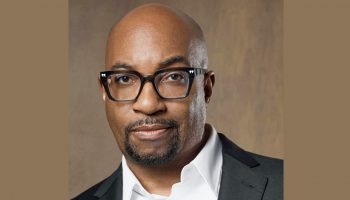
At 4 p.m. today, Buffalo State University’s Marcus D. Watson will join the African American Heritage House as its next innovator-in-residence. The associate professor of Africana Studies will engage Chautauquans in a talk titled “Dr. Watson on the Sexist Nature of Modern Buildings,” inspired by a chapter from his upcoming book, Half-Connecting Theory: An African Psychology Approach to Healing Disconnection in Modern Life.
“It’s a book that will help a reader see what the world looks like from an African psychology perspective, and I’m drawing on a chapter from that book for the presentation,” Watson said. “I hope that there is a natural call and response to the presentation, but as of now, it’s a standard talk … I want attendees to rethink and be excited about looking at the material culture, the material backdrop of life in a different way than they’re probably used to.”
The conversation on life’s inherent materiality will revolve around how African psychology is equipped to handle the titular disconnect of life in the modern age.
“We’re going through a time as human beings, at least in this country, if not globally, where many people are feeling depressed and lonely, anxious, suffering existential crises,” Watson said. “We’re in a context, it seems, of ultra-division and distrust, ongoing wars and so forth. Being able to take a glimpse at what the world looks like from an African psychology lens happens to come with ideas for how we might live better and heal some of those wounds.”
An example Watson uses is the construction of mud buildings in West Africa, which are designed so a home can someday return to the Earth; Watson argues this practice shows a respect for the planet that Eurocentric infrastructure lacks.
“Everything humans make, the materials come from the earth,” Watson said. “… What I essentially studied was how different cultures interact with the Earth in order to make their things. When we’re making a modern building … oftentimes … [they are built] in a way that what was taken from the Earth can never be returned to the Earth. It’s a permanent theft, but it indicates a prior, subconscious, deep cultural relationship … where we see the Earth as resources, an object, a sub-other to us as human beings, something that can be mined, exploited.”
Not only is this attitude detrimental to the health of the Earth, but it can also have negative effects on the physical and mental well-being of the humans constructing and living in the buildings.
“If indeed we are surrounded every day by these anti-Earth structures — whether it’s the homes we live in or the buildings we work in or the cars we drive or the streets we’re on that cover up the Earth so that we hardly even see her again — that could be at least one factor in helping to understand [and] explain why we may feel so disconnected and alienated and alone,” Watson said.
In addition to focusing on the detachment of modern living and its relationship to the buildings people live in, the title of Watson’s talk includes one other key word: “sexist.”
“From an African psychology point of view, Earth is … specifically feminine in nature, and it can be referred to as Mother Earth,” Watson said. “… Since the Earth is of a feminine nature, everything we build retains that feminine nature, and when we objectify Earth and build things that are never meant to be reciprocated, it holds that sexist act in place. Modern building, hard roads, all those things are non-biodegradable, as opposed to Indigenous ways of building, which respect what was taken … by making things so that they can go back to the Earth.”
The multifaceted subject of Watson’s talk will be explored in greater detail this afternoon at 40 Scott.
“[Chautauquans] should come if they consider themselves people who are good-hearted, if they consider themselves people who love all people and love the Earth, because they might learn more about what it might truly mean to execute love in a more holistic, comprehensive fashion through an African psychology lens,” Watson said. “Come and let’s commune and let’s learn little by little how we can course-correct and bring back the trust between people and the love between people so that we can bequeath that to those who are not born yet.”