DEBORAH TREFTS
Staff Writer
When licensed clinical psychologists provide comprehensive mental and behavioral care for a wide range of health problems, consult with agencies and communities and train and supervise others, they apply a plethora of skills and knowledge learned over a decade of studying, training, writing and examinations (academic, national and state).
For Central Intelligence Agency clinical psychologists, operational training (including learning how to survive crash-and-bang vehicular attacks), service abroad under exceedingly dangerous circumstances and fortified methods for coping with extraordinarily ghastly experiences are job requirements.
For the most senior CIA psychologists, accurately assessing world leaders past and present — heads of countries possessing global influence — requires not only acumen, but also deeply nuanced perspicacity.
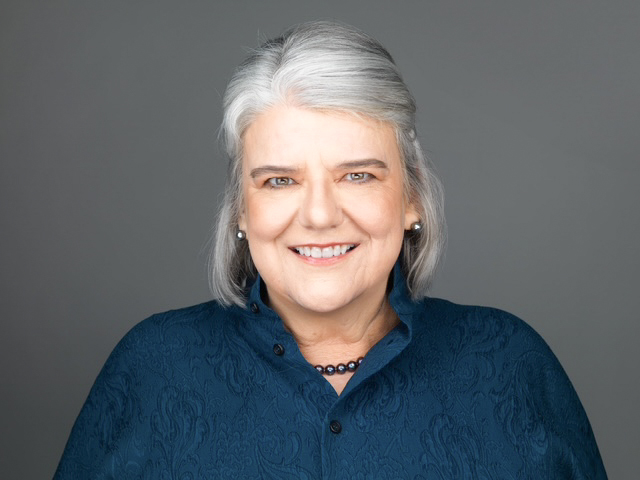
At 9:15 a.m. Tuesday at the CWC House, Ursula M. Wilder, Ph.D., will give a presentation for the Chautauqua Speaks program titled, “Heroes and Villains: Psychology of World Leaders.”
Wilder, a fifth-generation Chautauquan, is a former CIA clinical psychologist who retired in 2025 after 28 years of service “applying psychology to medical, operational and analytic missions.”
The “first woman psychologist elevated to the Senior Intelligence Service in CIA’s history,” she “was awarded numerous commendations and medals for her work in analysis (of world leaders), in field operations (after 9/11), [in] academic writing and publishing and in her work providing psychological care to intelligence officers and agents.”
At Georgetown University’s Walsh School of Foreign Service in Washington, D.C., Wilder is currently an adjunct professor and senior fellow. During spring semester 2026, she taught a foundational course within the School’s Asian Studies Program — titled Analyzing Asian Political Leaders — “covering essential aspects of the psychology of world leaders.” She said she also teaches about the psychology of espionage.
At Texas A&M’s Bush School of Government and Public Service in Washington, D.C., Wilder is a visiting professor of the Practice in the Department of International Affairs, where she said she also teaches about the psychology of world leaders. Her knowledge is “[b]ased on a decade writing psychological assessments of world leaders for national security” purposes.
Wilder did not dream about serving as a psychologist for American ops officers, case officers and spies when she was a child enjoying summers at Chautauqua. The daughter of a Methodist minister from Texas and an elementary school teacher from Erie, Pennsylvania, she resided for “a good part of (her) early years” with her four siblings in Europe.
In Brussels, she attended a Montessori school and in France, a Parisian girls’ school. When she was 13, however, her family moved back to the United States and spent half a year in Chautauqua, where Wilder went to public school.
“I was a little French girl who spoke French,” she said. “I thought America was Chautauqua. … Everything about America was big.” When her father became the minister of a church in Victor, New York, in the Greater Rochester area, she said she “spent her four years of high school in shock.”
Knowing from experience that “a girls’ school was not a bad thing,” Wilder went to Mt. Holyoke College in South Hadley, Massachusetts, and majored in Biology and English.
“I wanted to be a physician; then I watched my older sister training for her M.D., and I said, ‘No.’ Reading novels was like being a budding psychologist.” Since she wanted to learn about Hitler, she was “totally turned off” by teaching a pigeon to peck for a schedule of pellets.
For a couple of years after college, Wilder worked as a legal assistant despite knowing after six or seven weeks that it wasn’t for her. “I loved working with attorneys,” she said. “They’re so funny. On the whole, they’re just people; they’re not sharks. But that’s not how I wanted to use the literary and psychological side of my education.”
Other things she said she learned from this experience and her upbringing were that: “Clergy see the best of people, lawyers see and have to be aware of the worst of people, and doctors see people as they are.”
At Catholic University in Washington, D.C. — which she said was “strongly philosophical” — Wilder earned a Master of Psychology with a concentration in assessment psychology (interviewing and testing). She then began focusing on clinical psychology at The George Washington University, from which she earned her Ph.D. in 1992.
“At GWU, I realized I’d found a vocation,” she said. “And I spent years doing it and loving it.”
In 2006, Wilder received her Master of Theological Studies from Wesley Theological Seminary (Methodist) in Washington, D.C., where she studied religious violence, terrorism and counterterrorism ethics and different ways of framing evil.
During her Tuesday morning talk, Wilder will ask and answer a series of critical questions:
“Have … famed political leaders … primarily (been) chosen by historical events and therefore primarily (been) driven by their contexts, or do such leaders possess unique characteristics that would drive them to seize glory and power and to leave their mark on history in any era?”
“Why are some leaders called ‘the Great’ by popular acclaim (Alexander, Genghis, Peter, Catherine, Frederick), and why have some become archetypes of leadership (Caesar, Elizabeth 1) while others sink into obscurity?”
“Is it possible to consider a person a ‘great’ leader even if he or she is not a ‘good’ person?”
And, “[w]hat are some political superpowers and fatal flaws observed in good, great, bad and evil leaders?”