JENNA OUTCALT
Staff Writer
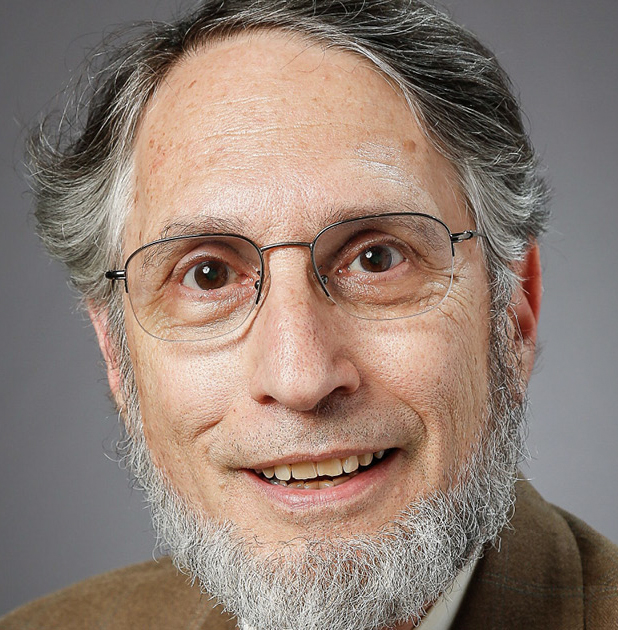
Although you may not know it, you’ve probably already seen Michael Ackerman’s work in action. His and his colleagues’ project has been used in research for the cars people drive, the movies people watch and the medical equipment that saves people’s lives. Each of these endeavours, as different as they are, needed to investigate the ins and outs of the human body to ensure safety, realism or effectiveness. Ackerman’s digital tool helped them do that.
Ackerman will talk about the project, named the “Visible Human,” at 9:15 a.m. today in Hurlbut Sanctuary for the Chautauqua Science Group lecture series in partnership with Chautauqua Climate Change Initiative.
The Visible Human began 25 years ago when Ackerman was working at the National Library of Medicine, which he described as the “Library of Congress in the United States for medical literature.” Ackerman was looking for ways to help colleges teach anatomy and transition to using computers, and he recalled his boss telling him to gather all the educators he talked to and ask them how they could help beyond just providing grants.
“We did that, and they said, ‘What we need is a digital cadaver, head to toe, the same body,’” Ackerman said.
This digital cadaver became the Visible Human project, consisting of digitized male and female cadavers “physically sectioned at a third of a millimeter slicing.”
“You can go up and download the whole thing or parts of it to reconstruct whatever you want in human anatomy,” he explained.
The project took about four years in total. Ackerman plans to discuss how the project came to fruition and what is being done with it in his lecture. According to Ackerman, “just about every medical student in the country in the last 15 years” has used the project.
“They don’t know it because the data has been grabbed into other programs, but it’s originally Visible Human data,” he said.
However, the data’s application did not end with education.
“The surprise to us was that it was well beyond that,” Ackerman said. “Engineers got an anatomist to reconstruct the data and they’re using it for virtual crash dummies. Other people are using it to estimate radiation absorption. There’s all kinds of things that other fields have said, ‘Oh, we could use a three-dimensional set of of anatomy in our area.’”
Ackerman said even some of the worries about the project ended up as positives. For example, they thought the data might put medical illustrators out of business because of the public availability of the anatomy.
“It turns out that it put medical illustrators into business because human anatomy in the raw is too complicated to fully appreciate and understand. So, the medical illustrator would do anatomy on a cadaver and then draw what they see but in a simplified form in order to understand it and to tell a story,” he explained. “Well, now the medical illustrators didn’t have to go and find cadavers.”
Ackerman said people are often surprised to learn that this is a publicly available data set and that “the U.S. government did it and paid for it,” since it’s such an unique project.
“Everything is possible,” he said. “You just have to have patience, and sooner or later, if you do your homework right and you take the trouble to do reviews, it pays off.”