LILY RESLINK
Staff writer
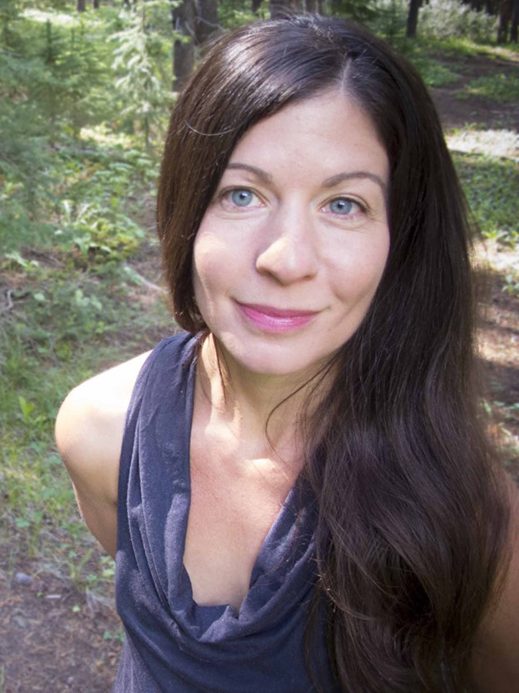
Leah Naomi Green sits on the quiet, reflective outskirts of the climate movement with pen, paper and students she hopes to instill with the same sense of thoughtfulness.
Green, an author of environmental poetry, views sitting and thinking as a neglected yet essential part of progressing toward a more environmentally conscious and connected society. She will deliver a lecture at 2 p.m. today in the Hall of Philosophy, which she titled “Don’t Just Do Something, Sit There,” after a quote from Zen Master Thích Nhất Hạnh.
She said her lecture will explore that quote through conversation with the writings of Robin Wall Kimmerer, Ross Gay, Wendell Berry, Ada Limón, Nhất Hạnh and herself.
At Katharine Wilkinson’s 10:45 a.m lecture today in the Amphitheater, Green will be giving “a little taste” of her environmental poems, and at her Interfaith Lecture, she will discuss the thought behind them.
Green is the writer-in-residence at Washington and Lee University, where she teaches both English and environmental studies.
“Technically there’s no religion in there, but ask anyone who’s ever taken my classes — it’s definitely part of what we do,” Green said.
When Director of Religion Robert Wilson-Black provided the lecture prompt, “spiritual responses to a throwaway world,” Green said she immediately thought, “This is the talk I was born to give.” She said her lecture will offer her reflections from 20 years of her thoughts on this topic.
Green’s perspective is also shaped by her life as a homesteader. “My family and I grow most of our own food and live in an ecological community where we heat with wood and forage and grow food.”
The spiritual perspective she will bring to her Interfaith Lecture reflects a range including Buddhism, Quakerism and Judaism.
Currently, she said Buddhist practice is the faith tradition from which she is learning the most. “My partner and I met at a Buddhist monastery and have spent the last 20 years living in this homesteading life inflected by that tradition.”
Quakerism, she said, preceded her current chapter. “I was lucky enough that my mom taught English at a Quaker school when I was growing up, so I got to go for free.” In her 20s, Green said she went to a Quaker college, where she lived in an interfaith house and led backpacking trips for a Quaker program.
Green said she was born into Judaism, which set her apart from the Christian majority she grew up alongside in her rural North Carolina town.
“My best friends growing up were all the religious kids who, of course, were …Methodist,” she said.
She said interfaith immersion throughout her life has influenced how she views humanity’s treatment of the environment and how she conveys this through writing.
With her students, Green said she often expresses gratitude for science. In addressing climate change, Green said she feels spirituality also has an important role to play in attending to the human mind and soul.
While she emphasized her belief that science is absolutely necessary, Green said “if science were enough, we would have solved climate change in the 70s.” She said the gap in progress lies in getting people to subscribe to already existing science.
“We have all the data we need. We even have all the technology we need.” she said. “There’s something about how humans relate to the more-than-human world that needs a lot of attention.”
“The power of deep listening” is something Green said she tries to practice and instill in her students.
“The way Thích Nhất Hạnh defines it is listening to someone else purely for the purpose of helping to ease their suffering,” Green said. She said this practice challenges the idea of listening merely to respond, determine accuracy or decipher truth.
With applications beyond human-to-human interaction, Green said the goal of this practice is “deeply listening for what it is that the being in front of you needs to say.”
Chautauqua Institution’s model of gathering for meaningful discussion, Green said, “is the opposite of doomscrolling on our phones alone.”
Green said she hopes people leave her lecture more present, more connected and more likely to sit and think for a moment.