
LILY RESLINK
Staff Writer
Brandon Dillard grew up in the Deep South, where he said he was taught to avoid uncomfortable conversations. Today, as the director of Historic Interpretation and Audience Engagement at Thomas Jefferson’s Monticello, he said he spends each day at a job that gathers large groups of people in a tiny room where they talk about religion, politics and personal relationships.
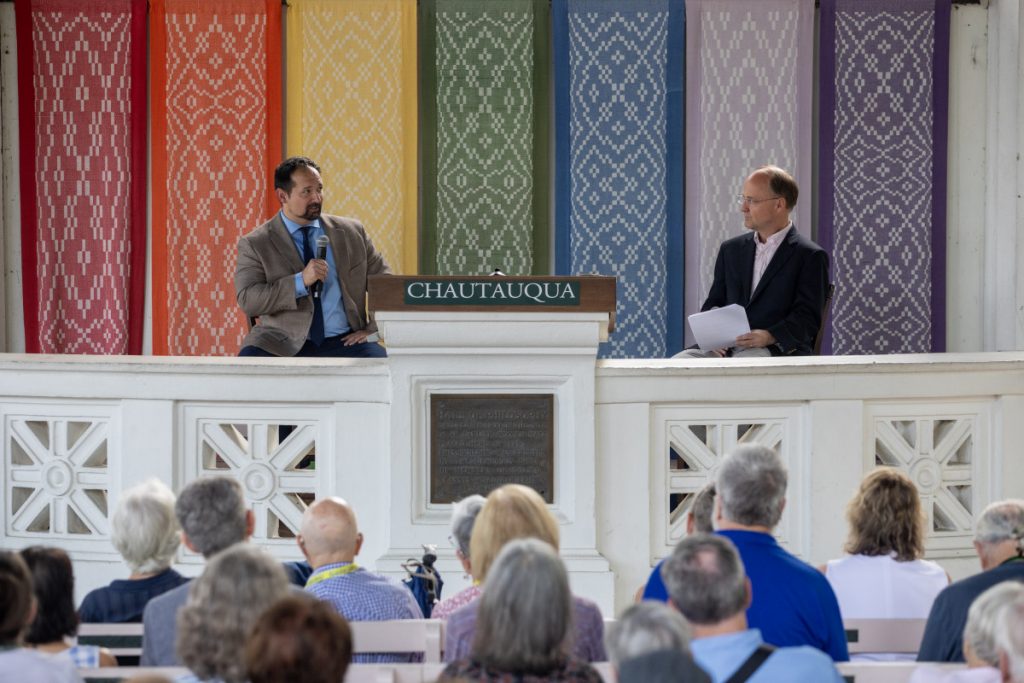
Dillard, who considers himself “somebody who studies the past,” but not necessarily a historian, spoke in a guided conversation with Director of Religion Robert Wilson-Black at 2 p.m. Wednesday in the Hall of Philosophy.
In this program, Wilson-Black asked Dillard about Jefferson’s views on religion, enslaved individuals — including Sally Hemings — at Jefferson’s Monticello, Monticello’s planning process to celebrate and educate across political divides during America 250 and Dillard’s reflections on Jefferson’s engagement with Native Americans, given his own Cherokee citizenship.
According to Dillard, there is a broad range of public perceptions of Jefferson, and there are layers to how Dillard thinks and talks about him both as a historical figure and an individual.
To anyone who says they “really hate” or “really love” Jefferson, Dillard said, “you have not read enough of what he wrote.”
He described Jefferson as “the living contradiction that perhaps, more than any other founder, embodies what it means to be an American.”
Wilson-Black and Dillard discussed Jefferson’s open-ended views on religion. Dillard said one of the most important lessons from Jefferson regarding how one worships — himself included — is, “it does not matter.”
Dillard said Jefferson grew up watching conflicts caused by religion’s involvement with the state, which Dillard presumed to be formative to Jefferson’s privacy relating to public religious expression. He said Jefferson thought “freedom of conscience was absolutely key to free government.”
Dillard said Jefferson was motivated by the search for knowledge and scientific truth. Noting that Jefferson lived during the Enlightenment, Dillard said, “Jefferson had a skeptical approach to some of those things that he deemed impossible to prove through science.”
He quoted another historian who said, “Jefferson does not belong to the left or the right — he belongs to the past,” which Dillard said is a good way of understanding him.
The conversation shifted to considering the legacy of Jefferson and Monticello today.
According to Dillard, within Jefferson’s written observations and thoughts about the enslaved people on his plantation, he “says things today that we would find shockingly racist.”
Dillard described Monticello as a place that evokes an incomparable feeling.
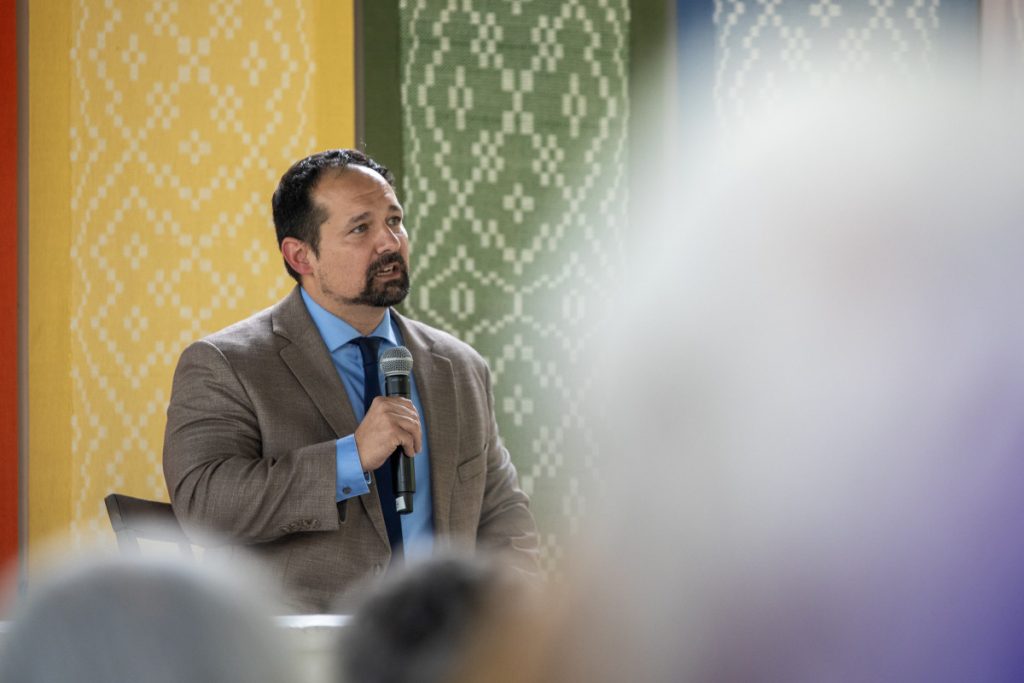
“If you really want to understand America, this place that has this aspirational vision — freedom and equality — and yet, to this day, continues to actually argue about which people deserve freedom and equality, … go to Monticello,” Dillard said.
“[Monticello] echoes the things that are so familiar to us today mixed with something that’s pretty far in the past,” Dillard said.
Within uncertainties surrounding Hemings and Jefferson’s relationship and the genealogy of her children, Dillard said there are some important factors to keep in mind: Jefferson was 30 years older, he enslaved her and he promised her that her future children would be free.
“Here you have a 16-year-old girl negotiating for the future freedom of children who are not yet born with one of the most powerful men that she will ever know, and that tells us a little bit about who she was as a person.”
The conversation touched on Monticello’s approach to America 250 in alignment with its mission, which is “to conserve, protect and maintain Monticello for future generations and to interpret and present Thomas Jefferson and his world,” according to Monticello’s website. Dillard explained Monticello’s audience data reveals an even split between liberal and conservative-leaning visitors, which motivates Monticello to initiate dialogue and ask people to reflect on shared values.
Dillard spoke candidly about his Cherokee citizenship, explaining that there are racial, cultural and political recognitions of Native heritage, to which he said he has differing connections.
Regarding race, he said, “I usually identify as a white person with Native ancestry, if I do that at all.”
“How did Jefferson feel about Native Americans? I don’t know any more than I know about his religion,” Dillard said.
Dillard said while conversations about Jefferson’s harm to Native Americans evoke personal feelings, he views it through an understanding of Jefferson as a complicated man.
“I think it is foolish for anybody to pretend like they can just take some sort of mythical objective view; that’s not real,” Dillard said. “But if we are going to have an honest conversation about Jefferson and Native America, we have to look at all of the hard stuff and we have to look at the things he said that were admiring of Native people and just try and wade through it all and recognize that the United States of America is a complicated place.”
Dillard said he looks at the positive and negative events of Jefferson’s life as a guide to understanding what it means to be human.
“If we’re going to move forward, we have to hold those things in tandem and we have to strive to be better, not strive to bury the bad in the past. We have to learn from it,” Dillard said.