NORA SMITH
Staff Writer
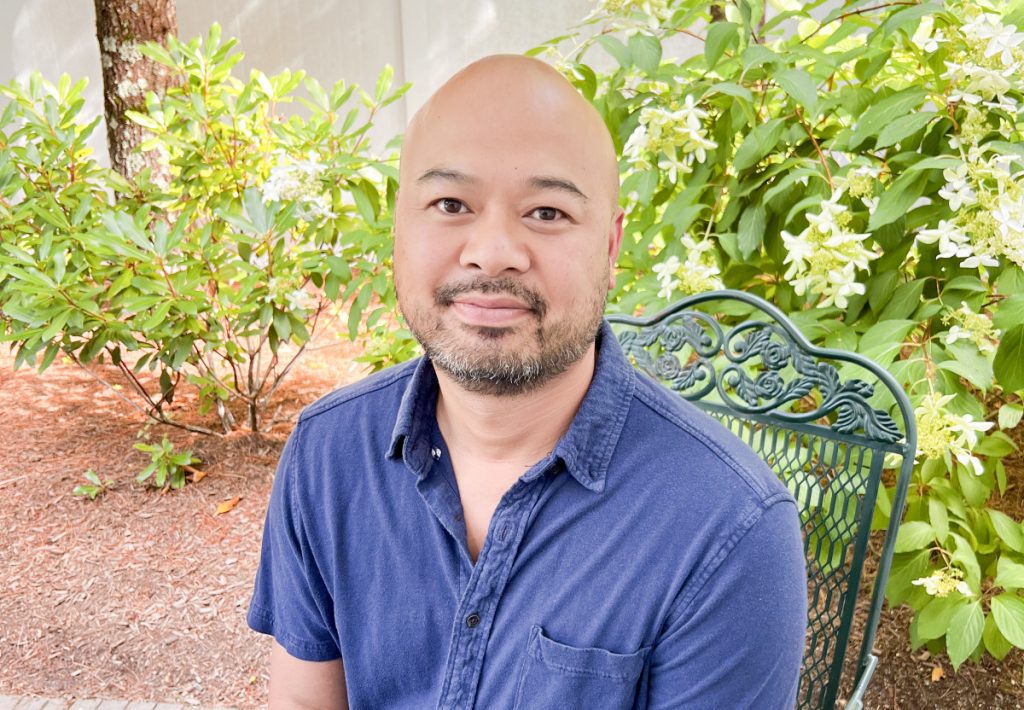
As an immigrant from the Philippines inspired by his own search for belonging, award-winning poet and guest judge for the 2026 Chautauqua Prize Oliver de la Paz continues his quest for home in his writing.
In the 1970s, de la Paz and his family immigrated to the United States and eventually settled in eastern Oregon, where de la Paz’s only company was the public library.
“That’s where I spent a lot of my days,” de la Paz said. “I was an avid reader, and I’m an only child, and I was a scribbler. I kept a notebook and I wrote stories. I wrote a lot of stories.”
Still, de la Paz said he didn’t consider himself a writer until he was admitted into a creative writing program and published his first book, Names Above Houses. Even today, as an author and editor of seven books, he said imposter syndrome still lingers.
“The imposter syndrome comes and goes, and I think that now I realize it’s part of the cycle of writing,” de la Paz said. “Some days are really great, some days are really tough, but they’re all part of the process.”
In his writing, de la Paz said he’s “very interested in the idea or concept of what a home is,” whether thinking about who has one, how one is built or where one can be found.
“That investigation or inquiry comes from my own search for a place where I would belong, and I think that all stems from being an immigrant, an only child winding up in a predominantly agricultural white part of eastern Oregon and trying to figure out where I fit in,” de la Paz said.
Michael I. Rudell Director of Literary Arts Stephine Hunt said she’s pleased to welcome de la Paz back to Chautauqua Institution for “Writing the Diaspora: A Reading with Oliver de la Paz,” at 12:15 today on the Alumni Hall porch.
Within de la Paz’s recent award-winning poetry collection, The Diaspora Sonnets, de la Paz said he “recounts in poetic form, my family’s search for a place to live,” and Hunt said he examines his personal migrations around the globe.
“He’s done a lot of movement around the world, and his experience in life and diaspora as an experience of life, as well as a formative piece of culture and of his thinking and his writing, will be central to what he’ll talk about,” Hunt said.
With de la Paz having been to Chautauqua on many occasions, Hunt said de la Paz was someone of immediate interest when selecting guest judges for the 2026 Chautauqua Prize.
“He’s not only an incredible poet, but just a fantastic reader,” Hunt said, adding that one of her favorite parts of being the prize administrator is getting to listen in on the judges’ deliberations for the long list of finalists because she gets to experience these writers as readers of other works as well as their own.
“Getting to learn a bit more about how thoughtful and generous and beautifully critically involved Oliver is as a reader was really important, at least to me,” Hunt said. “And really fun to witness, but what we’re going to be able to see is the other side of his work, him as a writer.”
De la Paz said he will read some new pieces centered around the St. Louis World’s Fair and the aftermath of the Philippine-American War, in addition to pieces from The Diaspora Sonnets.
“A lot of my work comes about in the aftermath of U.S. imperialism and war, and the conversations that center around what happens when there is a mess that’s made in the world, and where … people wind up after that happens,” de la Paz said.
De la Paz said he looks forward to conversing with Chautauquans and exploring all the Institution’s grounds have to offer once again.