DEBORAH TREFTS
Staff Writer
America’s food system — comprising the infrastructure, processes and value-adding activities involved in growing, harvesting, processing, packaging, transporting, distributing, marketing, consuming and disposing of food and junk food — is facing numerous challenges. So, too, is the global food system.
“We have a very messed up food system and tend to have short memories,” Jonathan Deutsch, Ph.D., CHE, CRC, said.
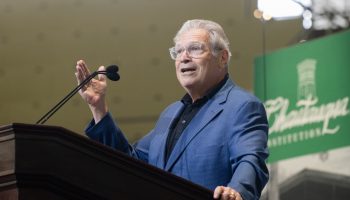
At 3 p.m. Saturday in the Hall of Philosophy, Deutsch will deliver a lecture for the Chautauqua Women’s Club’s Contemporary Issues Forum titled, “How Chefs are Key to the Future of Food.”
In a nutshell, he’ll explain “how chefs — specifically research chefs working at the intersection of culinary arts and food science — work with physicians, food scientists, urban planners and dietitians to ensure an equitable and sustainable food system.”
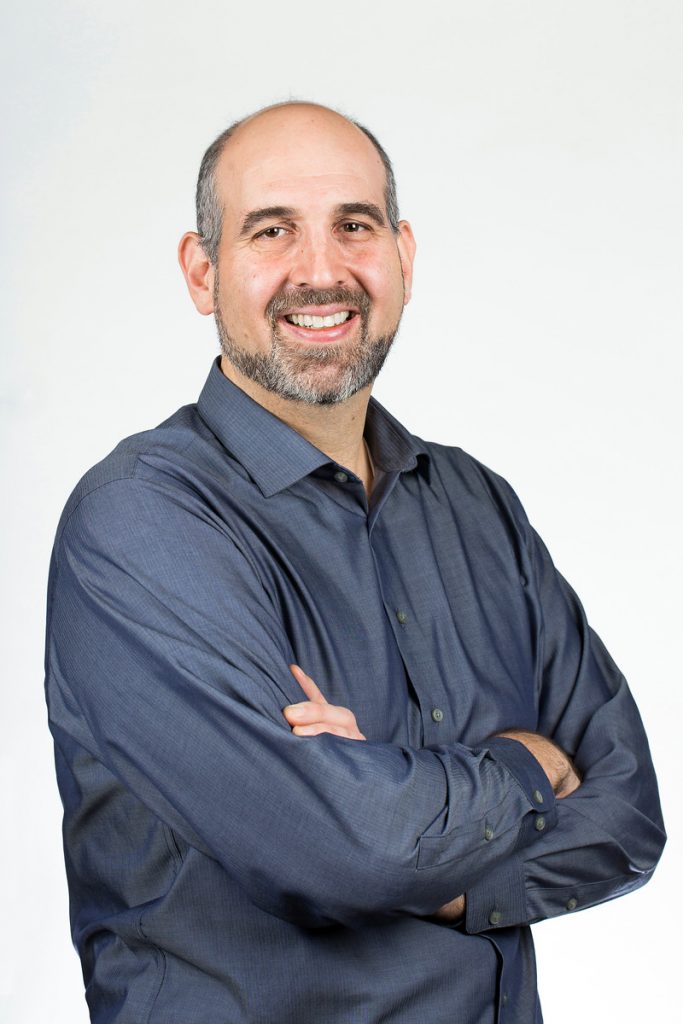
Currently, Deutsch is professor of food and hospitality management and co-chair of the Department of Health Sciences at Drexel University, a “global leader in experiential education” based in Philadelphia. His portfolio includes culinary arts and the food, nutrition, exercise and health sciences, which he summed up as “the lifestyle and preventative medicines.”
A certified hospitality educator and certified research chef, Deutsch is the founding program director of Drexel’s Food Innovation and Entrepreneurship Programs and the founding director of the Drexel Food Lab — “a culinary innovation and food product research and development lab focused on solving real-world food system problems in the areas of sustainability, health promotion and inclusive dining.”
Research chef is “a job that people don’t know exists,” he said. “But … every product anywhere has to have been developed. There’s a recipe, it must be free of allergens, fit through a machine, have a long shelf life … I did this for a lot of years for the big, bad food industry and ultra-processed foods. … At Drexel Food Lab, we apply these same techniques to good food problems — solutions for people, the planet and the economy.”
Because microbiologists, public health officials and pathologists dominate conversations about human health, planetary health and economic health, Deutsch said that on Saturday afternoon, he’ll tell a separate story about each of these areas to demonstrate the importance of including chefs.
According to Deutsch, “[w]hile incredible technological advances have been made in preparing for the future of food, one — good cooking — is too often left out of the conversation.”
“Each (food product) could be meticulously designed,” he said. “… Intentional design thinking is more effective than leaving things to chance. … [And] in our opinion in the (Food) Lab, things should taste well, and that’s why you should eat them. … If we really want people eating better food, we have to have good tasting food.”
His stories of culinary innovation will focus on “food waste prevention and minimization (health of planet), customized nutrition (health of people), and a market-based solution to culinary medicine (health of economies).”
Drexel’s is “the only program like this around the country,” Deutsch said. “It’s the only doctorate-granting university with a culinary degree. Drexel’s late president, Constantine Papadakis, was a bon vivant food and wine lover. He built a culinary school to have a place to take his donors and others. He passed away in 2009, but the program is in its 35th year. Graduates and undergrads from across the country study there. … [Recently,] our international enrollment is down.”
After earning his associate degree in culinary arts at the Culinary Institute of America in Hyde Park, New York, Deutsch transferred to Drexel, where he majored in hotel and restaurant management and earned his Bachelor of Science degree in 1999. Five years later, he completed his Ph.D. in Food Studies and Food Management at New York University in New York City.
As a classically trained chef, Deutsch worked in a variety of places, including small luxury inns and restaurants. He developed the culinary arts program at Kingsborough Community College in Brooklyn, New York, which is part of the City University of New York system, as well as the Ph.D. concentration in food studies at CUNY’s Graduate Center and School of Public Health.
As the former president of the Upcycled Food Foundation, he worked to prevent food waste and global warming. And as the inaugural James Beard Foundation Impact Fellow, he led an effort to develop a national curriculum on food waste reduction for chefs and culinary educators.
An author of numerous articles in professional journals, Deutsch has also co-authored or edited eight books, including The Anti-Inflammatory Family Cookbook: The Kid-Friendly, Pediatrician-Approved Way to Transform Your Family’s Health (c. 2021), Barbecue: A Global History (with Megan Elias, c. 2014), They Eat What?: A Cultural Encyclopedia of Weird and Exotic Food from around the World (c. 2012), and Culinary Improvisation (c. 2009).
Who better than Deutsch to join forces with experts from a diversity of academic and professional fields to work toward future-proofing the U.S. food system by making it equitable and sustainable?