
SOPHIA ROOKSBERRY
Staff writer
Over the past nine weeks, Chautauquans watched as a personified corporation threw tantrums in a diaper, a dying father went through the motions of his remaining days, a surreal workplace became a fascist regime and much more on the stages of Bratton Theater and Roe Green Theater Center.
“I always want to offer an entertaining, successful, celebrated season that people enjoy and have something to chew on, and I think we met that,” Jade King Carroll, producing artistic director of Chautauqua Theater Company, said. “Another big goal is making sure that our Conservatory and our fellows are represented well, that they grow and that they’re having a fulsome experience that really does help bridge between the educational and the professional.”
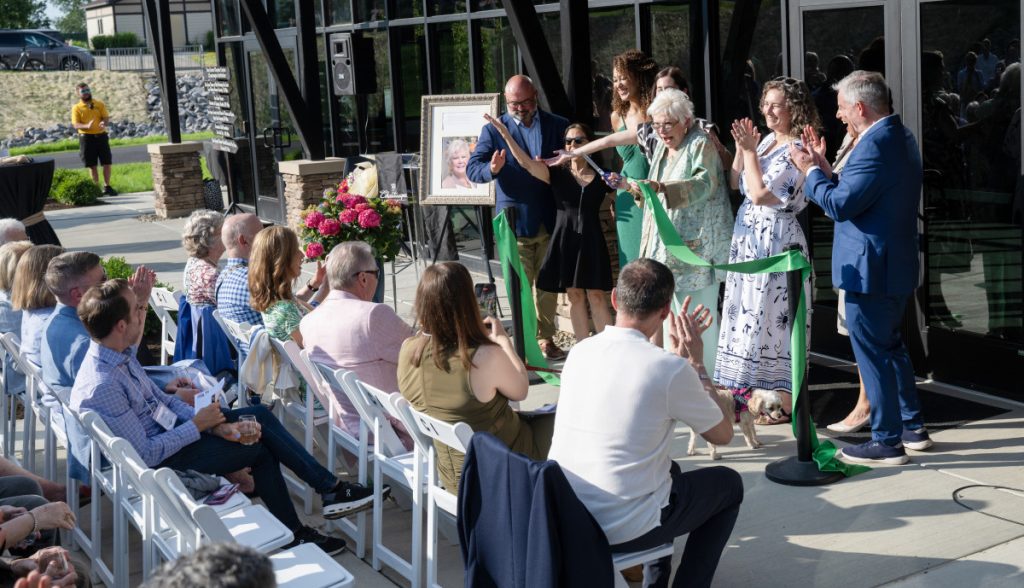
These were common goals between King Carroll and Managing Director Emily Glinick. They also shared similar hopes for RGTC, which officially opened on June 28.
“It was really important that we, first and foremost, thanked our incredible donors,” Glinick said. “We had some major gifts from a variety of people who were absolutely critical to the success of the building, some folks going back decades in support of CTC, so to see it all come to fruition and physically cut the ribbon on the building together was massively important.”
The day after the ribbon-cutting, CTC broke in the new building with the first performance of the late night series, spearheaded by Vice President of Performing and Visual Arts Laura Savia.
“It exceeded our expectations in terms of audience engagement,” Glinick said. “We were on the conservative side with budgeting our revenue goals for that space, but the late night series more than doubled the revenue that we had projected for the space, and all but a few of those performances completely sold out. … It really shows you that there is excitement and momentum behind the venue itself, but also behind the programming that we’re bringing.”
RGTC was more than just a vessel to expand CTC’s program offerings. The building was designed to provide the company with a shared space on any given day, whether or not a show was running on The Michael E. Hill & Peter M. Korns Black Box Theater stage.
“For the past couple of years, as we were building and ideating and creating it, we called it an artistic coral reef, which is something that really feeds off of … the diversity of how different everybody works and all working toward one healthy ecosystem, and I think we did that,” King Carroll said. “This was my fourth season working with Emily and helming CTC, and I think this was our healthiest season of employee morale, just being a company.”
A few days after the opening of RGTC, the summer’s first New Play Workshop opened across the grounds in Bratton, launching the season with a vigor that didn’t cease until the last show closed on Aug. 16. Throughout July, the inaugural New Play Labs — The Bone Wars and ERASERS: A Bloodthirsty Office Comedy — brought another dimension of new work development to RGTC.
“Overall, it went well because the playwrights felt like their work was served by the process, which is the ultimate goal, to help the play and the playwright grow and expand and figure out what its heading is,” Glinick said. “From a new work development perspective, I think it was a super success … I’m just so thrilled that we had such a huge audience response, and that people stayed for the talkbacks to continue providing that essential feedback that Chautauquans are so good at.”
At the heart of the season was the world premiere of Sharyn Rothstein’s Best for Baby, a “very funny tragedy” that was presented as a New Play Workshop last year and completed its commissioning process this summer.
“A gentleman on the porch after the show said, ‘I’m going to need to review my stock portfolio,’ because he was so shaken by the malpractices of Johnson & Johnson that he wanted to divest from that company, and honestly, that kind of change is what that play is asking for,” Glinick said. “It’s the power of the theater to change hearts and minds, and to change your pocketbook? I mean, that’s on a whole other level.”
Beyond the wallets touched by Best for Baby, CTC was able to measure the show’s success in its own fiscal way. According to King Carroll, Rothstein’s play was the fourth most attended show in CTC history and the third highest grossing show the company had ever presented.
“In the new play world, you budget for the long-term returns of commissions,” King Carroll said. “Often a new play won’t sell out, but if you’re commissioning it, then you get the long-term returns of investment. To have a world premiere … without a star, so to speak, be one of our highest grossing and most-butts-in-seats [productions] is a great success.”
While the company was able to see a relatively quick return on Best for Baby, other commissions were still finding their footing on the grounds this summer.
“The Crossover was an amazing residency,” King Carroll said. “… We’re looking forward to a closed-door, private workshop just to get some people to hear the music outside of Chris [Jackson’s] mouth in April, and a first draft of the music is due in January, so that is a thrilling place to be. It was so great to be with Chautauquans and to share that first piece of The Crossover with our audience. I know it excited something in the entire artistic team and we’re just raring to go.”
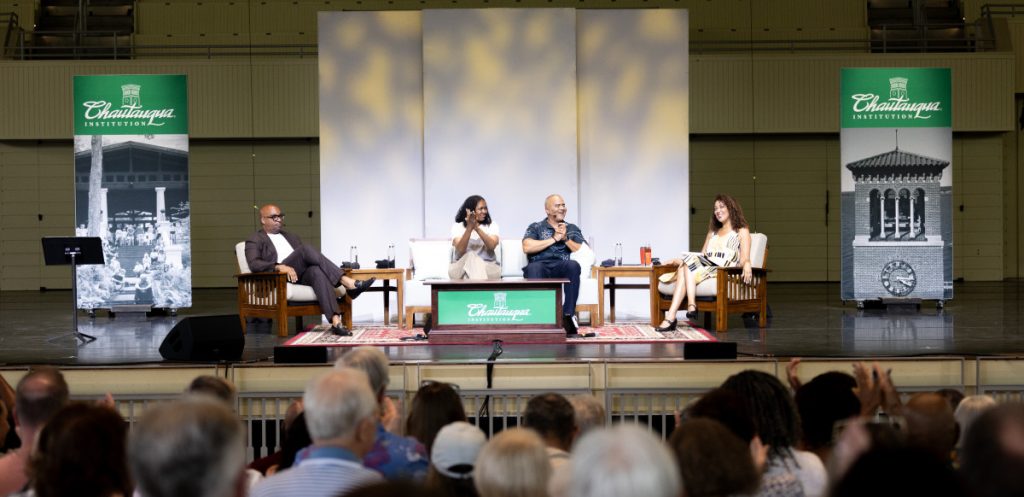
In addition to the team adapting inaugural African American Heritage House Distinguished Fellow Kwame Alexander’s coming-of-age book, two other playwrights spent some time on the grounds this summer to work on their commissions.
“One of the things that the Roe Green Theater Center was built for that we didn’t really have a space for in the past was having writers residencies,” Glinick said. “This year, we had a bunch of writers-in-residence. Not only did we have the folks from The Crossover, but we had Theresa Rebeck, who is the most produced woman on Broadway. We have won a New York State Council on the Arts grant to commission her for her next new play.”
Sarah Burgess was also in residence at Chautauqua this summer, working on what is currently named Untitled Central Valley Play.
“[It’s] a look at how aspects of this country can fracture a family, but it’s a really personal story about three sisters and their familial relationship,” King Carroll said. “It’s not discussing the politics, it’s just the world that we’re in … I’ll be directing that, and that’ll be a New Play Workshop next year.”
King Carroll also hopes to present one of this summer’s New Play Workshops, The Motions by Zora Howard, as a mainstage production next summer.
“I loved the conversations around Best for Baby and The Motions,” King Carroll said. “They’re both such theatrical pieces in very different ways that are pushing boundaries and the expectations of theater. … We have such an adventurous and curious audience, so it’s always great to be in dialogue with them on the plays, and particularly the plays we commissioned.”
Although not what one would traditionally consider a new work, Shakespeare’s As You Like It was another New Play Workshop that inspired riveting conversation among Chautauquans. The entire Acting Conservatory performed in the Bard’s classic comedy, and Bandits on the Run spent a week at Chautauqua workshopping some original songs to accompany the reading.
“Jade and I were intentional in wanting to program a New Play Workshop musical in the space this year, because as we arc toward producing our musical adaptation of The Crossover, we wanted to have a stepping stone into the world of doing a musical in that space,” Glinick said. “We learned a lot of what it takes from our staff in order to support something like that, and I just think that Bratton was made for music. When you look on the inside, it almost feels like you’re on the inside of a wooden instrument.”
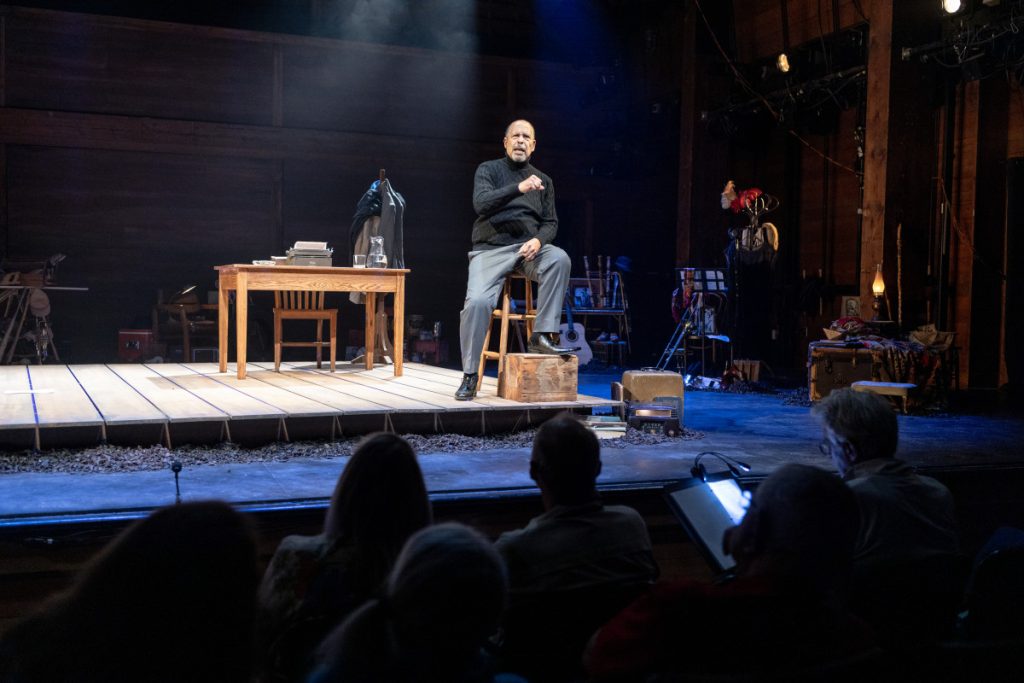
The final production of the season was also presented in Bratton: August Wilson’s autobiographical one-man play, How I Learned What I Learned.
“There were many people who, coming out of How I Learned, said, ‘That’s the best production I’ve ever seen Chautauqua Theater Company do,’ or, ‘That’s the best piece I’ve ever seen in the theater,’ so … from a discerning audience that sees theater across the country … that’s pretty high praise,” Glinick said.
After a robust season of storytelling, King Carroll and Glinick are gearing up for a post-mortem discussion to factor lessons from the summer into next year’s plans, and to acknowledge the staff who made the season possible.
“I’m so grateful to our incredible staff for really rising to the occasion this summer,” Glinick said. “It was a lot of ‘you don’t know what you don’t know,’ and with a new space, there’s things you expect, and then you need to expect the unexpected, and this staff was a mix of longtime returning staff and some new people, and everybody just really stepped up to the plate.”