
Lily Reslink
Staff Writer
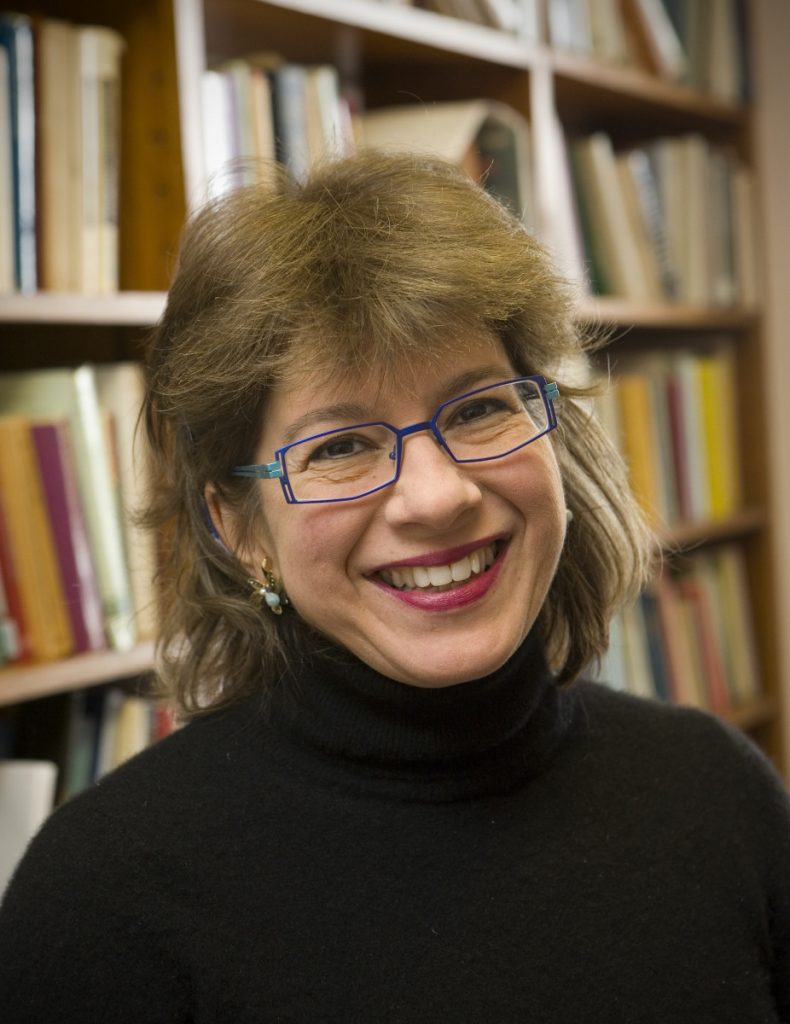
Eli M. Black Distinguished Professor of Jewish Studies at Dartmouth College and chair of the Jewish Studies Program Susannah Heschel is interested in how Abrahamic religions construct the identities of one another. At 2 p.m. today in the Hall of Philosophy, she will make her Interfaith Lecture Series debut with a presentation illuminating the causes and effects of inter-religion contempt.
“I would say just as human beings are complicated, so are theologies; and what transpires in the imagination is important,” Heschel said.
Heschel said there is ample scholarship on Christian anti-Judaism, which includes negative images and statements throughout centuries. She aims to advance this scholarship by asking: “Why?”
“I’ve written about Jewish approaches to Christianity in the modern period, historical approaches, theological approaches, how Jews have understood Jesus and Paul [and] the New Testament in relation to Judaism of that era,” Heschel said.
Heschel’s scholarship focuses on Germany, which she said is “where all the important developments occurred in the realm of Jewish studies and also Christian theology.”
Heschel said her upbringing was formative to her perspective and approach to religious scholarship.
“I also grew up as feminist, recognizing the often horrific limitations society places on women, for which religion is a participant,” Heschel said, in conjunction with Week One’s ILS theme, “Women of Spirit.”
Her father — a major Jewish theologian active in the civil rights movement and in the Second Vatican Council — marched alongside Martin Luther King Jr. Heschel said she grew up in a home where peacemaking, reconciliation and dialogue were central.
She said these influences shaped her response to the Oct. 7, 2023 attacks on Israel — an approach that garnered global attention. At Dartmouth, Heschel co-organized a panel of Jewish Studies and Middle Eastern Studies faculty to lead community discussion and answer questions.
In a joint interview with NPR, Heschel and James Wright Professor and Chair of Middle Eastern Studies at Dartmouth College Tarek El-Ariss explained their prior relationship between academic programs and with students enrolled in these programs enabled them to host the community dialogue together. According to the interview, Heschel and El-Ariss teach a course titled “The Arab, The Jew and the Construction of Modernity” in which students of Palestinian, Arab, Jewish and other backgrounds convene in group discussion; many of those students attended the panel.
“These are students who know us, who trust us, who are already part of a conversation. And so some of them, of course, were upset, angry, scared. But they brought these emotions, the soul baggage also, and expressed it. But they expressed it in a thoughtful way, and things remained really civil throughout,” El-Ariss said in the NPR interview.
For Heschel, a broader question in her research is how Judaism constructs itself “through the fantasies it has about Christianity and Islam.” She discussed the Christian imagination about Judaism as well as the Jewish imagination about Christianity and Islam. She explained these perceptions have broader applications because she connects the identity construction to the cause for conflict. “There are ways in which you don’t necessarily know the religion, but they imagine it for particular purposes,” Heschel said.
With a focus on those who fall into the clutches of contempt, Heschel is a curious inquirer of factors in inter-religion relationships that cause this.
“It was a big area of interest for Jewish historians to look at some of the similarities between rabbinic literature and the Quran, for example,” Heschel said. “In doing that, I’m also interested in what lies beneath the surface.”
Ahead of her lecture appearance, Heschel called for people to learn from historical peacemaking efforts. For her, sources of admiration include Martin Luther King Jr., Abraham Lincoln, Barack Obama and her own father. Heschel said she would like people to deepen their understanding of the complexity of inter-religion relationships and noted this mindset’s benefit to engaging with her lecture.
“I would like everyone to have their greatness of mind and heart,” she said.