
FAITH SIEGEL
Copy Editor
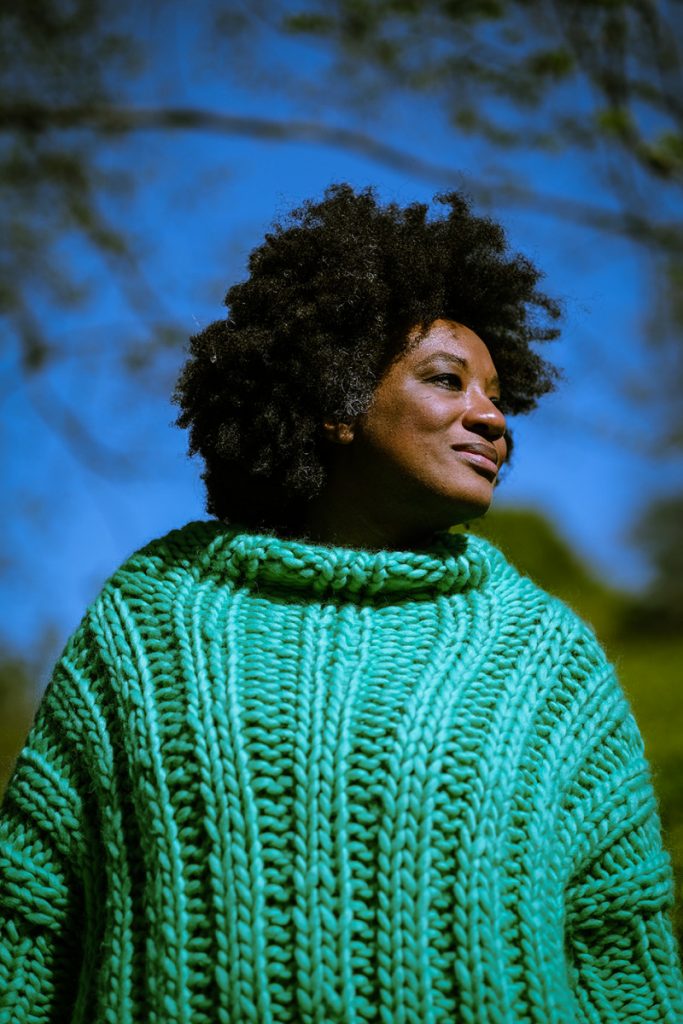
Citizens in today’s society face a tough trade-off: “You can’t have healthcare, but you can have a shopping spree at H&M.” Modern consumption patterns are intrinsically linked to histories of colonization and are detrimental to the environment, as writer and sustainability consultant Aja Barber explained in an interview with journalist Myriam François.
In her alliterative debut novel, Consumed: The Need for Collective Change: Colonialism, Climate Change, and Consumerism, Barber detailed where systems of power, sustainability, fashion and culture meet. She will bring her insights to Chautauqua Institution at the 10:45 a.m. lecture today in the Amphitheater, continuing Week Four’s theme, “Wasted: Our Era of Disposability.”
Grounded in her lifelong interest in fashion, Barber looks beyond sheer fabric and sees the systems that have established and enabled consumer patterns today, exacerbating wealth inequality and the
climate crisis.
“From the minute we are born, we’re trained to be consumers. That’s the society we live in,” Barber said in a 2021 interview with Vogue.
Through the growth of social media, enabled by a lack of widespread education on the dangers of overconsumption, continuous buying became “our entire culture,” Barber said in the interview with François. Purchasing goods can quickly become an easy dopamine hit in a world where larger structural successes like a steady job market, an affordable housing market or accessible healthcare are increasingly harder to come by.
“The things that are really important and really matter, those social safety nets we all love … that stuff is going away, but instead we’re being flooded with cheap, accessible goods that are made by the exploitation of someone else,” Barber explained to François.
This exploitation has roots in colonization, Barber said. From underpaid, mistreated people working in dangerous conditions to neighborhoods acting as dumping grounds for little-worn clothing, “traditionally pillaged” countries — Barber’s preferred term, as opposed to the labels “developing countries” or “third world” — take the brunt of overconsumption’s negative impact.
In Consumed, Barber wrote, “… colonialism shows up all over our planet, especially in the places where our products are manufactured, but also in the places our trash goes and our used clothing gets dumped.”
Marginalized communities are disproportionately affected by the climate crisis, according to Barber, which overconsumption contributes to on a massive scale through resource overuse, emissions from product production and masses of discarded goods.
The cycle of consumption is largely driven by fast fashion brands whose priority is to sell as much as possible, as cheaply as possible. However, in the interview with François, Barber said placing blame on corporations — though accurate — doesn’t relinquish individuals from their obligation to action.
“People love the conversation about, ‘It’s not on the individual, it’s on the corporation,’” Barber said. “Well yeah, obviously. Who is going to regulate a system if we as individuals do not change ourselves a little bit? … I still think that we have to start unlearning for ourselves before we can change anything.”
This unlearning can look like everyday efforts to make the most with what one has. Over time, practices like questioning just how much one really needs to consume, learning how to repair one’s clothes and swapping clothes with friends can change overconsumerist habits.
Consumed ends with a message reminding readers of their value as individuals and the power that even one action holds.
“Go ahead and put that back on the rack. Remove it from your shopper basket. You don’t need it, because you’re good as you are.”