DEBORAH TREFTS
Staff Writer
Standing in checkout lines gazing at a plethora of health-related messaging on magazine covers or a smartphone can be a mind-boggling experience. How is one to know if the claims being made are accurate, reliable, significant and based on impartially funded research, or are merely marketing ploys?
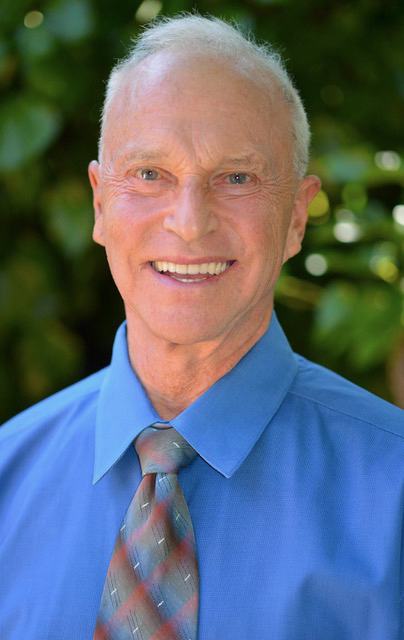
When it comes to one’s personal health over a lifetime, impulsive and adventuresome consumerism is not the best practice. At 9:15 a.m. Tuesday at the CWC House, Alfred Scopp, Ph.D., will give a fact-based presentation titled “Longevity Science” for Chautauqua Women’s Club’s Chautauqua Speaks series.
Scopp earned his Bachelor of Arts with honors in psychology at Cornell University in Ithaca, New York; his master’s in environmental science at Yale University in New Haven, Connecticut; and his Ph.D. in biostatistics and research design at Duke University in Durham, North Carolina.
“My talk is on the best data from research and metrics about longevity and mortality rates,” he said. “Longevity is how long … you live. We care about things that add at least three to four years to your lifespan. We don’t focus on the small things, but on those that reduce mortality by at least 15%.”
According to Scopp, “The best longevity strategy in medicine is in cardiology. … Their longevity model is: Don’t wait until you have a disease. Do the work [of prevention] decades beforehand. There are four major diseases of aging. They’re the cause of 80% of mortality after [age] 65. … The processes that cause them go along your whole life, so do things to prevent them.”
A migraineur, Scopp co-founded (with internist Kenneth Peters, MD) and for 38 years co-directed the Northern California Headache Clinic in Silicon Valley in order to treat intractable migraines and other severe headaches. When he retired in 2018, he pivoted towards longevity science because he’s a “fitness nut,” had been practicing yoga since he was 16 and he knew he could “combine the best research with statistics in science.”
“I gave [a] Grand Rounds [presentation] in my hospital in Mountain View, California,” Scopp said. “I’d waited until my retirement because I thought I’d be run out of town, that the doctors wouldn’t take [longevity science] seriously. But many were delighted. Since then, I’ve spoken at other hospitals and educated the public.”
With no product to sell and a strong commitment to knowing and applying the best science, Scopp said “it’s easy not to get distracted by marketing.” He will discuss each of “the five things that really matter” for increasing longevity and decreasing mortality: fitness, an active social life, a healthy diet, sleep and body mass index. Avoiding “deleterious substances” is also important.
“If you are just a little better than average — in the top third — for women, 14 years are added; for men, it’s 12 years,” he continued. “Some very basic concepts are important. First, things that extend your life span extend your wellness years.”
According to Scopp, “healthy habits decrease major aging diseases by 78 percent. … and aging itself is being seen increasingly as a legitimate treatment target.”
Especially because the aging process begins at the early age of 20, his longevity science presentation is meant for adults of every age.
“Knowing what the best research shows gives the biggest yield in life span longevity and is the most helpful,” Scopp said. “These things involve little or no expenditure. … If you know what really matters, you don’t have to focus on the small stuff.”