DEBORAH TREFTS
Staff Writer
Chautauqua Women’s Club members’ 42 consecutive years of dedicated work and perseverance have resulted in a major philanthropic achievement.
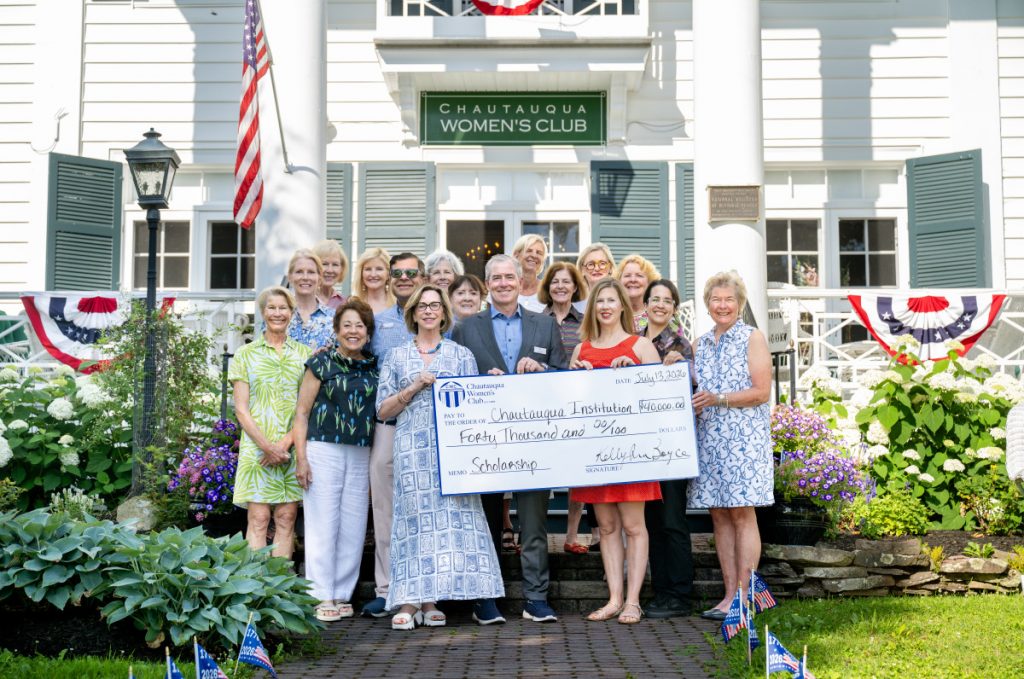
As of 2026, CWC’s cumulative donations to Chautauqua Institution since 1985 have exceeded $2 million. All were earmarked for scholarships supporting students enrolled in the Schools of Performing and Visual Arts.
In her booklet written in recognition of CWC’s centennial, Chautauqua Women’s Club History, 1889-1989 (c. 1989), the late Alfreda Locke Irwin wrote the following about the priority CWC was giving to students:
“The main recipient from [the Women’s] Club benefits has been the scholarship program. The Scholarship Fund was separated in the mid-’60s with its own treasurer for the better management of the funds that come for this purpose from individual donations and gifts, as well as approximately 20% of the proceeds of benefits, plus the donations given at recitals. … The Scholarship Committee, headed by Mrs. Beverly Esch, is a very busy committee with many duties related to students, their scholarships, their appearances in recitals and other matters.”
CWC’s emphasis on raising money for student scholarships has never wavered — even during the peak years of the COVID-19 pandemic. According to Irwin, scholarship giving approximated $13,500 in 1989. In both 2025 and 2026, it totaled $40,000.
At least a dozen of the CWC scholarship recipients this season are members of the Music School Festival Orchestra. In total, 23 exceptional students have been honing their knowledge of and skills in these disciplines: bassoon (1), cello (2), clarinet (1), dance (2), flute (1), horn (1), opera (2), percussion (2), piano (3), string bass (1), theater/acting (3), theater/design (1) and violin (3).
The profound gratitude of the students who benefitted from CWC’s magnanimity last season is apparent from the many thank-you notes it received. The following are unattributed excerpts from two of the notes:
“Before arriving here, I was going through a period of self-doubt in both life and music. I wasn’t sure where I stood as an artist or whether my voice still had something meaningful to say. Thanks to your generosity, I was able to be here, and this experience has helped me reconnect with myself in ways I didn’t expect. I was reminded of the initial reason I played piano. I’ve found a new sense of clarity and self-trust, made musical discoveries that feel personal and honest and formed connections/precious friendships I know I’ll carry with me long after I leave.”
“… As the saying goes — it takes a village — and this is certainly true with opera singers. I have had such an incredible experience at Chautauqua. My time here would not have been possible without your generous support, and I am so glad and lucky that you are now part of my village.”
Sarah Malinoski, director of the Chautauqua Schools of Performing and Visual Arts, played an essential role in that student’s village. She said that students are coming in and out of her office “every day, all the time.” Monday, she was backstage with MSFO’s instrumentalists before, during and after their performances on the Amphitheater stage. For her, “the excitement is really fun backstage.”
Malinoski knows how important a CWC scholarship is to each person. She said that three of Chautauqua’s current artistic directors were former scholarship students.
There have been “a number (of scholarship students) from Venezuela,” she continued. “It’s a turbulent time, especially with the earthquakes, and it’s such a gift for them to be able to come here and focus on something else. It makes you realize how lucky we are. They can do what they love here. We’ve also had a few from Ukraine. It was an incredible experience trying to get them out; it tugs at your heart. And those are just a couple of stories.”
Scholarships are “the main thing that makes an impact,” Malinoski said. “When I started 23 years ago, the students had to pay thousands of dollars to come here. Now, room, board and tuition are totally free for music and theater students because of scholarships. And the School of Visual Arts is almost all covered. We are working on the School of Dance. We have $200,000 in total for it, including funding from the Women’s Club. It has supported students in all of our disciplines.”
Samantha Minardi-Lopez is Chautauqua’s manager of Student Services for the Schools of Art, Dance and Music. Her year-round portfolio includes addressing myriad student issues and needs “from the point of application, through admission, enrollment, onboarding” and the five to seven weeks of their individual programs and residencies, including their meals in the new Bill & Chloe Cornell Dining Hall in Greene Family Commons.
This season’s students have come from nearly all 50 states, plus Canada, Central and South America, China, England, Europe, Japan, Southeast Asia and Ukraine. Minardi-Lopez said that although the majority of them are between 18 and 28 years old, they are as young as 11 in the School of Dance and between 30 and 80 in the School of Art.
Some of the expenses incurred and challenges faced by students are not ones that most people would anticipate, yet they are of considerable concern for Minardi-Lopez. “A student had to drive his bass here from Texas because he couldn’t take it on an airplane,” she said. “Cello students have to buy a second airline ticket for their cello. $500 to get here is unobtainable to a lot of students. … In the School of Music this year, for the first time ever, all students have a full scholarship. … Applications went up 20% for the Instrumental Program.”
Minardi-Lopez continued: “25-year-old students have an apartment, a car, car insurance, phone bills. (Chautauqua’s) program is so dense they do not work while they’re here. Music students are here for five to six weeks, Art for six weeks, and Dance for up to seven weeks. They may be worrying about their family back home. These students very much have real lives and real life problems.”
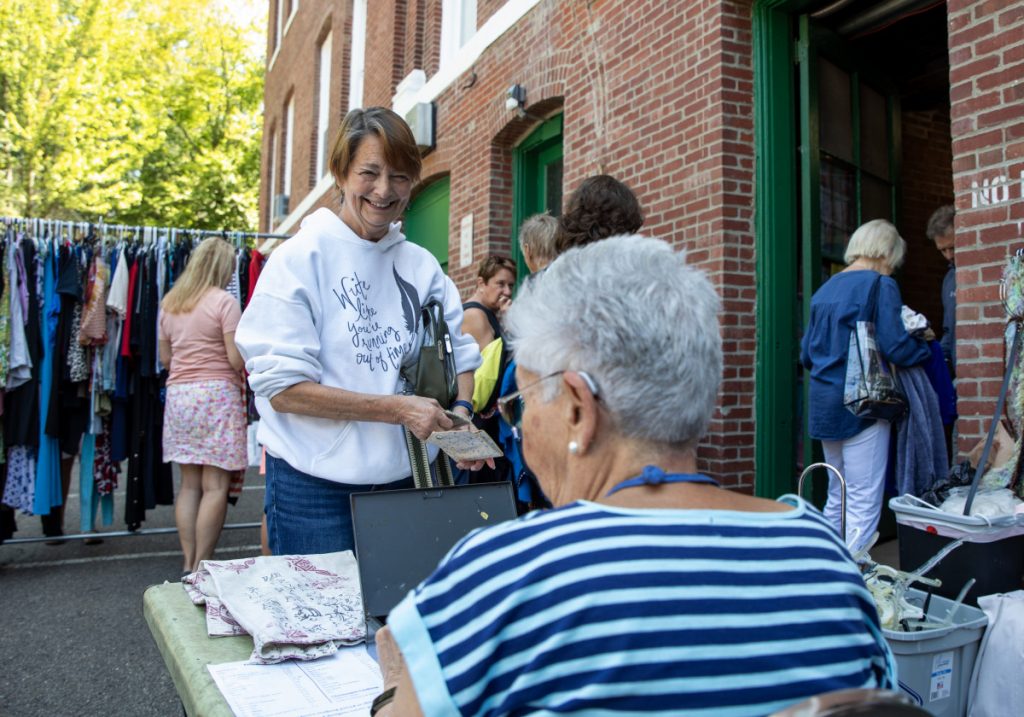
Chautauqua’s Interim Chief Advancement Officer and Senior Director for Community & Belonging Amit Taneja said: “Hundreds of students have been funded through these scholarships. … It is such a significant milestone. … The Women’s Club is an exemplary group because many hands and groups of volunteers helped to raise the funding. … They represent the ethos and collective commitment (of Chautauquans). They put in hundreds of hours.”
According to Taneja, “one of the changes (for Chautauqua since 2025, is that) we rely on the generosity of donors who continue to see the value and promise of the students who come to our schools. This makes it so it’s their talent that continues to enable students (to come).”
Karen Williams Miller — who since October 1, 2025, has been serving as CWC’s new scholarship chair — said that “all of the students are on scholarship money. Chautauqua Institution does not (contribute) anymore because of (its) cost-cutting. … (It) assigns 53 student recital events, and allows CWC to request donations.”
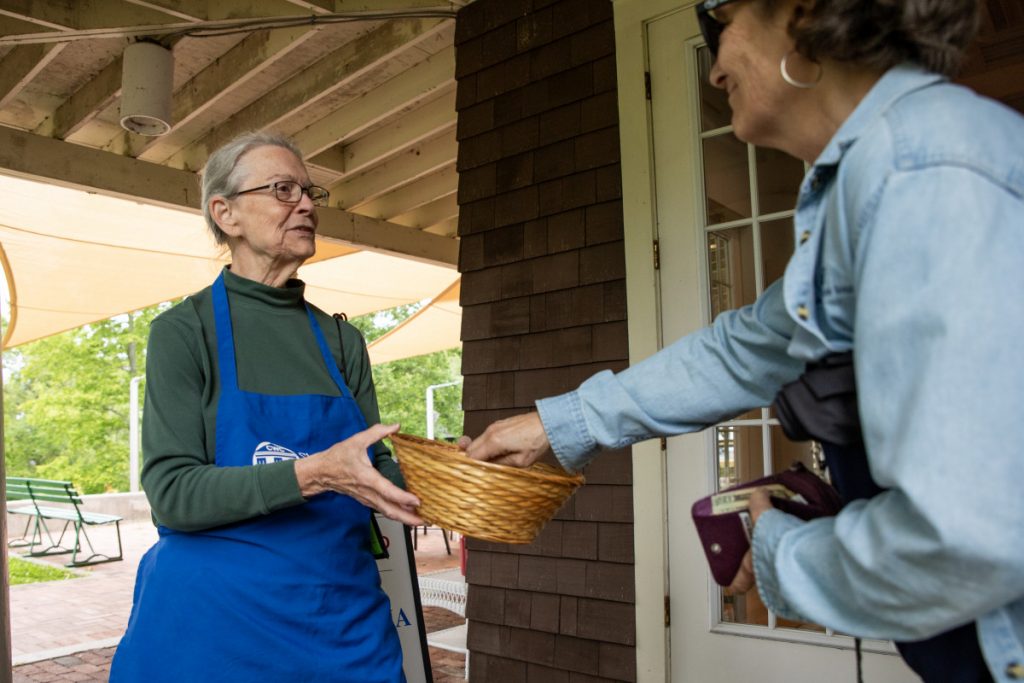
CWC volunteers donning “blue pinafore-type aprons” collect donations in baskets at alumni, faculty and masterclass recitals held in McKnight Hall, Elizabeth S. Lenna Hall, Fletcher Music Hall and Sherwood-Marsh Studios.
“There are 20 volunteers (this season),” Williams Miller said. “They have sandwich board signs, which are so well done, requesting donations for scholarships for students. … They stand outside and hold the collection baskets at the beginning and end of each recital. … People throw in $5 or $20.”
“It’s been so great getting to know a lot of (these CWC volunteers) over the years,” Malinoski said. “Countless students would not have been able to come without this (financial support).”
“I’m very close with the women who do the basket collection,” Minardi-Lopez said. “They contributed $40,000 from all of their volunteering.”
According to Williams Miller, in just one week last season — while Sharon McClymonds was still CWC’s Scholarship Chair — $1,200 was collected. By the end of the season, CWC’s recital volunteers had taken in more than $10,000.
Each year, CWC’s members are asked to contribute to its scholarship program. The names of those who give $250 or more are listed, and those donating $1,000 or more may designate a named scholarship in honor or in memory of one or more specific individuals or they may earmark a scholarship for a particular instrument (voice included), or a School. In addition, CWC makes a “Valentine Appeal” to its members requesting scholarship donations.
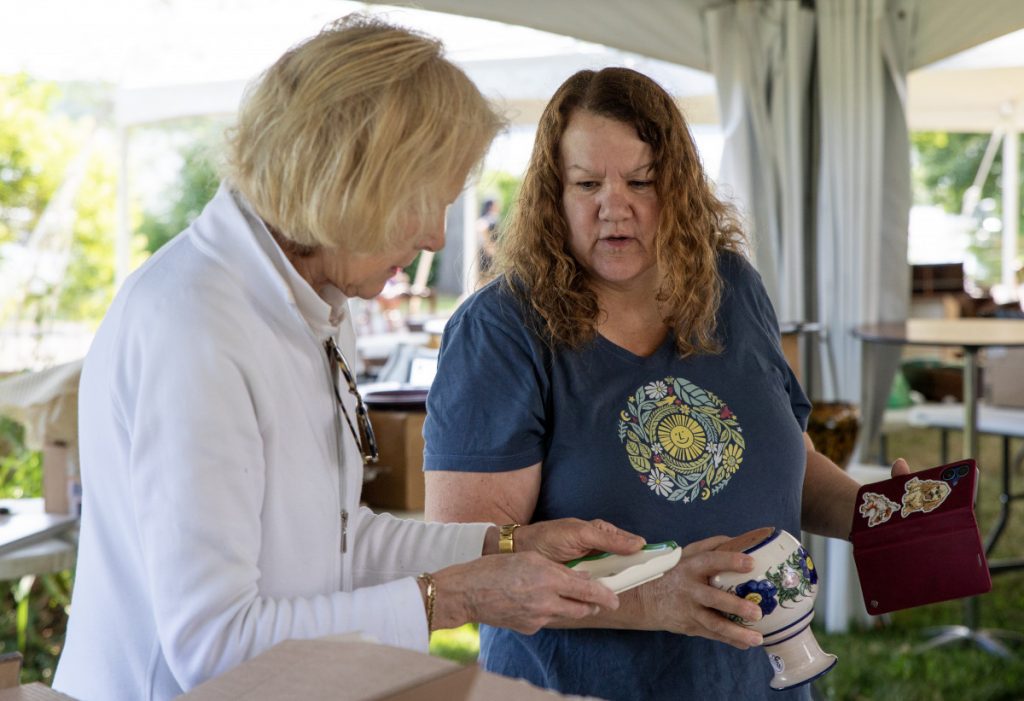
“Sharon McClymonds was the scholarship chair for six or seven years, and she provided me with (a) wonderful notebook with all the (scholarship-related) information,” said Williams Miller. Before retiring, Williams Miller focused on health and human services for Guidehouse, a consultancy headquartered outside Washington, D.C., after having left the missile defense business she’d run at Northrop Grumman.
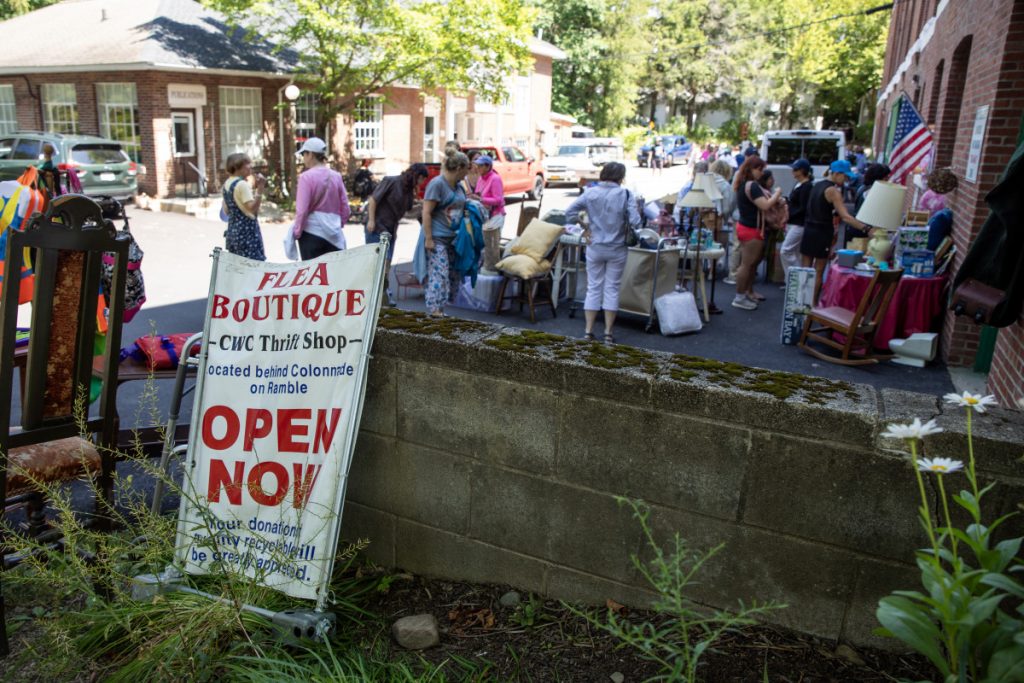
“I took over my role as scholarship chair in 2019 from Gail Gamble, who had been in that role for a couple of years while she was also running (CWC’s) Flea Boutique, which itself was a full-time job,” McClymonds said.
She continued, “We have a dedicated and enthusiastic group of … volunteers on the CWC Scholarship Committee, whose responsibility is to hold the baskets … to collect donations for student scholarships. We are given a schedule each June from Sam (Minardi-Lopez) … outlining the recitals we need to staff. … The Scholarship Committee does important work, is open to anyone and we always welcome new volunteers.”
For McClymonds, “The most memorable experiences were with the students who received the scholarships — (feeling) their pure and absolute gratitude. Most of these students are working one or two jobs to pursue their studies. To take time off from work to come here, not earning any money, it’s a big trade-off for them. They need every penny and more.”
According to McClymonds, “Chautauqua Institution has done all the vetting. All we have to do is give them money. Any donor of $1,000 gets a named scholarship, and we connect those donors with their students. … Donations of under $1,000 are pooled into a big CWC scholarship.”
During COVID-19 there were no basket collections; everything was remote, she said. “I asked Tina Downey how much was needed. We gave $10,000 for Theater and Visual Arts so the scholarships would continue. I didn’t want there to be a disruption in giving.”
The Chautauqua Women’s Club has “members who donate who really want to empower young students because it’s so hard,” McClymonds added. “The students are so appreciative, and the volunteers so dedicated. … I was so proud of our volunteers. When I joined, there had been no (official) scholarship chair for two years, so it’s in a much better place now.”
Last but certainly not least, CWC President Kelly Ann Boyce has been happily spreading the word about CWC’s philanthropic achievement to one and all: “While we’re incredibly proud to celebrate this $2 million milestone, the real story is the generations of Chautauqua Women’s Club members, leaders and donors who made it possible. For nearly 42 consecutive years, they have believed in opening doors for talented young artists because lifelong learning, opportunity and excellence have always been at the heart of who we are.”
“Their generosity,” Boyce continued, “has not only transformed students’ lives, but has enriched the Chautauqua experience for our entire community. This milestone reflects the enduring values and commitment of the Chautauqua Women’s Club, and we are deeply honored to carry their legacy forward.”