Sophia Rooksberry
Staff Writer
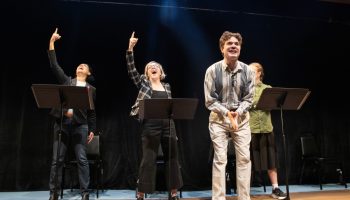
For more than two decades, a core mission of Chautauqua Theater Company has been to develop plays in their infancy. In the past, those new works were incubated in New Play Workshops, which required the team to rehearse and stage a reading in the span of a week. This year, the New Play Workshops are shifting to focus on refining the scripts of three new plays, and the inaugural FutureNow New Play Labs are providing a longer workshopping period for both the script and technical aspects of two new works.
The New Play Labs are a direct result of the brainstorming that took place when CTC began programming the first season for Roe Green Theater Center. Producing Artistic Director Jade King Carroll wanted to develop an exciting season for Chautauquans in this new space while remaining mindful of the budget cuts facing Chautauqua Institution this summer.
“What started as a bit of a challenge to figure out grew into something that I think is going to be a delight for the audience, and … already is transformational for the artists and the fellows and the plays,” King Carroll said.
After the program was approved in the fall of 2025, King Carroll began parsing through applications from teams of Playwriting and Directing Fellows, alongside The Drama League.
“The Drama League has partnered with us to help with the cost, and also The Drama League is one of, if not the preeminent institution for directors and a pipeline for directors in the country,” King Carroll said. “It’s great that we partnered with them both fiscally and just to reach more people.”
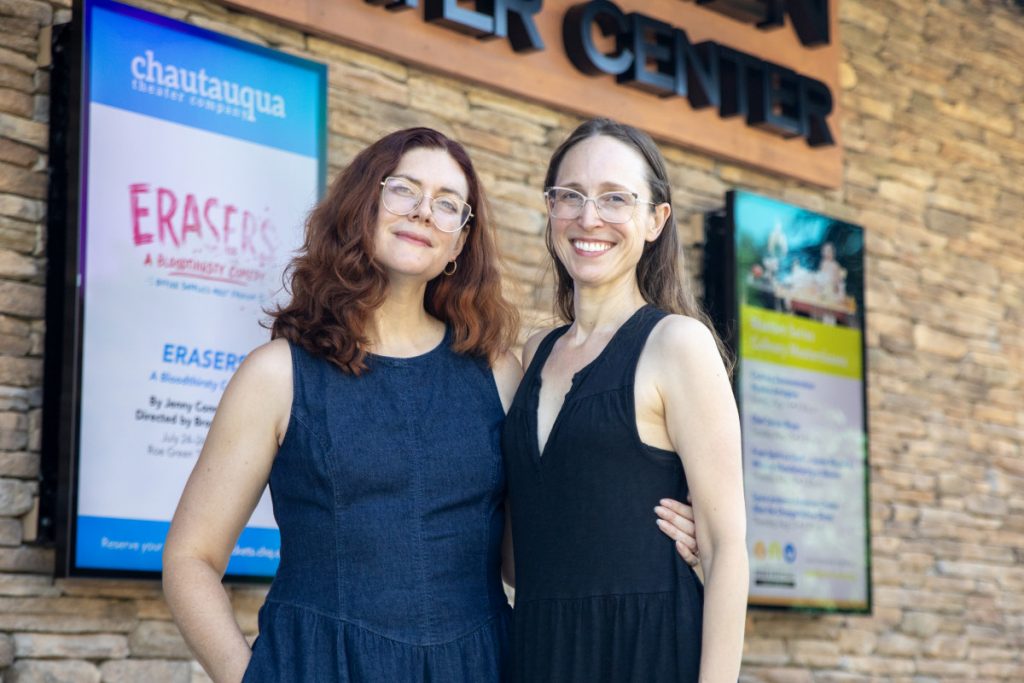
In the spring, the two teams and their plays were selected: The Bone Wars, written by Sarah Saltwick and directed by Liz Fisher, and ERASERS: A Bloodthirsty Comedy, written by Jenny Connell Davis and directed by Bronwen Carson.
“I just wanted some great theatrical plays that Chautauquans would like,” King Carroll said. “There’s one that is a comedy, and there’s one that is based on a true 1800s story of the rivalry of two paleontologists. I thought, ‘Oh, that’s something that Chautauqua can delight in, laugh at, chew on. It feels in line with our audience’s taste and Chautauquan programming.’”
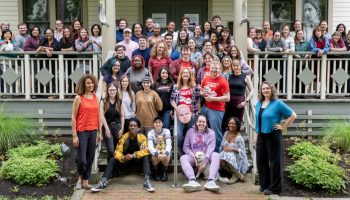
The creative team for each play combines existing fellowships with a new playwriting program. The Design and Directing Fellows have been a part of past CTC seasons, and this year each team will comprise a Design Fellow, Directing Fellow and newly-introduced Playwriting Fellow.
“I love working with Liz Fisher,” Saltwick said. “We are good friends, and this was an opportunity to work with her in a beautiful place on a new play … We knew there were things we wanted to work on in the play — getting it on its feet, seeing how it moves.”
Saltwick started conducting research for The Bone Wars four years ago and presented a reading of the script last summer in Austin, Texas. The other NPL of the season has yet to receive a public presentation, and Connell Davis is excited to present her play for the first time and to work with Directing Fellow Bronwen Carson.
“As much as working on the play, it’s a chance for us to develop a common working language, so we’re kind of using this as the excuse to build that … relationship,” Connell Davis said.
With so many burgeoning artists and fellows working in tandem, RGTC is already becoming a breeding ground for those working relationships. For King Carroll, these relationships are essential to the New Play Labs.
“Success to me for this program looks like some of these teams that I’m putting together continuing to work together after they’ve left Chautauqua,” King Carroll said. “We’re forming relationships that will last them and sustain them … through their careers.”
Beyond the dynamics between the Directing and Playwriting Fellows, the Design Fellows are also aiding in the development of the work while furthering their technical education.
“These aren’t full productions, so we’re looking at … the essential gestures we need to tell this story, and that really helps us zero in on what is most important,” Saltwick said. “… Designers always have really good questions of, ‘OK, why is this here?’ … It’s the brain trust of gathering ideas and problem-solving.”
In addition to these creative relationships beginning to form, Saltwick believes her script has already benefited from her time at Chautauqua. Although The Bone Wars has only been in rehearsals since Tuesday, Saltwick has already seen the workshopping process pay off.
“I already feel like the play is 100 times better,” Saltwick said. “There were things that I hadn’t seen in my previous work on it that were instantly apparent after our first reading, and I already feel like I took steps to help these two characters come more alive.”
After the rehearsal and staging process, Connell Davis is looking forward to factoring the audience responses into the future of her play.
“[ERASERS] is going to live or die in terms of if the rhythms of the laughter are falling where I want them to,” Connell Davis said. “[If they are], I have a play. If they’re not, I have problems.”
The goal of the New Play Labs is to give playwrights a chance to workshop their scripts based on collaboration with other artists and with the audience. The Playwriting Fellows have also found the general mission of Chautauqua Institution to be informative and inspiring in the lifespan of their work.
“The intersection of those four pillars and the way that the four pillars are in community and communication with each other is a lot of what I’m also interested in as a writer,” Connell Davis said. “The physical, the spiritual, the intellectual, the artistic — where those meet, that’s the part of the Venn diagram where I also want my work to live.”
Both Connell Davis and Saltwick have also come to appreciate the focus CTC places on developing new work, instead of only focusing on renditions of classic work.
“The idea that you’re doing the newest work at one of the oldest places, there’s a beauty to that,” Connell Davis said. “… It would be much easier to program plays that everybody is familiar with and is comfortable with, but to invite the audiences to come with us on this exploration and to step into that place of discomfort feels to me like the Chautauqua mission, too. It’s both really necessary … and really brave.”