
LILY RESLINK
Staff Writer
Elizabeth Dias, The New York Times national religion correspondent, is tasked with objective coverage of high-stakes, emotionally-charged events in the world of religion — events people are literally praying for, on and about.
“For me, it’s one of the privileges of being a reporter. There are very few roles in America where … the stated purpose … is to find out what is true, to think independently about it and to present that to the public in a fair way, which means really being engaged in that work of listening,” Dias said.
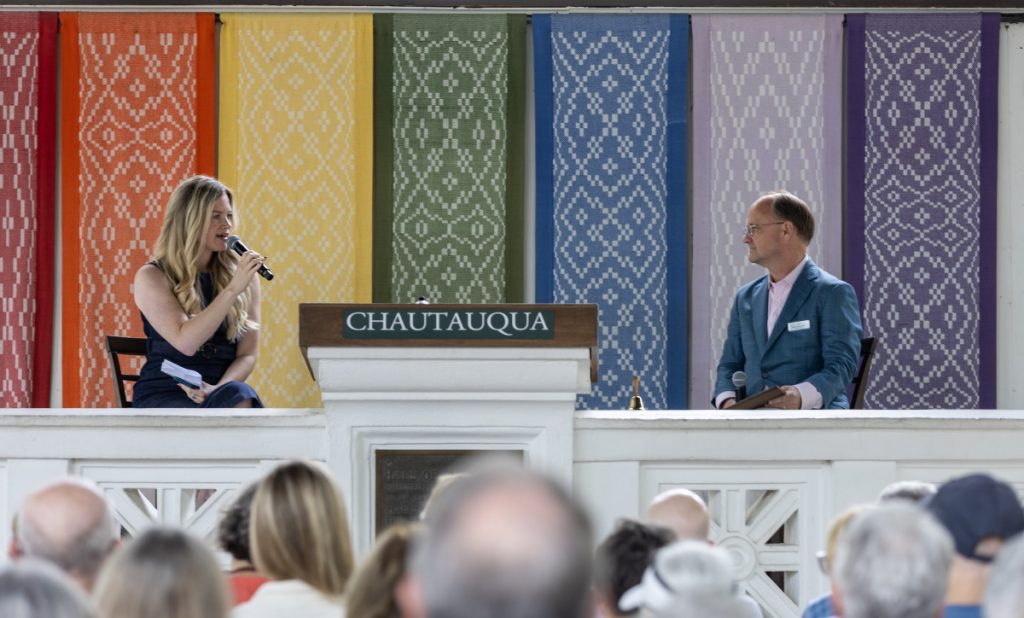
In conversation with Director of Religion Robert Wilson-Black, the pair charted four categories for Dias to explore during the lecture through the lens of her journalistic work: her recent book, top stories on religion in the U.S., big questions for American religion and Dias’ personal reflection on religion journalism.
In collaboration with her colleague Lisa Lerer, the Times’ national political correspondent, Dias’ newly published book The Fall of Roe: The Rise of a New America chronicles the last 10 years of Roe v. Wade and what its decline looked like. She said it’s the first investigation into how the political right — from the most local to the highest federal powers — worked together in developing multiple strategies to overturn Roe and “leveraging the court system.”
“It’s a story of how you don’t need a majority, actually, to change history,” Dias said. “In fact, many times this happens by a very strong minority who’s able to find the right levels of power and pull them to make the kind of change that they want.”
The day the court overturned the landmark ruling of Roe v. Wade in 2022, Dias said she was at an anti-abortion pregnancy center run by a group of Catholic women, who she was interviewing for the book.
Outside of the topic’s political division, she spoke on how gathering stories of people for the book brought her closer to the human impact. Dias said she witnessed how emotional the news was for the group. “This was an unbelievably deep, spiritual moment for them — one they had prayed for every day for decades. She said these are the types of intimate details that are important to take seriously when covering religion and understanding what’s going on in the U.S.
Dias named two top stories in U.S. religion that she’s worked on heavily: one being an overarching storyline in American religion, Dias said, on the rise of conservative Christian power, especially in its correlation with the allegiance with President Trump. The second, she said, is Pope Leo’s election as installation as a pope from America.
Dias said religion intersects with so much across the Times’ wide scope of coverage, and she has seen her colleagues across beats bring this to her attention. She said it is easy to think about politics shaping change in religious communities, but it is also shaped by technology.
“There’s not probably an institution in the world who understands better the implications of a new technology than the Catholic church.” The conversation of AI and religion, she said, poses larger questions of what it means to be human.
“Religion as a beat is something that plays out in these huge time scales that actually impact how people think about their lives now and the decisions they’re making,” Dias said.