JENNA OUTCALT
Staff Writer
University at Buffalo professor John Atkinson conducts his courses by challenging his students to examine what they are actually trying to “sustain” when they talk about sustainability. Although he gets plenty of answers like humanity or the Earth, Atkinson argues that what we’re really trying to sustain is our lifestyle.
“We don’t want to change the wonderful life that we have,” Atkinson said.
Atkinson will join Kenneth Omeruo, founder of UpCycleCHQ, and Diane Cohen, the executive director of Finger Lakes ReUse, on a panel at 12:15 p.m. today in Smith Wilkes Hall about moving beyond the era of disposability and the reuse economy. The panel is presented by a partnership with the Chautauqua Climate Change Initiative and the Western New York Sustainable Business Roundtable.
Atkinson is the Scott and Coleen Stevens chair in engineering sustainability at University at Buffalo. He said when people find out he studies trash, their first reaction is usually to say, “I’m sorry.”
“It wasn’t necessarily where I saw myself heading as a 7-year-old, literally diving into dumpsters with students,” he joked.
Atkinson explained when people think of waste reduction, they often jump to ideas like banning plastic bags.
“Why plastic bags? Because nothing changes,” he said. “At the end of the day, our lives are no different if we have or don’t have plastic bags.”
Larger change, however, will accompany a shift in mindset and lifestyle, according to Atkinson.
“We have to do it because it’s the right thing to do or because it’s important, not because it’s low-hanging fruit and it’s simple,” he said.
Atkinson held up the other two panelists as examples of people who implement those changes and “made it a lower bar for others to make similar lifestyle changes.”

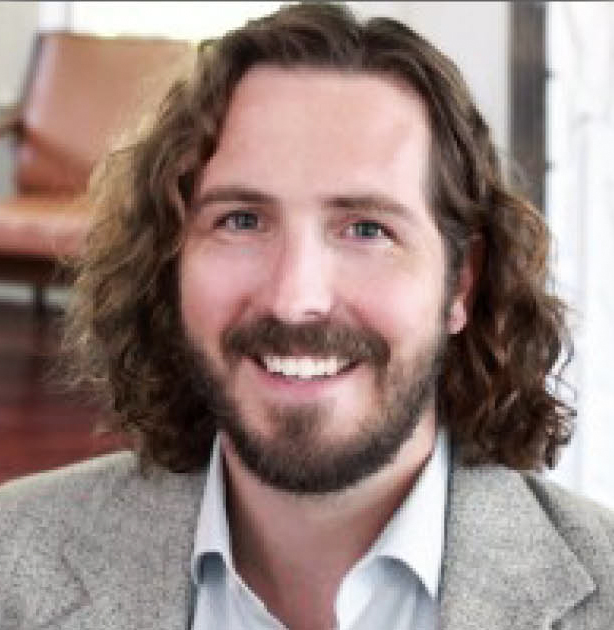
Omeruo started GreenClusta Technologies, which connects people in local or rural areas with opportunities and resources in their community, in 2024. In 2026, he started UpCycleCHQ, an initiative supporting the circular economy — reducing waste through reuse, creativity and local production — in Chautauqua.
Omeruo said he realized the reuse economy is about connecting materials, people, skills, communities and new opportunities.
“That realization has led to community material exchanges, library programs, maker spotlights, sewing and upcycling classes, weekly creative challenges and our UpcycleCHQ Maker Pilot Program, where local makers are exploring how reclaimed materials can become products and new business opportunities,” he explained.
According to Omeruo, the skills and materials for a reuse economy already exist — the key is connecting everything with the local community.
“I’d encourage people to think beyond waste,” he said. “I believe one of the greatest opportunities ahead isn’t simply reducing what we throw away. It’s discovering what already exists in our communities.”
Although Omeruo said technology can foster those discoveries and connections, people are at the center of change.
“The real change happens when people begin seeing value differently,” he said. “When someone looks at a pile of fabric scraps and sees potholders instead of waste, or sees feed bags becoming reusable shopping bags, that’s a mindset shift.”
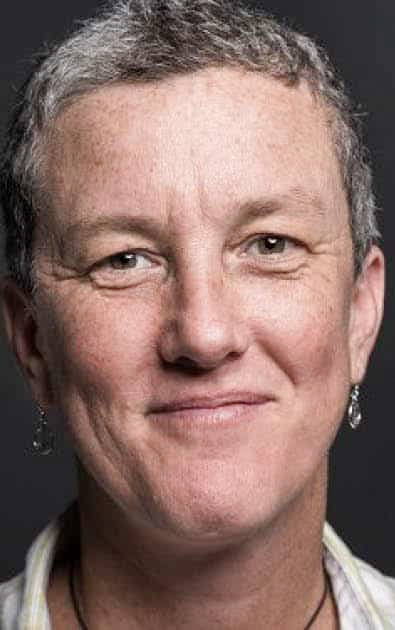
Cohen is the executive director of Finger Lakes ReUse, a nonprofit in Ithaca rescuing and reselling used materials, repairing or deconstructing old possessions and houses and teaching practical skills to locals. Since it opened in 2008, Finger Lakes ReUse has quadrupled in size and continues to expand.
Cohen said many people don’t realize how much consumption and waste have skyrocketed only in the past few years.
“The magnitude of the problem is hard to see because our waste systems are fairly efficient [in] getting [trash] to landfills or incinerators,” she said. “But we need to disrupt that, and what Finger Lakes ReUse is proving is that people want to participate in a better system.”
According to Cohen, people’s excitement about reuse has made it hard to keep up with demands for expansion in the community.
“It’s an exciting piece of evidence to show that if the public has an easy and accessible solution for their potentially reusable or repairable materials, they will participate in it, and we’d like to see a lot more of that happen,” she said.
Cohen explained that although reuse seems like a relatively simple concept, “it’s quite complex both to enact and to understand its potential.” Reusing an item doesn’t just keep something out of the landfill; it prevents the need for a new product with its own environmental footprint.
“From the whole life cycle of the product, the simple act of reuse avoids the creation of another one and the extraction of the materials to make it,” Cohen said.
Atkinson said he is looking forward to the panel because he values sharing messages and having conversations about waste and reuse systems.
“I want to learn as much as I want to teach. And that happens through dialogue. I don’t really want to just give a lecture. I can do that in my room, I can do that in my classroom, I do it all day,” he said. “But a dialogue and a conversation is how progress happens.”