LILY RESLINK
Staff writer
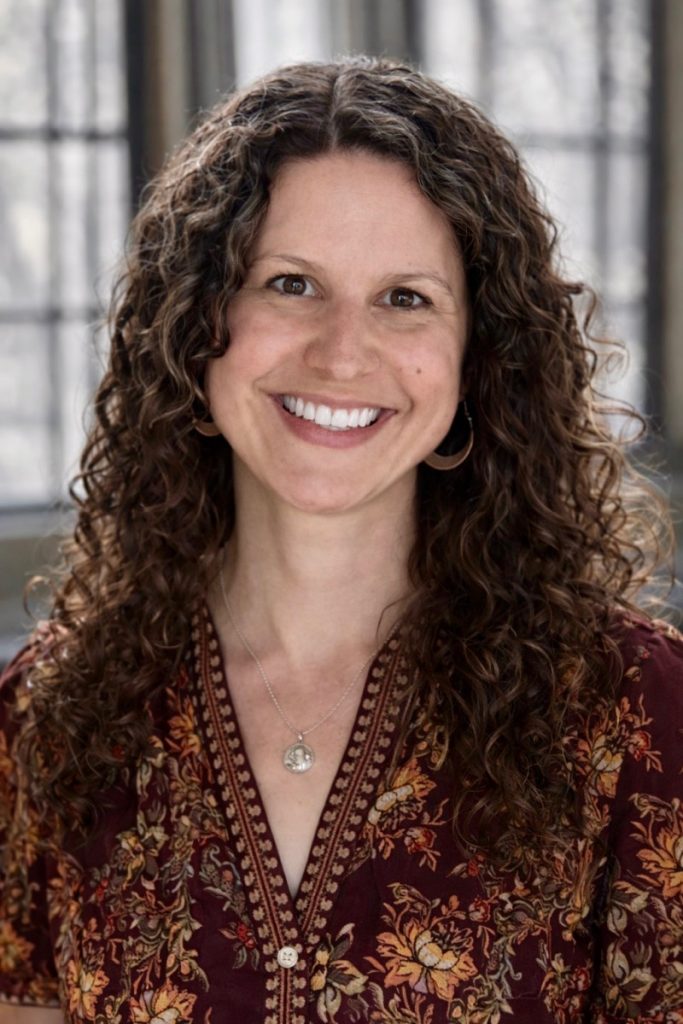
Within the Week Five theme of “The Creative Spirit: Art, Resilience and the Soulful Work of Making,” Natalie Wigg-Stevenson said her lecture, “Stop, Do Nothing, Receive: Attending to Art of the Common Good,” will extend the focus from art makers to art viewers.
“I think art viewing — the way we give art our attention to let it transform us — is itself a spiritual practice, and for some of us, an act of prayer,” Wigg-Stevenson said.
Wigg-Stevenson suggested Chautauquans bring a participatory, and maybe even playful, spirit to her 2 p.m. lecture today in the Hall of Philosophy; she said her lecture will present a more engaged role for artwork viewers, as she said viewers typically become peripheral to the artist when telling the story of art.
“I want to think with the audience about more responsible, more ethical, more engaged ways of attending to art for the common good,” Wigg-Stevenson said.
Wigg-Stevenson is a minister, professor of theology at Emmanuel College in Toronto, creative non-fiction writer and author of Transgressive Devotion: Theology as Performance Art. She noted the significance in distinguishing that she is not looking at the “theology of performance art,” but “theology as performance art.”
“I get kind of bored by theology that reflects on art. I’m much more interested in theology as an art form,” she said.
Wigg-Stevenson said she is passionate about transformative education, particularly about art and spirituality. She said performance art has continuously played a large role in her life, faith, ethics and spirituality.
Though she is a Christian theologian, she said she is not approaching the lecture from a particularly Christian perspective. In her lecture, she said she will discuss the work of Simone Weil, a Christian convert during World War II who was shaped by Judaism.
“[Weil] talks about practices of attention being a spiritual practice, being actually the foundation and the heart of prayer,” Wigg-Stevenson said.
Wigg-Stevenson said she is excited for the opportunity to spark thought in her audience about why art matters for the common good and how the artworks they love have transformed them. She said she has wanted to speak at Chautauqua Institution ever since her husband, Tyler Wigg-Stevenson, delivered a lecture at the Institution in 2010.
Although not explicitly mentioned in her talk, Wigg-Stevenson said her scholarly lens and pedagogical approach are based on an interest in decolonizing higher education. She also said her teaching is rooted in her affinity for connecting with people, which applies to the Chautauquan lecture audience.
Teaching as merely “an information dump” is something that Wigg-Stevenson said she fundamentally disagrees with.
“To me, teaching is about the relational connection, about helping them discover something inside themselves,” she said.
To the Chautauquan audience, Wigg-Stevenson suggested that individuals who feel creative may wish to come equipped with supplies — paper, pens, pencils or crayons — as an outlet for creative expression. She said when humans reimagine theology as a performance art, it becomes more playful, generative and transformative.