SAM HUFFMAN
Staff Photographer
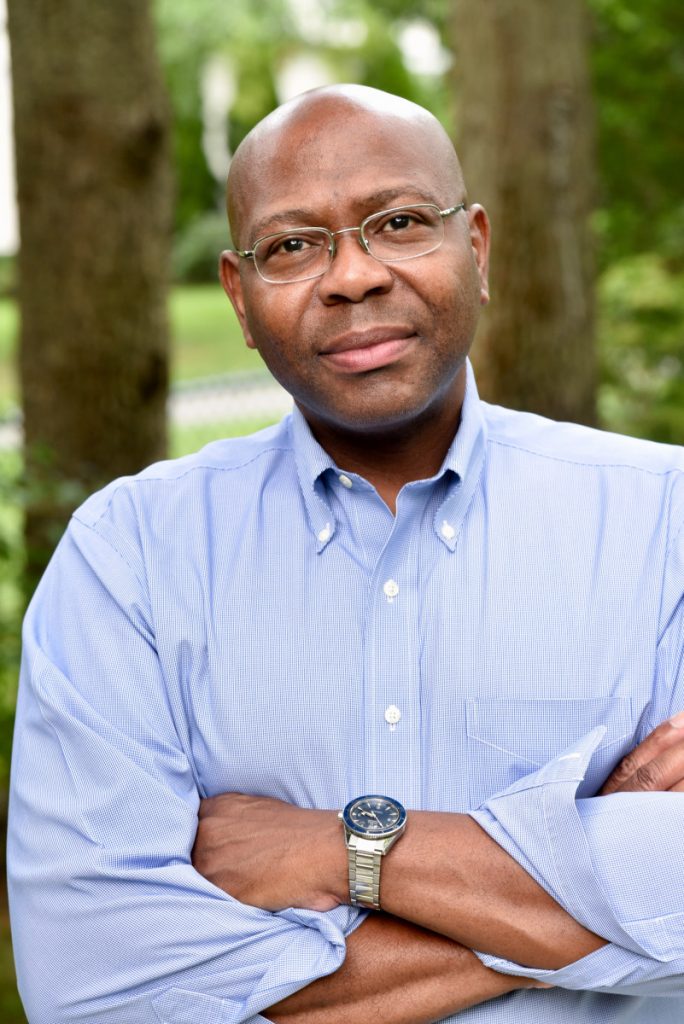
American political commentator, Manhattan Institute Senior Fellow and “Upward Mobility” opinion columnist for The Wall Street Journal Jason L. Riley will make his first appearance at Chautauqua Institution speaking at 10:45 a.m. today in the Amphitheater for Week Two’s Chautauqua Lecture Series theme, “Breaking the News: Charting a New Media Landscape.”
As the week’s only opinion columnist, Riley has written about a variety of topics varying from social inequality, economics, education and immigration with sharp precision and wit for more than 25 years. Outside the WSJ, Riley has written a body of published work detailing his experiences living in America as a Black conservative. Riley has also provided commentary to television and radio news outlets and is a frequent public speaker traveling to numerous universities across North America.
Recently, Riley’s writing has focused on topics including the decline of public school systems and education, growing concerns of the assimilation of artificial intelligence and, most recently, a timely opinion piece examining current and past sour American attitudes toward the government and the building and improvement of the country’s imperfect yet sturdy framework that has made the U.S., in Riley’s words, “the envy of the world.”
Core foundations that inform Riley’s writing and commentary are the socioeconomic equality and advancement of Black people in America and how they are affected by public policy. For his literary political analysis, Riley has been awarded the 2018 Bradley Prize.
Some of Riley’s most notable works in political science literature include Please Stop Helping Us: How Liberals Make It Harder For Blacks To Succeed, published in 2014, which examines how liberal initiatives to support underclass Black Americans tend to cause more harm to their intended beneficiaries than good.
Riley further expanded on this topic in his latest book, The Affirmative Action Myth: Why Blacks Don’t Need Racial Preferences to Succeed in which Riley recalls how the Black families lifted themselves out of poverty in the 1960s and 70s prior to affirmative action laws, and examines the notion that people believe that Black Americans can’t succeed without governmental intervention, clouding Black achievements in a shroud of a suspicion of unfair advantage.
As a Buffalo, New York native, Riley attended State University of New York at Buffalo, graduating with a Bachelor of Arts in English, and later beginning his career in journalism at Buffalo News and USA Today. He joined The Wall Street Journal in 1994 as a copy reader before joining the Editorial Board in 2005.