JENNA OUTCALT
Staff writer
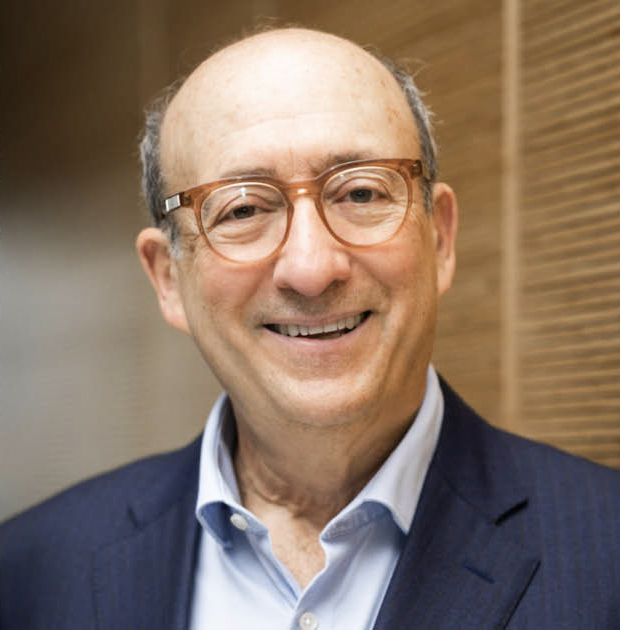
David Michaels, Ph.D., a professor of environmental and occupational health at The George Washington University, is teaching his students to be critical not just of how scientific studies are reported or interpreted, but of the studies themselves.
“You have to read things carefully and truly understand what was being done, how the results were reached,” he said.
Michaels is an epidemiologist who served as assistant secretary for labor at the Occupational Safety and Health Administration during President Barack Obama’s administration. He is the author of two books about the prominence of doubt and disinformation in science. Michaels will speak for the Chautauqua Science Group and Chautauqua Climate Change Initiative at 9:15 a.m. today in Hurlbut Sanctuary about how disinformation permeates scientific conversations.
“Disinformation is now front page news, but there really is a long history of disinformation,” he said.
Michaels described how corporations would use the “tobacco playbook,” where they would hire scientists to conduct research that cast doubt on the need for more regulations.
“I saw this up close when I was in the government, both at the energy department when I was in charge of health, safety and environment for the nuclear weapons complex, and then when I ran the Occupational Safety and Health Administration,” Michaels said.
He shared the example of attempting to increase regulations on beryllium in the manufacturing of nuclear weapons while the beryllium industry pushed back.
“They brought in a group of scientists, the lead of whom had worked for tobacco, to say that ‘Yes, beryllium causes lung disease, but more research is needed before we can have better protections,’” Michaels said.
However, he called that line of reasoning “nonsense.”
“We knew how to protect workers,” Michaels said. “More research is always useful, but we need to make decisions based on the best available evidence of the time.”
Michaels explained regulations would always have to contend with opposition from corporations, which “have a great deal of power in the United States.” However, new problems are also arising.
“My concern right now is that the White House has elevated the purveyors of scientific disinformation, both around environmental exposures and infectious diseases,” Michaels said. “They have been given a larger platform and more political power than ever in our history.”
To combat disinformation in science, Michaels said society must continue to “promote the importance of transparency” and ensure studies are funded without conflicts of interest.
“We need to defend independent science and recognize the importance of the national scientific enterprise in maintaining and improving the well-being of the country,” he said.
He said he hopes that after his lecture, the audience, like his students, will look at scientific studies with a more critical eye.
“I certainly hope that they will look closely and always ask who benefits from the interpretations provided by scientists, especially in relation to who’s paying those scientists,” Michaels said.