
JENNA OUTCALT
Staff Writer
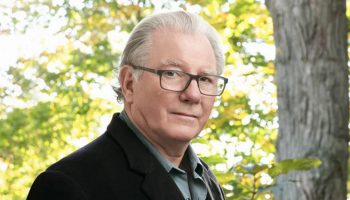
George Carlo may work in sports, but his business is science: how it affects brains, bodies and performance. A medical scientist by training, Carlo works with teams and athletes to maximize their performance. He emphasized that everything he does is grounded in a scientific perspective.
“That’s an important part of it,” he said. “People can have confidence that this wasn’t just some crazy idea coming from some guy from Jamestown.”
Carlo will speak for Chautauqua Science Group at 9:15 a.m. today in Hurlbut Sanctuary, delving into his career in sports performance science and how it can be applied to everyday life.
Carlo, who grew up in Jamestown, New York, is an author and attorney, as well as a medical scientist. He has written more than 200 publications covering topics ranging from human performance to consumer protection policy.
Carlo has worked with collegiate and professional sports organizations, including the Detroit Tigers, the Buffalo Bills, the PGA Tour and The George Washington University men’s basketball team.
“Over the years, I’ve had the privilege of working with all sorts of top-level athletes — professional and college athletes, as well as younger kids,” Carlo said. “I think that as a scientist, you look at every opportunity [to work with someone] as a laboratory.”
He said treating each stop like a laboratory helps him convey what he learns to players and coaches.
“It’s important to look under the hood like you would in a car,” he said. “Let’s see what’s going on here in terms of how the players are wired, how their mind-body connection works, how the interaction with other players works, how the interaction between coaches and players works.”
Carlo said there is a lot of “noise” in the world of data analytics today, so it is important to sort through the information to find what matters and put the data into context.
“Sorting through what is just noise and what matters is a very difficult task for players, for coaches, for parents who are wanting to put their children in the best position to succeed,” he said.
According to Carlo, optimizing the ability to adapt to new situations is “one of the keys” when it comes to being at the top of one’s game. He explained that it’s better to be adaptive than “reactive.”
When people are reactive, they run on adrenaline, which triggers a fight or flight response, Carlo said.
“When fight or flight is triggered, the mind-body connection breaks,” he said. “Your mind and body are operating on different tracks because of the adrenaline.”
However, those with higher adaptive capacities can engage in solutions-based thinking when presented with new information, Carlo said. This is one of the skills he tries to build with athletes.
“What you want to be able to do is understand where the person is and then be able to give them things that they can do to help enhance their adaptive capacity, help them keep their mind-body connection intact,” he said.
Carlo emphasized that “the functionality and the application” of his work go far beyond sports and can be useful in everyday life.
“I think that those who come [to the lecture] are going to be surprised at how adaptive what we have learned in sports is to everyday life, whether you’re in a leadership position in a company, whether you’re trying to be a parent that puts your kids in the best position to have a great life,” he said. “All of those things are where this can be applied.”
Carlo said stress is one area where these strategies can help.
“Especially as we’re aging, especially as we have stresses coming from a lot of different ways, stress management is huge — absolutely huge in sports, but it’s also huge in life,” he said. “The tools that we’ve been able to develop over the years to manage stress in sports apply directly to managing stress in life.”
Carlo said the best part of his work is seeing progress in the people he works with.
“It’s awesome to see success, and that’s what this is about: to give people better life, being able to not only be better on the field as an athlete, but have a better life in general,” he said.