SOPHIA ROOKSBERRY
Staff Writer
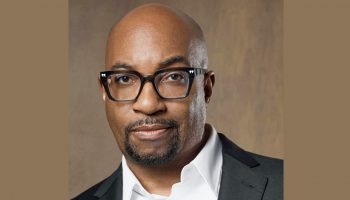
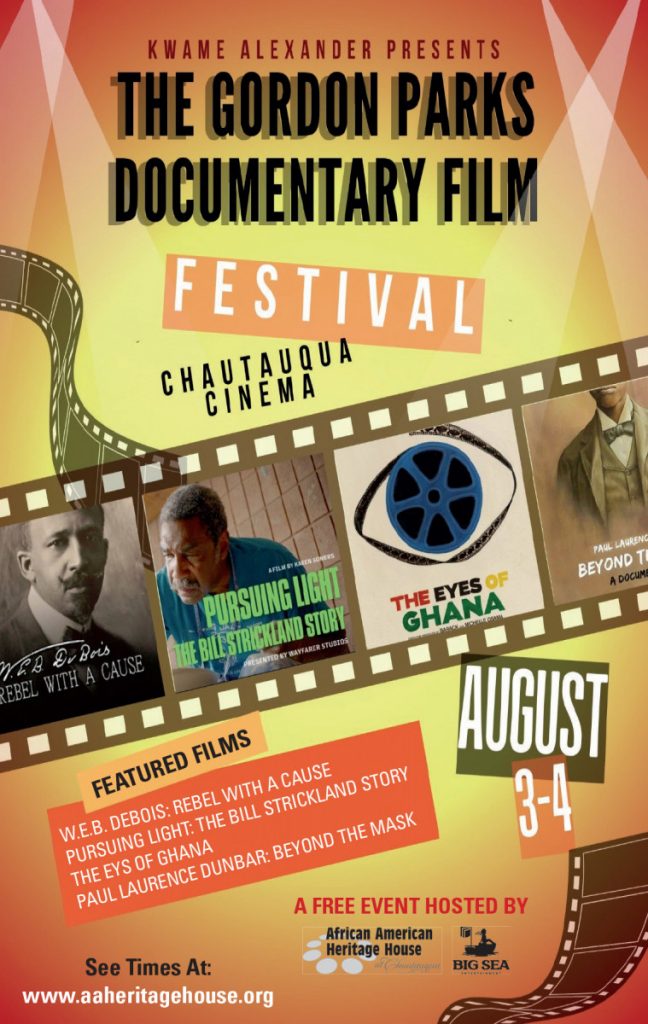
On Aug. 3 and 4, the African American Heritage House will host the inaugural Gordon Parks Documentary Film Festival at Chautauqua Cinema. The festival was organized by the AAHH Distinguished Fellow Kwame Alexander.
Alexander first came to Chautauqua Institution as a morning lecturer before spending two years as the Michael I. Rudell Director of Literary Arts. In his new role with the AAHH, Alexander is implementing extensive programming to engage Chautauquans in its mission.
“One of the things I decided this year in the reimagining of the Heritage House is to make it more public-facing, to make it more welcoming, to open it to the public in a more consistent manner and to be able to capitalize off of some of the ideas and interests and contacts that I have,” Alexander said.
These ideas have included dinner parties, invitations to writers and the first film festival for both Alexander and the AAHH. The latter project was inspired by Alexander’s friend, Karen Somers, and the documentary she directed and produced: “Pursuing Light: The Bill Strickland Story,” which premiered earlier this year in Pittsburgh.
“I got to see clips of it, and so I said, ‘Karen, we should show your film at Chautauqua,’” Alexander said. “She was like, ‘That’d be great,’ and so then I began thinking, ‘This is America 250. We’re going to shine a light on this particular American story because America is made up of people, and so let’s showcase Bill Strickland and his story as an American.’ Then I said, ‘Well, maybe I can show another documentary,’ and before you know it, I had four or five documentaries.”
Somers began filming the festival’s catalyst when Wayfarer Studios asked her to visit Strickland at his home in Pittsburgh during the COVID-19 pandemic.
“They said, ‘Look, we’ve got the life rights for this remarkable human … and we want you to go down to Pittsburgh and do interviews with him, do some B-roll with him and see what we’ve got,’” Somers said. “Bill is a double lung transplantee, and they wanted to make sure that they had Bill on film as a ‘just in case,’ … so I went down and we shot with Bill for several days during COVID and got some incredible material.”
When Somers returned from Pennsylvania, the studio immediately wanted her to produce the footage into a documentary, which premiered in February and is now streaming on PBS. The film documents the founding of the educational nonprofit Manchester Bidwell Corporation, which Strickland created in the late 20th century and has since grown to encompass 17 centers across the country.
“We live in a time right now where human suffering is reaching such sad, epic levels globally, and many of us really feel the pain of that and are looking for solutions,” Somers said. “… [Strickland] has created a very unique system in his centers, which combines creating beautiful environments with opportunity.”
According to Somers, these centers are dedicated to and built by underserved communities across the country. In addition to other offerings, their workforce program is designed to “feed into local businesses that have jobs that are sustainable” and their youth arts program focuses on “empowering kids to think about their own autonomy in the world.”
The artistic focus of Strickland’s life and work is in alignment with the namesake of the film festival, Gordon Parks. Alexander said he chose to name the festival after Parks to honor his work as a documentarian of Black life in America, in addition to his work as a poet, novelist and photographer.
“Gordon Parks was known as one of the greatest photographers of the 20th century, and he was a humanitarian with this very deep commitment to social justice, and that is what Bill represents,” Somers said. “… Like Bill, [Parks] was born into poverty and segregation … and he, as a young man, was drawn to art, to photography, and that became his saving grace … You have these very direct connections between two men who began as artists and ultimately they are very well-known for their deep commitments to social justice.”
Strickland is not the only documentary subject whose work parallels the festival’s namesake. Another documentary featured in the festival is “W.E.B. Du Bois: Rebel With a Cause,” which focuses on another pillar of culture and social justice within American history.
“[Du Bois] almost single-handedly carried the torch for African story [and] African experience, and putting that centrally in the American culture,” BK Fulton, the documentary’s executive producer, said. “… He thought that he could do this with academics and intelligence, but he realized that some of this behavior is beyond reasoning. It was cultural, and so he … created pageants, books [and] spawned the Harlem Renaissance.”
As a former classmate of Alexander’s, Fulton has been exposed to no shortage of stories about Chautauqua and is looking forward to presenting the film to the Institution’s audience.
“The people that come there have a broad appreciation for what makes America great, and when we hear from young people, when we hear from people from different backgrounds, when we see stories and learn of people we haven’t really studied, then it expands our understanding of what it means to be human,” Fulton said. “I think that showing this kind of film to an inviting, welcoming audience is great
for a filmmaker.”
As much as Fulton is looking forward to the festival, Alexander believes Chautauquans will have even more to benefit from attending the screenings and accompanying conversations with filmmakers.
“When you come here, you sort of have this contract with this place that you want to be informed on some topic that you may know something about, a lot about or nothing about,” Alexander said. “You want to leave the morning lecture or the Sacred Songs inspired in some way, and you want to feel uplifted … It doesn’t work unless you’re entertained, and so it is my hope that all … of those things collide and happen on Aug. 3 and 4.”
In addition to showings of “W.E.B. Du Bois: Rebel with a Cause” at 8 p.m. Aug. 3 and “Pursuing Light: The Bill Strickland Story” at 8 p.m. Aug. 4, the festival will feature “Paul Laurence Dunbar: Beyond the Mask” at 1:45 p.m. and “The Eyes of Ghana” at 5 p.m. Aug. 3. Tickets are free of charge and must be reserved in advance on the Chautauqua Cinema website.