
LILY RESLINK
Staff Writer
Chickasaw storyteller Amy Bruton Bluemel will step up to the podium at 2 p.m. today in the Hall of Philosophy to deliver an unscripted lecture on the story of the ancient people now called the Mound Builders.
According to Bluemel, the storyteller is the librarian of culture. “At one point in our tradition, we didn’t have a written language, and so our people would have storytellers,” she said.
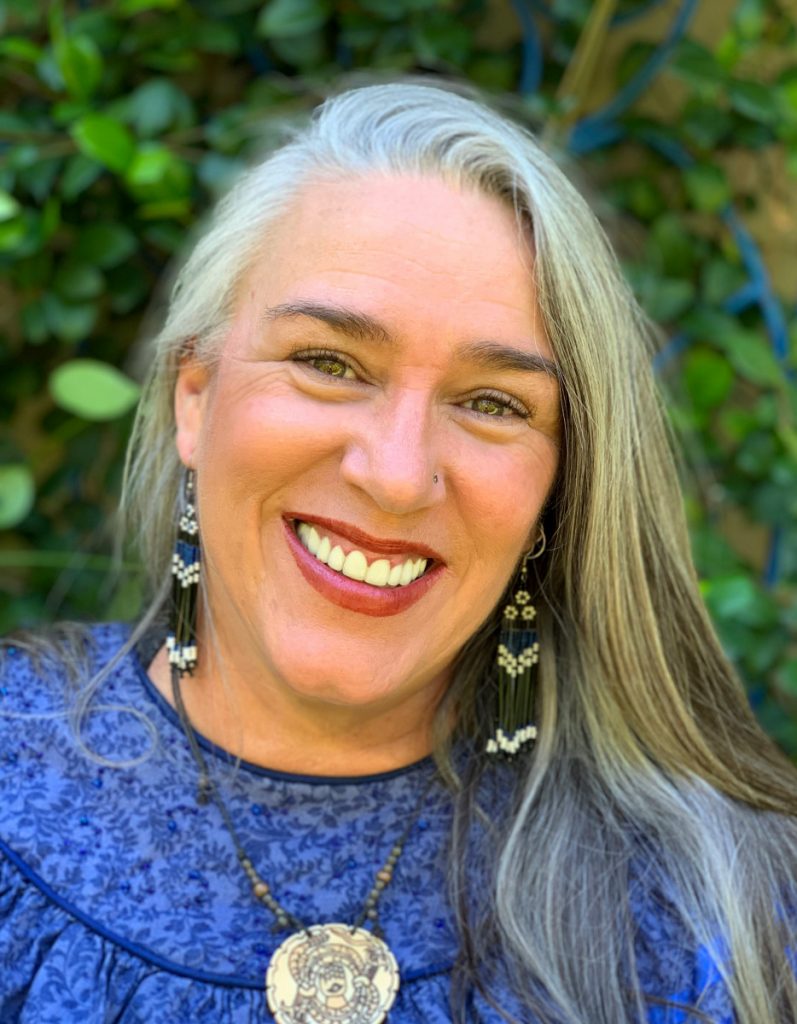
Bluemel — artist, founding member of dance troupe Chikashsha Hithla and registered member of the Chickasaw Nation — said she will share a story she has worked to bring to life for about a year and a half.
“The Mound Builders were building big earthen mounds — pyramidal-type shapes — from the top of the United States all the way down to the Mayans,” Bluemel said.
Although building materials differed geographically, she said the Mound Builders and the tribes that emerged from the Mound Builders shared similar belief systems about how the world works, where one’s spirit goes and how one reaches back to their ancestors.
Bluemel said her lecture will provide an overview of that belief system and how it continues to play a part in cultural practices.
She said the mounds in the U.S. are larger and older than the Pyramid of Giza, yet most people are unaware that these Mound Builders ever existed.
“Unfortunately, a lot of these mound sites … were just dug up and plowed over by farmers or business or building, and they didn’t even think about saving them or what it could have meant to us as a society,” Bluemel said.
She explained that inspiration to become a storyteller came from a realization: She did not know enough about her mother’s people. Learning one’s own history is something she said she has grown to find very important.
“My history is very mixed. My father is white; my mother is Indigenous. I’m a mixture of different things, but I think it’s important to understand who you are; I think it’ll make us all stronger, better people,” Bluemel said. Her own journey in learning about her roots, she explained, rekindled her connection with them.
As a child, Bluemel said she had an obsession with stories, which was amplified by frequent traveling as part of a military family.
“Living in all these places — Germany, Turkey, Okinawa, Scotland — I learned their stories, and just loved it,” she said. Being raised away from her Indigenous culture, she said she began to immerse herself in it after returning to the U.S. as a young adult.
“I have spent the rest of my time talking to elders, reading historical accounts, reading books, talking to archaeologists, talking to anthropologists, talking to anybody who can give me information,” she said.
Bluemel expressed finding thrill and gratification in piecing together information to form a cohesive narrative. One component of storytelling that Bluemel emphasizes is its ability to illuminate similarities across humankind.
“I’ve worked with people all over the world. I’ve worked with storytellers of all different races, belief systems, you name it, and we all tell the same stories,” she said. “We all have a story about why the sun’s in the sky. We all have a story about why rabbit has his tail. We all have a Cinderella. We don’t call her Cinderella in every language, but there’s a Cinderella,” she said.
She noted the awe that comes from similarities in ancient stories. “These are not stories that spread on the internet and could hop from continent to continent in a matter of seconds,” she said.
In her Interfaith Lecture, she said she will provide an overview of ancient views of the soul and prayer. She said she will talk about the belief that “the soul has to leap into the sky, and there’s a journey that the soul has to make before it gets back to its ancestors.”
She said she will also discuss the stomp dance, which is a form of prayer and social connection. She said her dance troupe, Chikashsha Hithla, travels across the country and is focused on education.
She said her lecture may offer a window into something ancient, opening an examination of one’s own spirituality. In addition to history, she said Chautauquans can also expect to learn some Chickasaw language.
Bluemel said she believes she has the best job in the world: “I get to travel and talk about something I’m passionate about: my people and my traditions.” She said she is excited to share it with Chautauqua and she hopes Chautauquans enjoy it as much as she does.
“We all want the same things. We all want to be happy. We all want to be loved. We all want a place for our children,” Bluemel said. “We all want to go on to something bigger than ourselves. We try to put ourselves in different camps. We try to put ourselves [in camps] by race or class or age or sex, and we’re just fighting the wrong battle. We’re all the same.”
She said she thinks looking at shared beliefs found in cultural stories “shines a light on how human we all are.”