NORA SMITH
Staff Writer
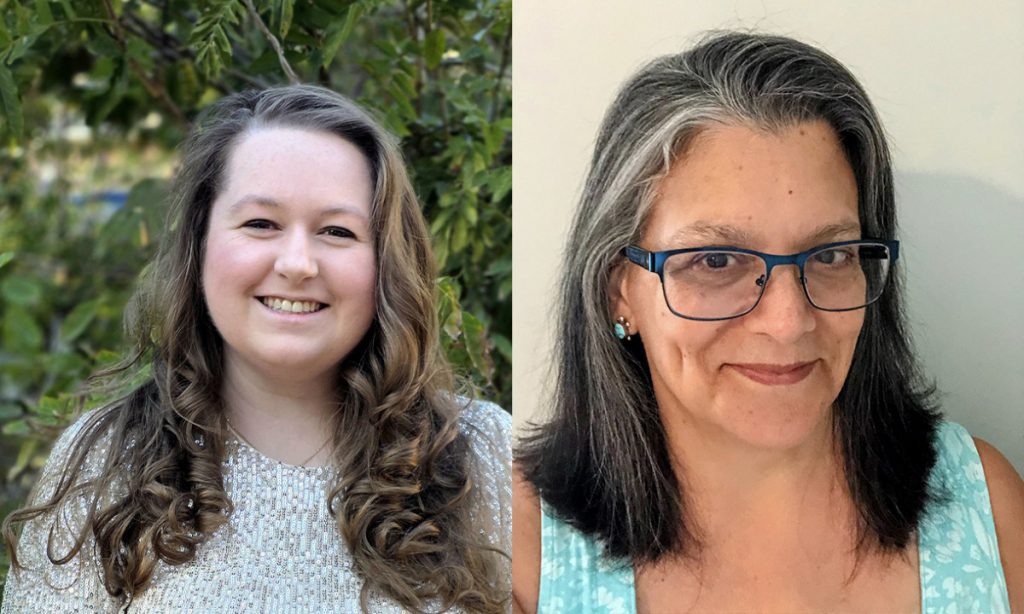
Prose writer and enrolled member of the Cherokee Nation A.J. Eversole, and writer, poet and enrolled member of the Ohlone-Costanoan Esselen Nation with Santa Ynez Chumash lineage Deborah A. Miranda explore their tribal ancestry throughout their writing and share these perspectives with readers.
Michael I. Rudell Director of Literary Arts Stephine Hunt said she’s thrilled to celebrate Native American voices during Week Seven’s “Global Power and Our Evolving International Order.”
“In many places around the country and the globe, Indigenous voices are not always held up in the ways that they should be and celebrated in the ways that they should be, and this celebrating Indigenous voices in a week that’s geared toward international conversations, I think, is really important,” Hunt said.
Hunt said she is excited for Miranda to be teaching poetry because Miranda is most often known for her memoir, Bad Indians: A Tribal Memoir, so this will give Chautauquans a chance to see a different side of her work.
“I’m delighted to have her focusing her work in that aspect of Indigenous poetry, which is, of course, so close to the tradition of oral storytelling and oral histories,” Hunt said.
Miranda credited her background as a writer to having been born into a family of storytellers.
“My dad was native and quite a good storyteller,” Miranda said. “Not a traditional one, just he liked to tell his stories, and I also, for some reason, very early on, started writing stories and poems.”
Miranda said she wrote her first story when she was just 7 years old; at 10, she begged her mom for a typewriter, typing away day and night. She said she apprenticed as a poet for a long time and, in turn, wanted to record what she had seen.
“I wanted to create a way for my family’s stories to live on, and when I got a little older, I started writing down my grandmother’s stories, my mom’s stories and of course, my dad’s stories,” Miranda said. “At a certain point, I just realized that it kind of had fallen to me in the family to be the person who recorded our Indigenous history in a way that was really legible to us.”
Miranda said she records this history through poetry.
“I think that a lot of California Indians did not know our own history,” Miranda said. “So, this was a way to kind of spread it around and tell people what I’d learned, and now I feel like the poet laureate of my tribe.”
Miranda’s mom was born in Beverly Hills, and her dad was born on the Tuolumne Rancheria, a native reservation, with his mom Chumash from the Santa Ynez Reservation, and his dad Esselen from the Carmel Missions.
Miranda said in the U.S., there is a culture in which most people think Native people are extinct or that they live on small reservations, but Miranda said, “the truth is, we’re everywhere.”
“I’m really happy that my work has been able to educate people, but also create a lot of compassion and understanding for what Native people in California have been through,” Miranda said.
In addition to telling the stories of her ancestry and tribe, Miranda said she’s interested in “writing about the different ways there are to be human” and how these overlap.
“There are ways that Indigenous people overlap so much with non-Indigenous people in terms of what we hope for, and what we have been through and what we want for ourselves and our children, and I really hope to make (that) connection with my poetry,” Miranda said.
At the Free Faculty Reading 3:30 p.m. Sunday in the Hall of Philosophy, Miranda said she plans to read excerpts from Bad Indians: A Tribal Memoir and from her forthcoming poetry book from University of Arizona Press in Spring 2027 titled Maxanax Chempapísi / Bloodwriting.
In addition to Miranda’s reading, she will host a generative workshop titled “Writing Down Your Demons,” that will run from 8:30 to 10:30 a.m., Monday, Wednesday and Friday from Aug. 10 to Aug. 14 in the Alumni Hall Poetry Room with an enrollment fee of $145 and a maximum of 15 participants.
“I want to give people a lot of generative ideas,” Miranda said. “I want to show them that there is poetry all around them and it’s almost like you have to reach out and catch it.”
Miranda said in addition to teaching participants techniques to find poetry in daily life, she will also provide generative and revision ideas, which she said participants don’t often receive in a workshop.
Although Eversole doesn’t have her own collection of work out yet, Hunt said she has been contributing to the literary world in a variety of ways for about a decade now.
“She’s done a lot of in-depth work with Native literature in particular, so that history of storytelling practices within Native tradition is a part of her not just cultural experience but her central focus literary experience…” Hunt said.
Having grown up in rural Oklahoma, Eversole said her love of writing stemmed from having a very active imagination as a child when playing outside. She said she has always adored fantasy and wanted to explore different worlds and tell different stories, but it wasn’t until after working for the Disney company for several years and being let go that she began to create her own magic.
“That is when I really made my pivot to, ‘I’m going to make magic in a different way, and I’ll do it myself . . .” Eversole said.
Dedicating herself to writing and finishing the stories she had always hoped to write, Eversole finished a young adult contemporary story, wrote some picture books and is contributing to two anthologies, one of which, Never Whistle At Night Part II: Back For Blood, will be released Aug. 18.
“. . .When I was younger, I wanted a commercial story, which I don’t think I’m against that anymore, but I think now that I’m older . . . I feel like there’s more like, ‘Oh no, I can say something with what I’m writing,’ and I definitely pivoted,” Eversole said.
During the Free Faculty Reading, Eversole said she plans to read the story, “Dilasulo Walks” from Beyond the Glittering World, “an Indigenous futurism type fantasy story about a pair of moccasins who gain sentience at night…”
Eversole said this piece explores which qualities are valued in museums.
“Is it better to look at something that was used for its purpose, or is it better to look at something that was never used at all?” Eversole said. “What is it about humanity touching things that matters in a museum setting?”
In her writing, Eversole said she hopes to encourage the inclusion of all narratives.
“I think we’re so used to thinking of history one way and of our versions of history as well-taught and the only narratives,” Eversole said. “There are multiple narratives, there are other ways to look at history beyond just what your views of history are…”
Eversole said these narratives and different views of history can all share the page; to her, short stories can show a variety of perspectives, from the personified perspectives of the artifacts in the museum to the viewers from specific communities who are examining them and how their perspectives differ.
The story is based on the Dallas Museum of Art, where Eversole said there are many Mesoamerican artifacts, but only four objects from ancient North America.
“. . . It just really sits there, and it makes me question, because I go through the museums and think about identifying with the Mesoamerican stuff even though that’s not where my people are from, but it’s the closest I have to ancient Americas as a whole,” Eversole said.
In addition to Eversole’s reading, she will host a generative workshop titled “When Your Story Refuses to Fit” from 3:15 to 5:15 p.m., Monday, Wednesday and Friday from Aug. 10 to Aug. 14 in the Alumni Hall Prose Room with an enrollment fee of $145 and a maximum of 15 participants.
Here, Eversole will nurture a genre-blending workshop. She said her workshop will investigate questions about how genres meet reader expectations as well as how different genres can be combined to enhance the reading experience.
“. . . I think the talking about, ‘What does each genre promise the reader?’ and ‘How can you combine like a thriller promise and a romance promise to create the perfect combination of reader enjoyment, where they get both?’” Eversole said.
Eversole hopes participants can learn to braid multiple genres by highlighting different aspects of each one to please the readers’ desire for a range of genres.