
LILY RESLINK
Staff Writer
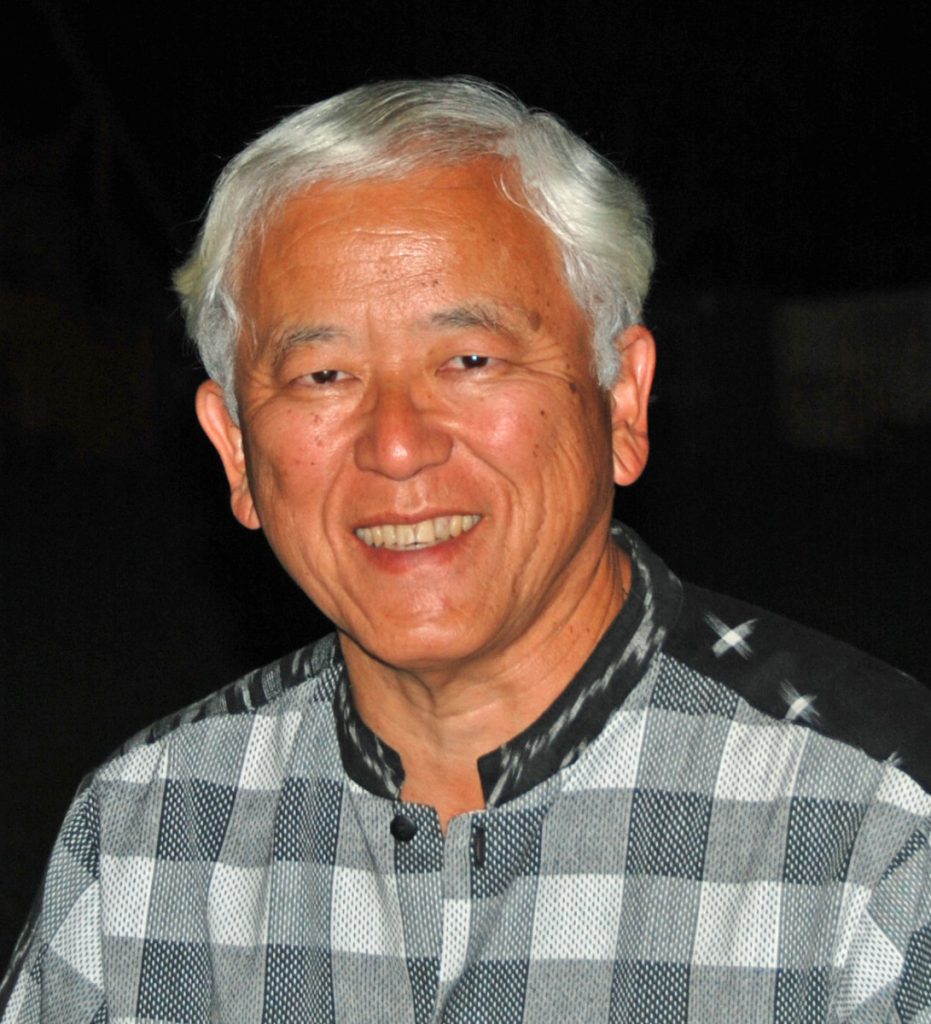
George Tanabe, a scholar of Japanese religions with a focus on Buddhism, will deliver a lecture at 2 p.m. today in the Hall of Philosophy. He said it is difficult to summarize Buddhism simply because, like any other religion, there are many differing teachings and beliefs within it.
He said, then, it is simpler to provide an overview of Buddhism as it applies to a centuries-old and still-evolving dance tradition: Bon Odori. Tanabe explained the Buddhist teaching “that death is followed by rebirth and there’s a space — an interim between one life and the next life.” That space, he said, is the focus of Bon Odori.
Obon, also known as Bon, is a Japanese Buddhist festival held to honor the spirits of one’s ancestors. This celebration includes Bon Odori, also known as the “Bon Dance,” and Tanabe said he has witnessed distinctions of this dance develop across time and space, ranging from Japan itself to Japanese cultures in Hawaii and California.
In Japan, he said the celebrations are sponsored by community organizations rather than Buddhist temples. Tanabe said the festival’s music and dancing are not to commemorate the dead through Buddhist tradition, but are instead associated with rice planting, fishing, coal mining and “life-sustaining activities.”
He explained how Hawaii and California create their own unique case for Bon Odori. There, he said, Buddhist temples essentially function as community centers. These dances have a dual function of celebrating these life-sustaining activities and commemorating the dead.
This joining of “the secular and the sacred” or “the living and the dead” in these dance celebrations is “a uniquely American phenomenon,” Tanabe said.
Tanabe is professor emeritus at University of Hawai‘i at Mānoa, where he taught for nearly 30 years and was chair of the religion department. Currently, he is president of Bukkyo Dendo Kyokai Hawaii and chairman of BDK America, which are Buddhist nonprofit educational foundations.
As a historian and researcher who studies the doctrines, teachings, institutional histories and biographies of Buddhist leaders, Tanabe is familiar with Obon at both academic and “popular” levels. Through his activity with churches and temples, he said he has also observed Buddhism’s broader applicability and relevance.
Many religions believe that people go to another place when they die, and in Buddhism, he explained, “there is a sense that the people who have passed away — the souls of the dead — are still alive, but they’re not disembodied souls.”
He said Buddhist teachings think of the dead as still having their bodies: “Grandpa is still grandpa, and he still has his favorite food and his favorite beer and his favorite cigarettes.”
Tanabe said the draw to the tradition is not surprising to him, partly because “the belief is as much a human sentiment as it is a religious teaching.”
At the same time, Tanabe said “Temple Buddhism” is losing popularity more broadly. “On the one hand, temples are dying, but interest in the teachings and the values of Buddhism are rising,” he said.
Tanabe obtained a Master’s of Divinity degree from Union Theological Seminary in New York. He said his specialty shifted from the New Testament to Buddhism during his Ph.D. Applying this scholarly background to current practice, he said his nonprofit work in Hawaii has a long tradition of interfaith activity, such as hosting Buddhist-Christian dialogues.
Tanabe said his lecture will aim to offer an understanding of death in the Buddhist context, but also a broader application to other religious traditions and ordinary human feelings. He said he recognized that people view the traditions he will speak about as different from their own, but he hopes his lecture will help the audience understand how they might apply them to their lives.
He noted that there will be multiple opportunities for people to participate in Obon at Chautauqua throughout the week. Following his lecture, a workshop will take place at 4 p.m. today in Carnahan-Jackson Dance Studios, led by Head Bon Odori Instructor at the San Jose Buddhist Church Betsuin Adrienne Iwanaga.
Tanabe will also offer remarks during Chautauqua’s Obon celebration at 3 p.m. Sunday on Bestor Plaza.
“Nothing can be more common than death. And so [the Bon Dance] is just one way of dealing with it,” Tanabe said.