
JENNA OUTCALT
Staff Writer
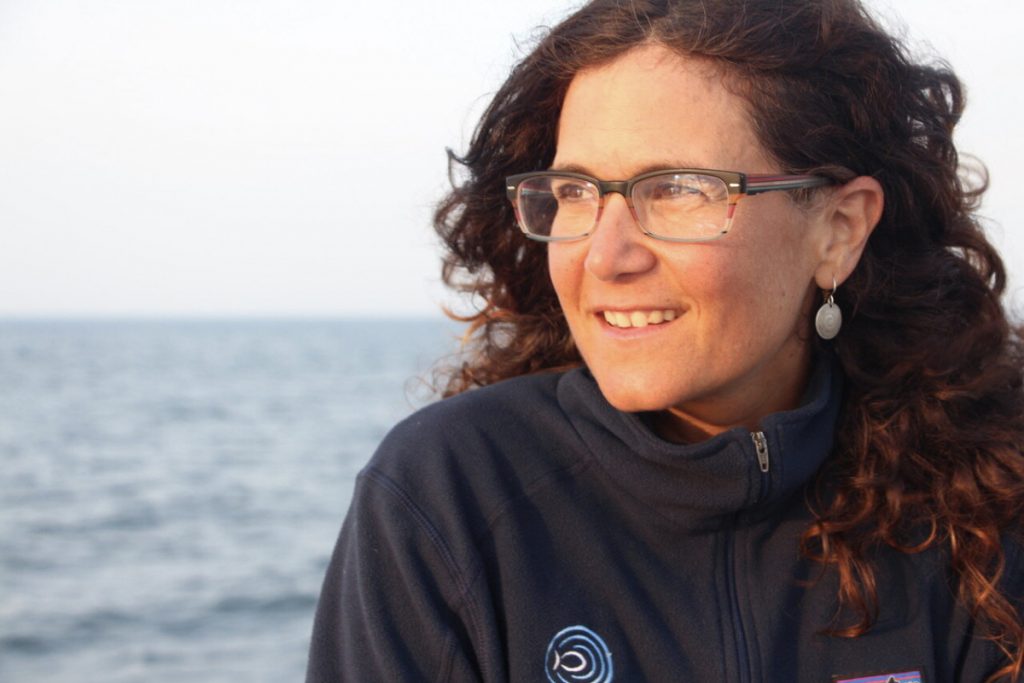
According to Rachael Zoe Miller, there’s not just one way people can connect to the water. Miller herself is a fan of watersports, including paddling, sailing and swimming. Beyond recreation, the water also ignites her creativity and curiosity.
“Whether someone makes a connection through motion and sport, or through curiosity and understanding and knowledge, or through creativity and inspiration, all of those end up with a similar outcome, which is an energy and enthusiasm to protect those places,” Miller said.
Miller, an ocean conservationist, author and National Geographic Explorer, will speak about the era of disposability and launch her new book at 12:30 p.m. today in Smith Wilkes Hall in partnership with the Bird, Tree & Garden Club and Chautauqua Climate Change Initiative.
The first part of Miller’s lecture will present some of her stories about protecting the ocean, particularly focusing on marine debris.
“The water, because you can only see so much when you’re standing next to it, holds such a lore and mystery for people,” Miller said.
She will play a game with the audience called “Source or Sink,” asking attendees to guess whether particular places around the globe create more waste or absorb more waste from other places. Miller will also introduce a new citizen science program that recently opened for participants.
Her lecture will lead into a book launch where she will introduce Decision-Making in the Age of Plastics: Kitchens! The new book looks at essential kitchen products and how people can reduce their exposure to microplastics and other chemicals with their purchasing choices.
“It’s an opportunity for people to understand more about these categories of products, what they’re made of, what the consequences of those materials might have in terms of their health, environmental health and even on their wallets,” Miller said.
According to Miller, kitchens are “one of the most significant vectors for microplastics becoming inhaled or ingested.” However, her book lays out ways to minimize potential harm in the kitchen.
“And the good news is it doesn’t have to cost a fortune,” she added. “It doesn’t have to mean that you completely change all of your kitchen habits, and it is pretty low-hanging fruit for personal and environmental impact.”
Week Four’s theme focuses on the era of disposability; Miller, an expert in the way waste can affect the world, said the theme goes to the root of many issues she works with, such as marine debris and exposure to plastics or plastic-related chemicals. However, Miller also hopes disposability is a bell curve, and society is past the peak.
“We’ve learned a lot about the consequences, and I do think that collectively we are moving towards seeing the value in materials, and seeing the value in things, and seeing the negative value that the end of life produces,” she said.
Miller said finding solutions to disposability requires everyone from consumers and small businesses to national governments and large corporations.
“This is complex, and complexity doesn’t mean that we can’t overcome it,” she said. “It just means that it requires interdisciplinarity and that we need to address this complex problem from multiple disciplines, with multiple stakeholders.”