JENNA OUTCALT
Staff Writer
Waste disposal is one of the most ubiquitous environmental concerns that surrounds us — and one of the most undervalued, according to John Atkinson.
“We take it for granted that the trash is going to disappear, that it’s out of sight, out of mind,” Atkinson said.
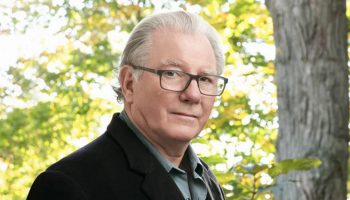
Atkinson is an environmental engineering professor and the Scott and Coleen Stevens chair in engineering sustainability at University at Buffalo. He will speak at 9:15 a.m. today in Hurlbut Sanctuary for Chautauqua Science Group and the Chautauqua Climate Change Initiative about changes in recycling and waste management.
“I think many people still have the same view of recycling systems and waste management systems as they had probably for the past 40 years because what they see hasn’t really changed,” he said. “It’s still a truck that comes up once a week, collects their trash and then disappears.”
Atkinson plans to discuss what is changing behind the scenes in waste management, alongside the societal implications of those changes. Atkinson, who was originally trained as a chemist, said his favorite part of teaching about waste was the fact that anyone could understand it and he could see tangible results in the field.
“I am not diminishing the importance of fundamental science. It is absolutely essential, but it’s not for me,” he said. “I wanted to study something that I could talk to everybody about.”
He believes conversations about waste systems are especially important because many people don’t fully understand them.
“If you can’t understand the system, you can’t be expected to engage with it,” Atkinson said. “You can’t be expected to improve it.”
And, according to Atkinson, not many people really understand where trash goes.
“If you pull a random person off the street and you say, ‘What happens to your trash?’ — it doesn’t matter who they are; they can be a 7-year-old or they can be a lawyer — they will tell you the same thing, and they will tell you a story that sounds like a magic trick: ‘I roll my bin out in the morning, I come back from work and it’s gone,’” Atkinson said. “And that is the extent of their knowledge.”
He said the biggest misconception about waste disposal is that it doesn’t work.
“Recycling is not broken. It needs to be improved. It can be improved. There’s a lot of smart people thinking about how to improve it,” Atkinson said. “But at the end of the day, I think the standard methods still hold a lot of weight and we will still continue to rely on them for a long time.”
Atkinson said he plans to highlight the value of new technology versus traditional methods like physical sorting of garbage.
“Some of the tried-and-true methods are still good. We read a lot about robots and we read a lot about chemical recycling and turning plastic into oil and things like that. And there’s certainly value there,” Atkinson said. “ There’s certainly opportunities there, but I think one of the things that I want to do in this talk is ground those opportunities.”
However, he is also excited for a conversation about lifestyle change, which he sees as the most important factor in improving waste systems.
“At the end of the day, waste management is dictated by each and every one of us. The amount we generate, the type we generate and what we do with it — that’s what’s going to solve the waste problem,” Atkinson said. “It’s not going to be some billion dollar company that comes up with a new magic trick. It’s going to be you and I giving a damn.”