
LAYLA VINSON
Staff Writer
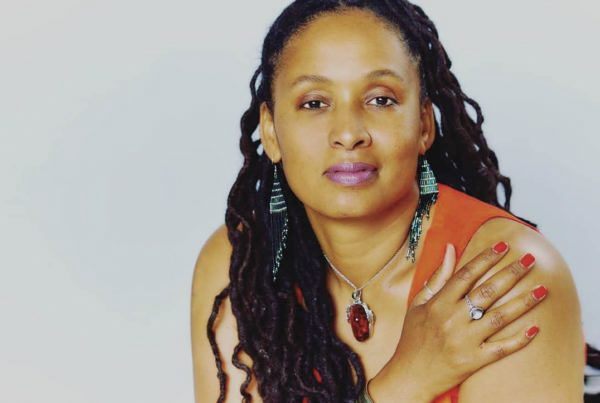
Opening the doors of its home and conversation, the African American Heritage House welcomes award-winning author and educator Shonda Buchanan for a discussion centering “hidden Black Indian figures and the heritage of America,” according to the AAHH. Weaving the complicated web of history and lived experience in her memoir Black Indian, Buchanan will share her insights at 4 p.m. today at the AAHH.
“Writing about someone who is not a savory character — how do you give them their humanity?” Buchanan asked, detailing the challenging process of balancing nuance, complexity and truth as she navigates the path that led many individuals toward complicity or perpetuation within unjust systems. “It’s a fun exercise, but also for some people it’s painful because we just remember the villainous part of it. And sometimes we can’t get past that.”
An associate professor for the Department of English at Western Michigan University and faculty member for the creative writing program at Alma College, Buchanan tackles that challenge further in her writing workshop, “The Funny Thing About Memory.” Conveying the oral narratives of others while also maintaining that their lived experiences do not necessarily equal fact requires a certain technique she frequently utilizes in her writing and covers in her workshop.
“My story is only one story of the millions; I’m one person writing about my family,” Buchanan said.
Buchanan emphasized the importance of personal dialogue to recognize distinctions and avoid distorted classifications.
“There are millions of people who have had the same kind of bi- and triracial experiences.”
Buchanan said racial identities are “constructions” of categories “for purposes of classifying, dividing and then providing — or not providing — services or rights.” These classifications impact everything from legal language to healthcare.
“The things that we call in the Constitution inalienable rights — we don’t all get that,” she said.
In her extensive research of these societal systems spanning centuries, Buchanan urged individuals to realize the pillars of racism in which society continually engages have been taught for generations through schools, books and healthcare. In identifying these facilitators and how they impact younger generations, she said individuals should ask themselves to consider possible approaches for addressing these issues.
“For me, writing is definitely an act of resistance. Writing is an act of recovery of the lost and hidden heritage or lost stories that we lost on the migration trail,” Buchanan said. “… It is our responsibility as storytellers, as writers, to uncover these narratives that live under the land and that are represented when we talk about boundaries and why a boundary was drawn.”
Despite deeming her work as an “act of resistance,” Buchanan said she found it incredibly important that Black Indian does not attempt to provide all of the answers. Instead, she finds it critical that the dialogue remains open without constraint to ensure each voice has an opportunity to be heard.
“We need everyone’s story and everyone’s narrative so that we can just essentially say, ‘Oh, we have this in common. This is different, but I still respect you. I still respect you and I can live next to you and we can make a community,’” Buchanan concluded.