JENNA OUTCALT
Staff Writer
David Wallace-Wells is not an environmentalist. In fact, as he says in the first chapter of his book The Uninhabitable Earth: Life After Warming, he doesn’t even consider himself a nature person.
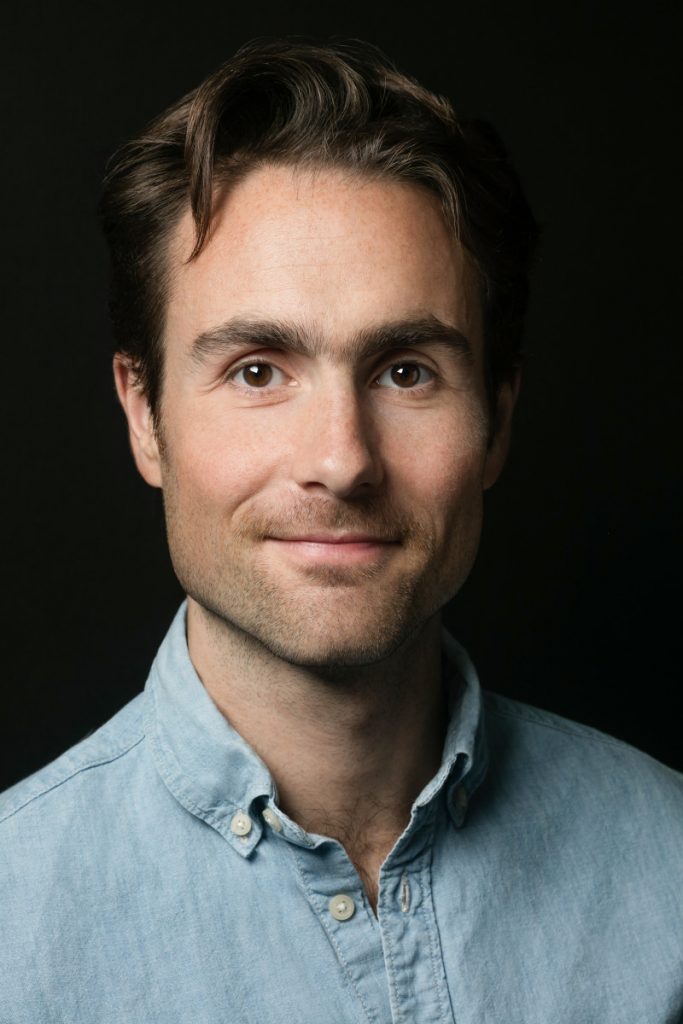
However, Wallace-Wells has become an authoritative voice in the sphere of climate change and the future of the planet, known for his blunt realism when it comes to the catastrophes Earth is facing. At 10:45 a.m. today in the Amphitheater, Wallace-Wells will open Week Four’s theme: “Wasted: Our Era of Disposability” with a conversation on the climate.
Wallace-Wells is a science writer and essayist at The New York Times, focusing on technology, climate and the future of the planet. His recent columns have delved into topics like artificial intelligence, literacy and consequences of the war in Iran.
The Uninhabitable Earth addresses climate change as a current issue with tangible effects rather than a distant dystopian future. Wallace-Wells explained in the book that he started collecting “terrifying, gripping, uncanny” stories of climate change years ago.
“At first, it seemed the news was inventing a new genre of allegory,” he wrote. “But of course climate change is not an allegory.”
Chautauqua itself has been no stranger to environmental issues, with smoke from Canadian wildfires leaving a haze over the state of New York in recent days. Wallace-Wells addressed the threat of wildfires in The Uninhabitable Earth. He pointed out that fires in places like Los Angeles were one of the environmental disasters that wealth couldn’t insulate against.
“The fact that warming is now hitting our wealthiest citizens is not just an opportunity for ugly bursts of liberal schadenfreude; it is also a sign of how hard, and how indiscriminately it is hitting,” he wrote. “All of a sudden, it’s getting a lot harder to protect against what’s coming.”
Wallace-Wells also coined the term “climate kaleidoscope” in his book, which he identifies as the phenomenon where “we can be mesmerized by the threat directly in front of us without ever perceiving it clearly.”
Wallace-Wells uses fiction like movies and television shows to illustrate this concept. Movies and books often portray a world ravaged by some kind of disaster that invokes, but does not necessarily mirror, the threat of climate change. However, despite public fascination with fictional apocalypses, Wallace-Wells warns the rate and scope at which the real world is changing might “eliminate any effort to narrativize warming.”
“No longer a narrative, it would recede into what literary theorists call a metanarrative, succeeding those — like religious truth or faith in progress — that have governed the culture of earlier eras,” he wrote.
In his book, he also cautioned against betting on new technology to outpace climate change.
“We think of climate change as slow, but it is unnervingly fast. We think of the technological change necessary to avert it as fast-arriving, but unfortunately it is deceptively slow — especially judged by just how soon we need it,” he wrote.
Wallace-Wells wrote in The New York Times this month about the need to recognize warming in Europe and prioritize practical solutions instead of assigning blame.
“To pretend adaptation is simple is to live in denial of the pace and scale of warming,” he wrote.
In the afterword of The Uninhabitable Earth, Wallace-Wells addressed how he had to wrestle with difficult questions and new revelations about a changing climate while he wrote the book.
One of the biggest questions he came across during the writing process was who he meant when he wrote “we” have to address the climate. He noted that people with the power and wealth to push real change are often the ones who have the least to lose and most to gain from climate change.
“And yet climate change is also, inarguably, a saga in which we are all implicated, and which threatens to deform all of our lives should we not change course,” he wrote.
However, Wallace-Wells hopes this will be a motivating factor for global solutions. He wrote that humanity has the potential to create a livable, prosperous and just future in response to climate change.
“Call me crazy, or better yet naive, but I still think we can,” he wrote.