LILY RESLINK
Staff Writer
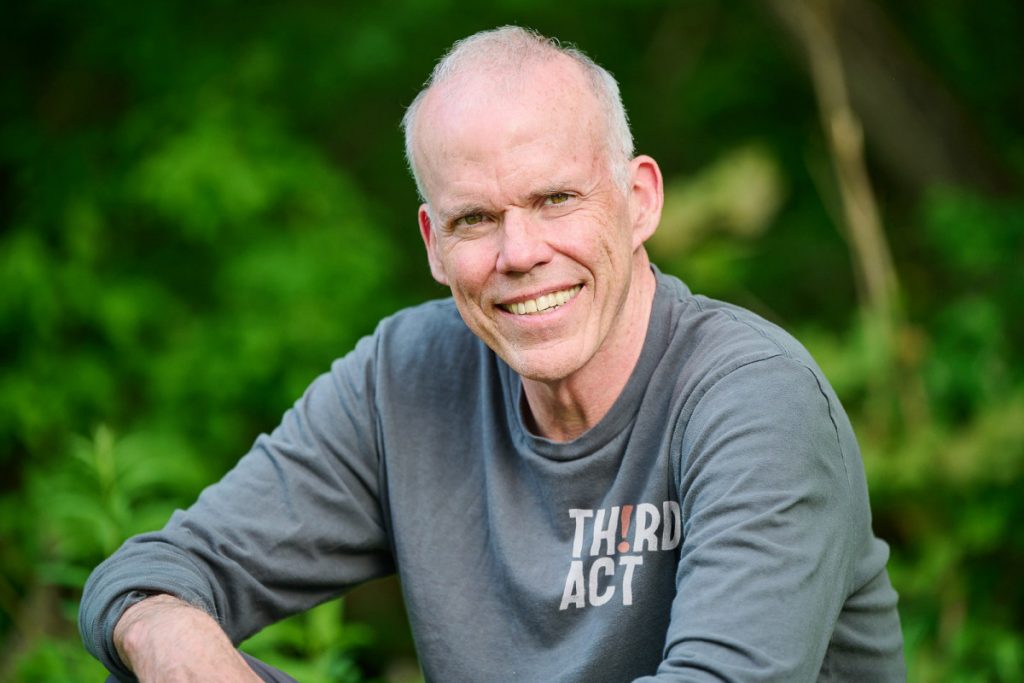
Bill McKibben is an author, environmentalist and activist who founded Third Act — a group focused on connecting people over the age of 60 to action on climate justice. He said taking his environmental career in this direction, shortly after turning 60 himself, was inspired partially by Chautauqua Institution.
McKibben said “being at Chautauqua and seeing there a mostly older group of people,” reminded him of what “latent power lay in the skills and history of people [his] age.”
McKibben delivered a solo lecture in 2019 and discussed generational divides in climate action in a joint morning lecture with Frank Sesno in 2024.
“I feel very comfortable at Chautauqua.” McKibben said. “I feel very much a part of the mix of people there, so I very much look forward to talking, as always, there.”
Since McKibben’s founding of the movement in 2021, he said Third Act has grown to “about 120,000 Americans working to protect democracy and climate.”
“I understand why some people at the top will worry that there’s not enough young people, … But for me, … I completely believe in the power of older people to do remarkable things,” he said.
At 2 p.m. today in the Hall of Philosophy, McKibben will deliver a lecture he said discusses society’s status in the climate and energy fight, the role of this fight in resisting authoritarianism globally and the ways he sees faith community members expressing climate action in religious terms.
“It’s not my main focus, but one of my focuses for decades has been on the building faith environmental movement.” He said he has seen increasing conversations at the intersection of faith and climate.
He said his lecture will also draw from the 2025 international conference called “Raising Hope for Climate Justice” in Rome. There, McKibben listened to Pope Leo XIV address questions of climate concern and recognize Vatican City as the first fully solar powered nation.
According to McKibben, interfaith communities have played important roles in the environmental justice scene.
“Most of the battle over things like fossil fuel divestment has been playing out across all the Protestant denominations for a decade now,” he said.
McKibben — a Methodist — said he is on the board of a group called Dayenu that organizes Jewish Americans for climate activism.
While not holding a title on the “ecclesial hierarchy,” McKibben said he’s happy to participate in these discussions as part of “being a good Protestant.”
In the realm of religion, McKibben said a primary challenge in engaging with climate action is “the absurd evangelical hijacking of Christianity” that rejects climate change as a serious concern.
McKibben said he sees these views as oppositional to the Bible.
McKibben said he observed that “this right-wing evangelical Christianity refuses to grapple with questions of creation and stewardship,” unlike other faith communities worldwide. He said this year, “Christians are finally beginning to take on that warped misunderstanding of the gospels.”
McKibben said many people are very concerned about climate change, but different messages appeal to different people, and there are many ways to get to “the right place.”
“There’s some people who understand that this transition to clean renewable energy is a huge economic boom. There’s some people who view it through the lens of competition with other countries… There’s some people who understand that it will be a much more peaceful world when we no longer rely on energy that’s only found in a few places,” McKibben said. “And there’s people who understand that they’ve been told that their faith instructed them to do the right and moral thing.”