
JENNA OUTCALT
Staff Writer
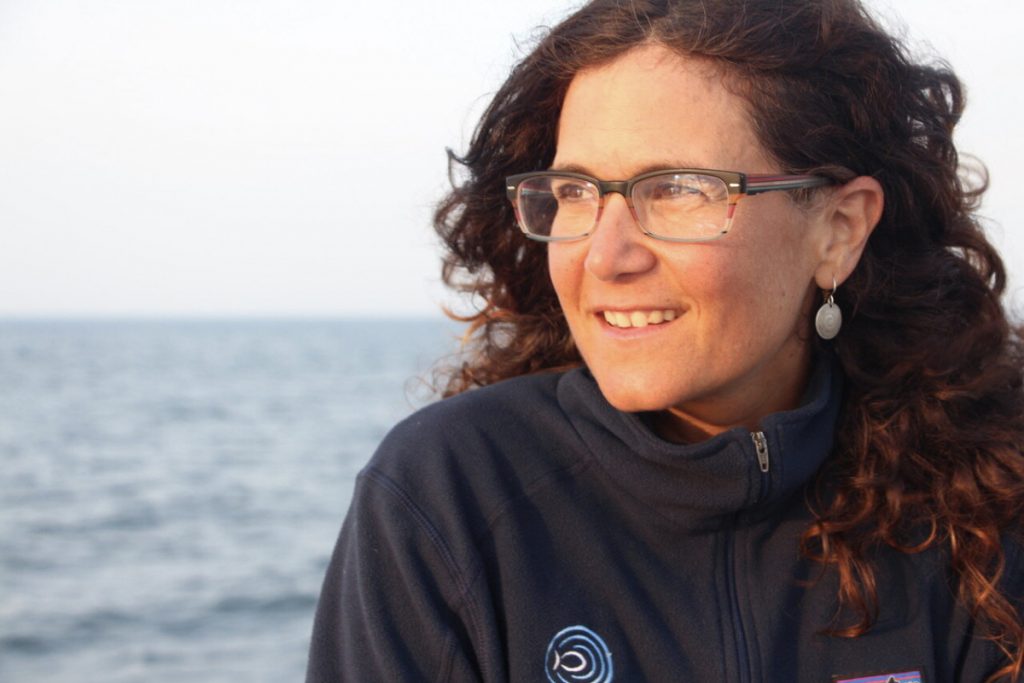
At 10:45 a.m. today in the Amphitheater, author, ocean conservationist and National Geographic Explorer Rachael Zoe Miller will deliver a morning lecture as part of the Week Four theme, “Wasted: Our Era of Disposability.”
In addition to this morning’s lecture, Miller discussed the concept of disposability in contemporary U.S. culture Tuesday at Smith Wilkes Hall in partnership with Chautauqua’s Bird, Tree & Garden Club and the Climate Change Initiative. Miller joins the week’s lecturers in place of Ron Gonen.
She said she is looking forward to building off the other lectures this week and addressing some of the questions she has heard so far.
“I think that being a pinch hitter gives me a very unique opportunity, instead of coming with an already submitted, ready-to-go program, to actually be a little flexible,” Miller said.
She plans to update Chautauquans on new information from microplastics research in the two years since she was on stage at Chautauqua, especially concerning pollution in the polar regions now that she has traveled there. She will end the lecture with “rapid-fire highlights” of some of her favorite solutions for marine debris from around the world.
Miller will share her expertise on disposability culture, making sustainable choices in everyday life as consumers and reducing microplastics exposure in households.
The U.S. Environmental Protection Agency defines microplastics as “plastic particles ranging in size from 5 millimeters (mm), which is about the size of a pencil eraser, to 1 nanometer (nm). For comparison, a strand of human hair is about 80,000 nanometers wide.” Microplastics are either intentionally manufactured for various uses or are the products of plastic degradation.
Miller explained that people can reduce their exposure to these microplastics over time through simple object swaps, which can lessen potentially harmful effects on the body.
“It turns out that there are choices that we can make in our kitchens, and we have control to deliberately and with intent replace or use products that reduce our and our family’s exposure to plastics and associated chemicals,” Miller said.
Miller recently launched her new book, Decision-Making in the Age of Plastics: Kitchens!, a kitchen-specific follow-up to her first book, which provides guidance on reducing microplastics in households. Her latest book guides consumers through the purchasing process to make informed decisions about the environmental implications of kitchen products.
The books, which Miller also illustrated, are written in a choose-your-own-adventure style that allows consumers to make tailored choices for their homes. There will be a book-signing event at 1:30 p.m. today in the Chautauqua Bookstore.
According to Miller, the goal of the book is to help people make “modern science-based but also deeply personal decisions about either what to purchase or even what to keep.” She said the kitchen is an important place to start reducing plastic exposure because it’s a necessary part of anyone’s life.
“Having cookware and utensils and a cutting board is not frivolous,” Miller said. “It’s essential.”
However, even in the age of disposability, Miller said people are beginning to see the value in objects and the negative value in throwing them away.
“At least in America, I hope that this era of disposability is a bell curve and we’re on the back side,” she said.