
LILY RESLINK
Staff Writer
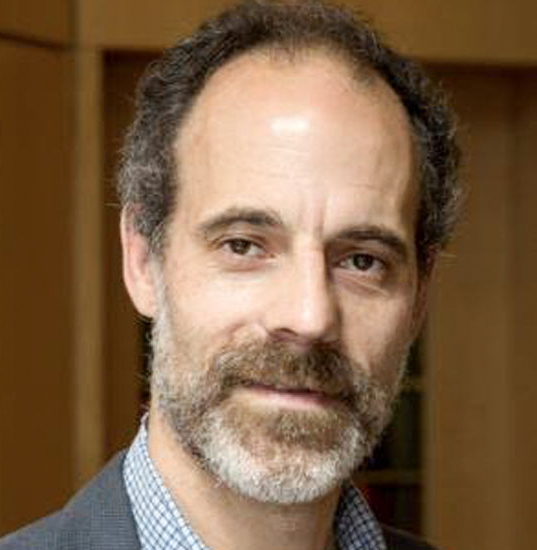
History professor David Waldstreicher looks at moments in Phillis Wheatley’s life that “could be read two different ways.”
Waldstreicher, who wrote a biography on Wheatley, will discuss her emergence as a thought leader during the revolutionary era. He said Wheatley emerged as a “key figure” who influenced the Revolutionary era through correspondence with revolutionaries and expressions of support and criticism of the Patriots.
This analysis of duality is something Waldstreicher uses to guide his approach to teaching classes, interpreting history and, at 2 p.m. today in the Hall of Philosophy, delivering his lecture on the American Revolution on “the life and writings of the enslaved poet Phillis Wheatley and its meanings for thinking about the American Revolution.”
Waldstreicher said he commonly uses this description of Wheatley: “She was the most famous individual African in 18th-century Anglo America, and she was the second North American woman to publish a book of poetry.” Waldstreicher said he will discuss Wheatley’s secular and religious themes in both her poetry and politics.
“She blended her own quest for liberty and emancipation and a literary career with what was going on in their churches in New England, and with the desire of the Patriots to sacralize the revolution,” Waldstreicher said.
Waldstreicher is a Distinguished Professor of History at the Graduate Center of the City University of New York. He is an author, having most recently published The Odyssey of Phillis Wheatley: A Poet’s Journeys Through American Slavery and Independence.
According to Waldstreicher, The Odyssey — which includes representation of war, enslaved people and trafficked women — was an important book to Wheatley and her methods of contesting slavery.
“By engaging with the classics, she could actually talk — or get closer to talking about — her own experience as a trafficked person than she could more directly — which her enslavers wouldn’t have wanted her to do,” he said.
He said his research on Wheatley draws from his early engagement with literary expression.
“In addition to my long-standing interest in slavery and the revolutionary era, and how we think of the relationship between the two, is that I was a poet at one time, and that my mother wrote poetry and her mother wrote poetry,” Waldstreicher said.
Additionally, Waldstreicher double majored in English and history as an undergraduate.
“This (research on Wheatley) was, for me, a return to something I’d always loved, but hadn’t been really central to my scholarly work,” he said.
He said his interest in Wheatley’s larger story grew when he learned more about her interactions with Benjamin Franklin; Waldstreicher said he questioned the accuracy of interpreting this scene as Franklin becoming anti-slavery, which compelled him to research and reinterpret.
“I thought, ‘There’s something very different going on here. He’s doing damage control. She’s becoming famous,’” Waldstreicher said.
Waldstreicher said his interest in Wheatley also grew from a course he teaches on the literature of anti-slavery, during which the class reads “On Being Brought from Africa to America” — a poem he said he will discuss during today’s lecture.
“The class was completely divided on how to read the poem,” he said, describing the students’ uncertainty of whether it was anti-slavery “or whether it was her being thankful for being brought from Africa to America and thus not anti-slavery at all,” he explained.
He said he read the poem to the class in two different tones: one more supplicating and the other more challenging. His students’ varying perspectives, he said, alongside other scholars’ work, confirmed for him “there was a lot more going on there than than most people realize.”
The idea that “maybe there’s more to Wheatley’s longer story” is what Waldstreicher said drives his scholarly works and what Chautauquans can expect as a takeaway from today’s lecture.