JENNA OUTCALT
Staff Writer
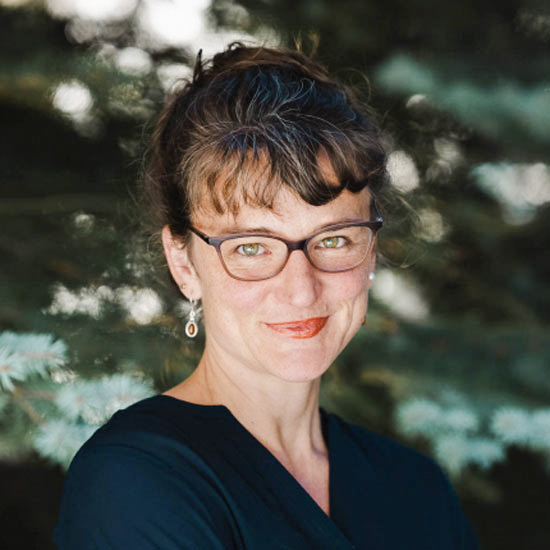
Although Chautauqua Institution has hosted many environmental speakers, few focus on the climate of Chautauqua itself. Meghan Collins said she is looking forward to exploring that exact topic.
“If there are other people who are curious about what Chautauqua’s future climate will look like and feel like, they can learn more and we can explore it together,” Collins said.
Collins will discuss the future of local climate for Chautauqua Science Group and Chautauqua Climate Change Initiative at 9:15 a.m. today in the Hurlbut Church Sanctuary.
“We will reflect on what people love about the Chautauqua setting and look at the near-term, like in the next 15 years or so, what scientists are suggesting we will see more of and what we will see less of,” she said.
The projections will touch on issues such as intense precipitation, temperature, wildfire smoke, snowfall and lake health.
“Many people may be familiar with global climate projections that talk about high-level impacts of climate in the near or distant future, but they may not have a lot of familiarity about what that means for the places they care about,” Collins said.
Collins’ background is in social science, but she has worked in environmental communication since college. She said it could be difficult for people to conceive of what computer-based climate modeling means in the context of their real lives.
“There are a lot of different variables that go into that, and a lot of math, but what this means for people in terms of relevance and relatability in daily life is a challenge,” Collins said.
She emphasized that although it might be hard to relate to climate science, it is necessary to understand how climate affects daily life and how communities can take action.
“Making a connection between what we care about, where we are empowered and climate realities is important,” Collins said. “That’s what we’ll be doing together.”
Collins said she looks forward to engaging with Chautauquans on this topic because of their commitment to learning more about environmental issues.
“One of the beautiful things that I personally love about Chautauqua is civic engagement and the spirit of learning,” she said. “I think those are two areas where people are strong.”
However, she said she wants to encourage Chautauquans to think beyond just the summer.
“[The question] I hope we answer together is, ‘Do we take that do we take that civic engagement home?’ ” she said. “Do we take the same dedication to the next 50 or 100 years home with us when we leave, when we’re not in such a supportive environment for those things?”
She said the audience for the lecture should come ready to participate in the talk.
“I love to encourage people to reflect on what a particular topic means for them and talk to each other,” Collins said. “People can expect a little bit of interaction.”
Collins said another challenge in climate communication is “overcoming the doom and gloom” to discuss what communities can practically do to improve their situation.
“In the early 2000s, there was a lot of discussion on what could be done globally to turn the tide, and that’s not the way that things have gone,” Collins said. “So, mitigation and buffering the effects are more salient in the current day conversation, which can be hard knowing that we’re bequeathing this to our children and grandchildren and
great-grandchildren.”
Collins said environmental communicators also need to overcome political rhetoric.
“The moment in time that we’re living has kind of made environment a wedge issue when it matters to all of us,” she said. “And I think that that is to the detriment of a lot of people who … rely on natural resources, but also are interested in stewardship.”
However, Collins said she holds out hope for a better future.
“I love learning, and I get to work with people who are really passionate about what they do every day,” she said, “and ultimately I hope that I’m leaving things a little bit better than I found them.”